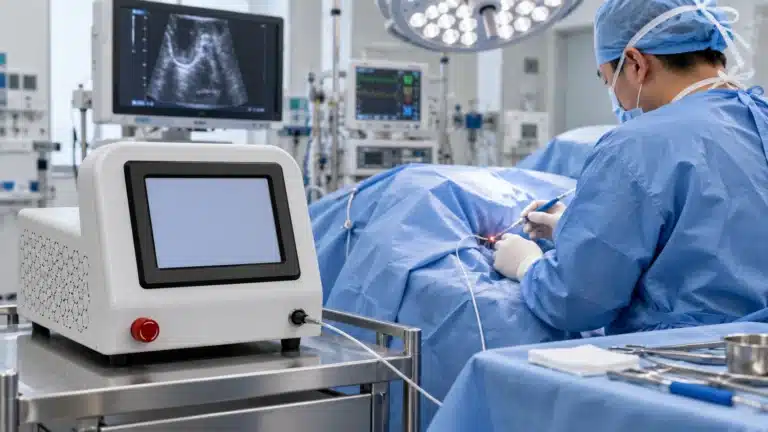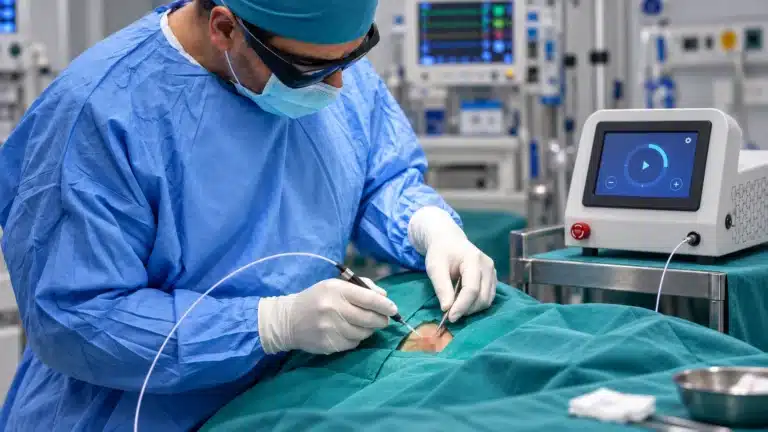
Anal fistula treatment requires more than closing an external opening. The clinical team must identify the tract, evaluate the internal opening, manage infection, and protect the anal sphincter. FiLaC, or fistula-tract laser closure, is a tract-focused technique that uses a radial-emitting laser fiber to deliver controlled energy inside the fistula pathway.
For hospitals, colorectal departments, and medical distributors, understanding how the 1470nm diode laser and radial fiber work together is important when evaluating equipment. FiLaC may be appropriate for selected cases, but treatment decisions must always be made by qualified clinicians after anatomical and clinical assessment.
What Is FiLaC for Anal Fistula?
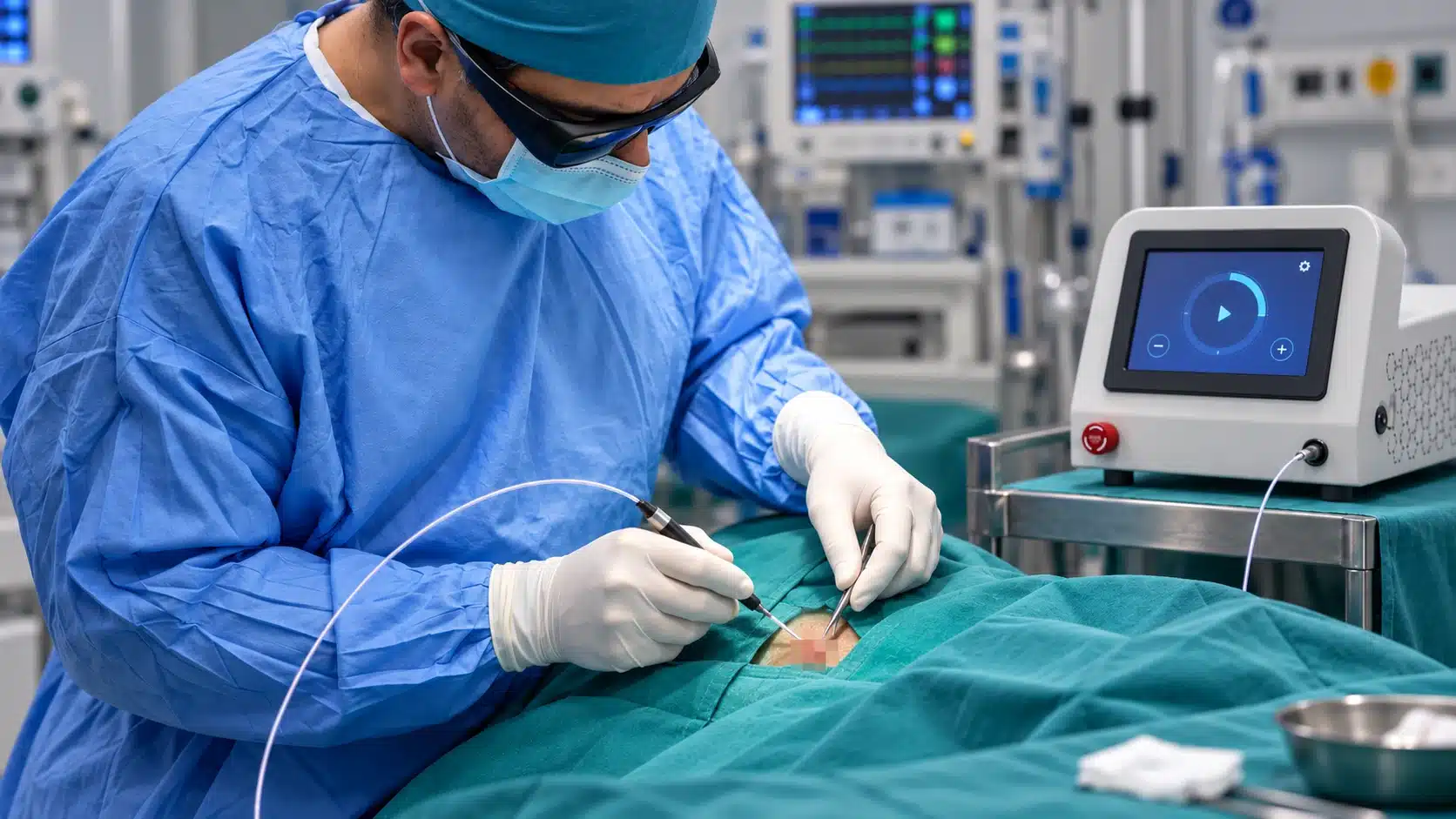
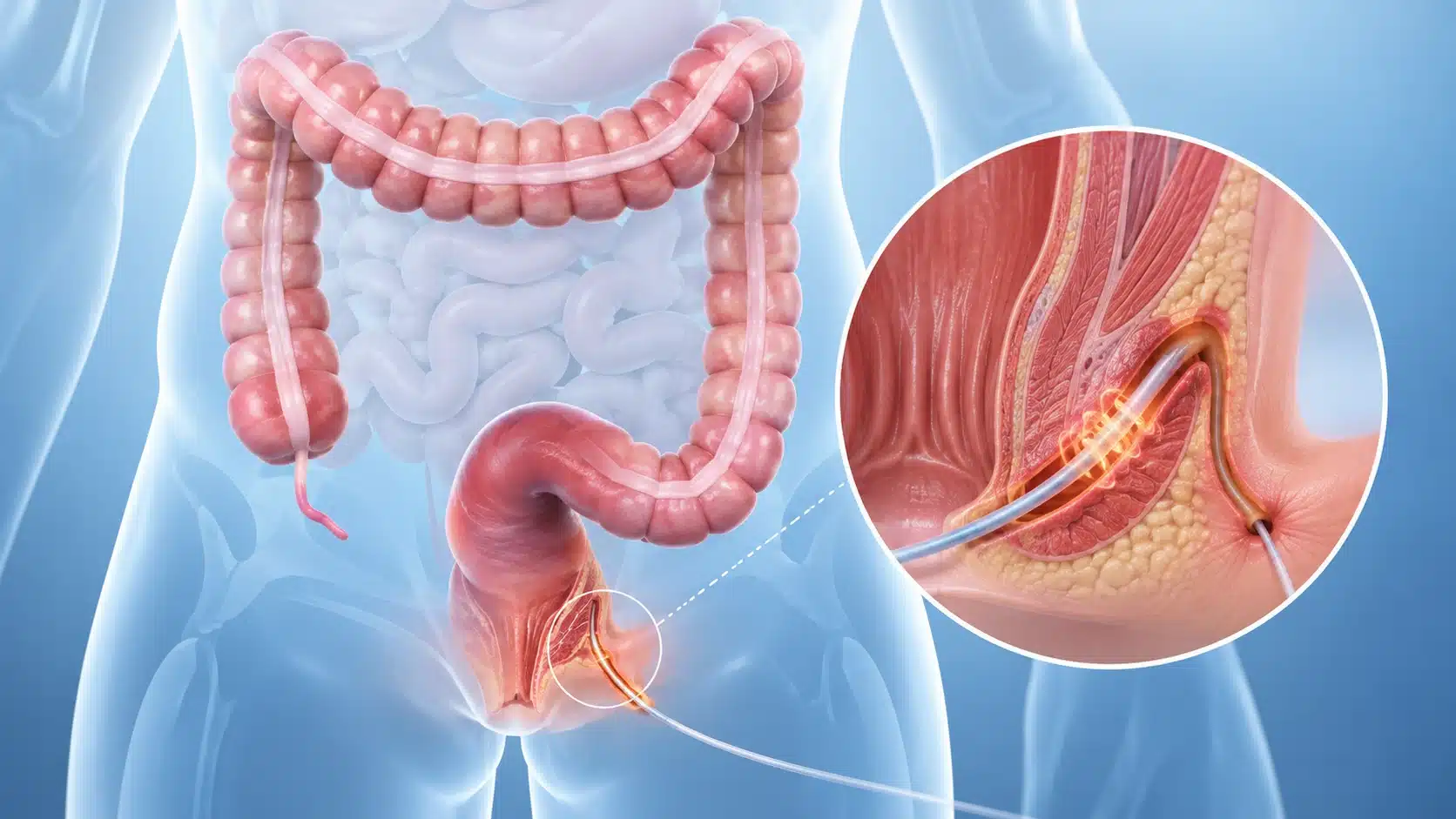
FiLaC is designed to treat the fistula tract from the inside. After the tract has been assessed and prepared, a thin laser fiber is introduced through the external opening toward the internal opening. Laser energy is then delivered while the fiber is withdrawn in a controlled manner.
The intended objective is to create a localized thermal response along the tract while limiting unnecessary dissection through the sphincter. For this reason, FiLaC is often described as a sphincter-preserving or minimally invasive approach. These terms describe the treatment concept and should not be interpreted as a guarantee of healing or continence outcomes.
Clinical suitability depends on the tract’s location, length, branching pattern, infection status, sphincter involvement, previous procedures, and the surgeon’s preferred treatment strategy. FiLaC should therefore be evaluated as one option within a broader proctology treatment pathway.
How Does a Radial Fiber Work?
A radial fiber differs from a conventional forward-firing fiber in the way it distributes laser energy.
A forward-firing fiber emits energy mainly from its distal tip. A radial-emitting fiber is designed to distribute energy laterally around the fiber axis. When placed inside a fistula tract, this creates circumferential exposure rather than concentrating the treatment only in front of the tip.
A typical workflow may include the following steps:
- The surgeon maps the tract and confirms the external and internal openings.
- Any abscess or active infection is managed according to the clinical plan.
- The tract is cleaned and prepared.
- The radial fiber is advanced through the tract.
- Laser energy is activated while the fiber is withdrawn at a controlled speed.
- The internal opening is managed using the surgeon’s selected closure method.
- The patient is monitored during follow-up for healing or persistent disease.
The radial emission pattern is relevant because a fistula is a three-dimensional channel. Circumferential energy delivery may help create a more uniform treatment field, but the clinical effect depends on energy settings, withdrawal speed, tract condition, fiber design, and operator technique.
Why Is 1470nm Used?
The 1470nm wavelength is associated with strong absorption by water in soft tissue. Since biological tissue contains a high proportion of water, this wavelength can create a localized thermal effect when used with appropriate settings.
In FiLaC, the intended mechanism is controlled treatment of the tract lining. Depending on the protocol, the thermal response may contribute to tissue coagulation, contraction, or ablation within the tract. The treatment objective is controlled energy delivery rather than uncontrolled tissue injury.
Arfurla’s proctology information describes 1470nm energy as targeting water in hemorrhoidal and fistula tissue. This wavelength characteristic helps explain its relevance to soft-tissue procedures, but the selected output, pulse pattern, fiber type, and withdrawal technique must be determined by the qualified clinical team.
980nm and 1470nm in a Multifunction Platform
A multifunction diode laser can support different clinical applications when the system, accessories, and protocols are properly matched.
For fistula-tract treatment, 1470nm is the wavelength most directly associated with water-mediated soft-tissue interaction. The 980nm wavelength is commonly associated with absorption by oxyhemoglobin and may be relevant to coagulation-oriented applications. The appropriate wavelength depends on the target tissue, procedure, fiber design, and institutional protocol.
Arfurla presents its 980nm/1470nm diode laser platform as a multifunction medical system with 650nm, 980nm, and 1470nm wavelengths and 12 integrated functions.
For procurement teams, the key question is not simply whether a machine lists 1470nm. Buyers should also verify output control, compatible radial fibers, accessory availability, operating instructions, training resources, maintenance arrangements, and regional technical support.
What Should Hospitals Verify Before Procurement?
A procurement evaluation should connect technical specifications with the actual FiLaC workflow.
First, confirm wavelength and output controls. The system documentation should clearly explain how clinicians select the required wavelength and regulate energy delivery. A listed wavelength alone does not establish that a complete clinical protocol is validated for every fistula type.
Second, verify fiber compatibility. FiLaC depends on the fiber’s emission geometry and handling characteristics. Radial fibers, connector standards, sterile packaging, and replacement availability should be evaluated together.
Third, assess operating-room usability. The interface should allow the clinical team to confirm settings before activation. Footswitch operation, status indicators, emergency stop access, and readable displays may all affect workflow reliability.
Fourth, review documentation and training. Hospitals should request user manuals, maintenance schedules, warranty terms, service response details, and application training. These factors influence the safe adoption of a laser platform as much as the laser source itself.
Arfurla’s proctology laser application provides application information for anorectal procedures, including fistula-related treatment. The purchasing hospital should still align the system with local regulations, credentialing requirements, sterile-processing procedures, and the operating surgeon’s established protocol.
Patient Selection and Clinical Limitations
FiLaC should not be presented as a universal replacement for fistulotomy, seton management, advancement flap, or other fistula procedures. Suitability depends on anatomy and disease status.
Clinical considerations may include a high or complex tract, multiple branches, horseshoe extension, an undrained abscess, active infection, recurrent disease, Crohn’s disease, previous operations, and the amount of sphincter crossed by the tract. The internal opening may also require a separate closure strategy.
Patients require realistic counseling about healing, follow-up, persistent drainage, and possible recurrence. A laser platform cannot eliminate the biological and anatomical factors that influence outcome.
For B2B buyers, this distinction is essential: the laser is an enabling device, not a stand-alone treatment decision. Outcomes depend on diagnosis, patient selection, operator skill, perioperative management, and follow-up.
Why Arfurla May Be Relevant to Proctology Programs
Bersama Arfur, operated by Hangzhou Arfurla Science & Technology Co., Ltd., presents a multifunction diode laser platform covering several wavelengths and medical functions for professional medical applications. For a proctology department, the potential value is the ability to support relevant laser applications through one integrated system.
Hospitals and distributors should evaluate the platform using practical questions:
- Is the 1470nm output appropriate for the intended soft-tissue protocol?
- Are compatible radial fibers available for the proposed procedure?
- Can clinicians receive application guidance and technical training?
- Are manuals and service documents available in the purchasing region?
- Can the supplier support installation, maintenance, and accessory replacement?
- Is the proposed configuration suitable for the department’s case mix?
Institutions can request an application fit-check with information about their intended procedures, fiber requirements, and local procurement conditions. A structured application discussion is more useful than comparing wavelength numbers alone.
Kesimpulan
FiLaC uses a tract-based approach in which a radial-emitting fiber is advanced through an anal fistula and withdrawn while controlled laser energy is delivered around the tract. The 1470nm diode wavelength is relevant because of its interaction with water-rich soft tissue, while 980nm may support other coagulation-oriented applications in a multifunction platform.
The technology may be useful for selected cases, but it does not remove the need for accurate diagnosis, infection management, surgical judgment, and follow-up. Hospitals evaluating an Arfurla system should assess the complete workflow, including radial fiber compatibility, documentation, training, service support, and compliance with local clinical requirements.
Pertanyaan yang Sering Diajukan (FAQ)
What does FiLaC stand for?
FiLaC means fistula-tract laser closure. It uses a laser fiber to deliver controlled energy inside an anal fistula tract.
How does a radial fiber differ from a forward-firing fiber?
A radial fiber distributes energy laterally around the fiber, creating circumferential exposure. A forward-firing fiber emits primarily from its distal tip.
Why is 1470nm used in FiLaC?
1470nm energy is strongly absorbed by water in soft tissue. This enables a localized thermal effect when the wavelength is used with a suitable fiber and clinical protocol.
Is FiLaC suitable for every anal fistula?
No. Suitability depends on tract anatomy, infection, sphincter involvement, recurrence history, inflammatory disease, and the surgeon’s treatment plan.