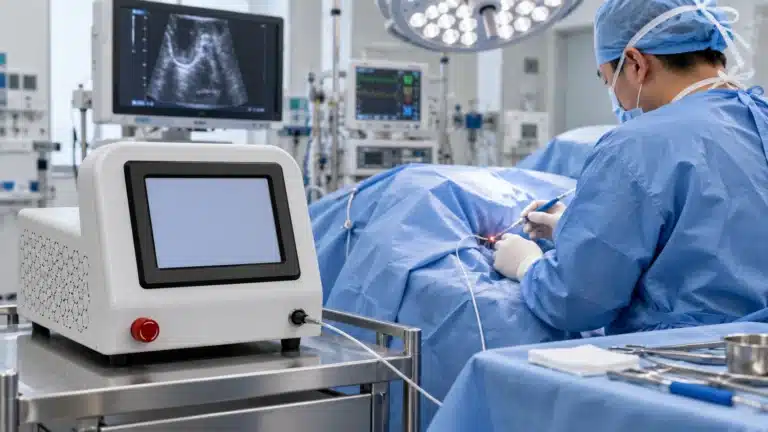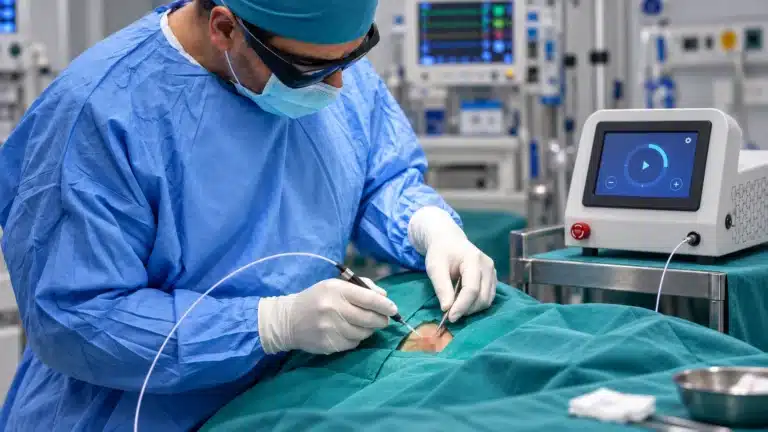
In recent years, the use of laser liposuction has emerged as a key category for aesthetic procedures in terms of body sculpturing. As opposed to external pads called “lipo laser,” laser lipolysis involves the introduction of energy below the skin surface using an optical fiber. The main purpose of the procedure includes destruction of localized fat, if necessary, aspiration, and the generation of thermal effects.
For B2B buyers, the business-related question goes beyond whether laser lipo is effective. The equipment choice is based on several criteria that include wavelength, power control, fiber capability, procedure, training, regulation, servicing, and support from the supplier.
What Is Laser Liposuction?
Laser lipolysis or laser-assisted liposuction is a minimally invasive procedure whereby laser energy is introduced in subcutaneous tissues using a thin fiber. Laser energy melts and breaks fat cells. Based on the quantity treated and technique used, the melted fat can be extracted or absorbed by the body.
Heating of controlled tissue might help to remodel collagen and contract tissue. This is what makes laser-assisted lipolysis different from suction alone. It should be used primarily for body contouring of small to moderate fat deposits.
How Does Laser Lipo Work?
A typical professional workflow includes four stages:
- Planning and anesthesia: The area is marked, and anesthesia is selected according to the treatment scope.
- Fiber placement: A fine optical fiber enters the subcutaneous layer through a micro-entry point.
- Controlled energy delivery: The clinician moves the fiber through the target tissue. Settings, movement speed, fiber type, tissue thickness, and treatment endpoint influence the result.
- Fat management: Liquefied fat may be aspirated with a small cannula, while smaller treatments may rely more on natural metabolic clearance.
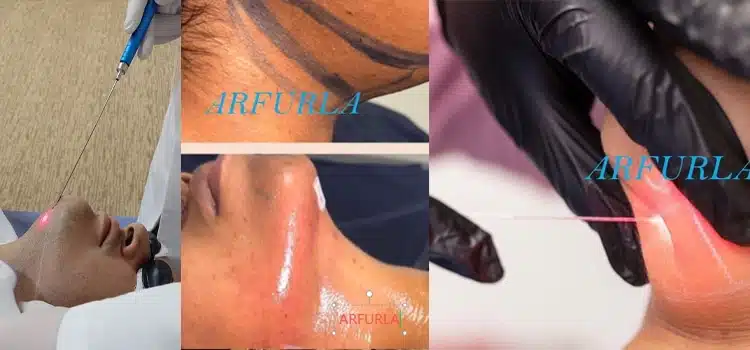
Arfurla describes its facial endo laser and bodylift lipolysis workflow as using hair-thin micro-optical fibers to deliver selective heat in superficial tissue. Its multifunction platform is listed with 650nm, 980nm, and 1470nm wavelengths, with the principal lipolysis positioning centered on 980nm and 1470nm diode laser functions.
Core Techniques for Laser Liposuction
1. Layered Fat Treatment
Treatment at controlled depths can create smoother transitions between treated and untreated zones. Stable output, parameter control, suitable fibers, and predictable energy delivery are important equipment considerations.
2. Cross-Hatching
Cross-hatching distributes treatment passes in more than one direction. The method is intended to improve contour uniformity and requires disciplined fiber movement and thermal control.
3. Feathering
Feathering gradually reduces treatment intensity near the edge of a target zone, supporting a natural transition around the jawline, arms, flanks, and other compact areas.
4. Contour Definition
Selective treatment may highlight anatomical contours rather than simply reduce volume. Results depend on clinician skill, patient selection, tissue quality, and treatment planning. Equipment does not replace surgical judgment or hands-on training.
Is Laser Liposuction Effective?
The available evidence suggests that the application of laser-assisted lipolysis has a capacity to reduce localized fat deposits and to produce skin retraction especially for small areas. The results of a randomized controlled trial of the submental rejuvenation using the 980nm diode laser-assisted lipolysis showed good results with regards to reduction of fat thickness and skin tightening with almost no pain after the operation as compared to the comparative method.
No single fat-reduction percentage applies to every machine, wavelength, body area, or protocol. Reviews describe promising outcomes but also identify small samples, inconsistent parameters, and variable evidence quality. Some studies report advantages in bleeding control, discomfort, or tightening, while other reviews find that superiority over conventional liposuction is not firmly established.
Laser lipo should therefore be presented as professional contouring technology with clinically supported potential—not guaranteed weight loss or a universal replacement for surgery.
What Areas Can Be Treated with Laser Liposuction?
Common treatment areas include:
- Chin and jawline: Compact submental fat and contour definition.
- Neck and lower face: Localized sculpting and tissue-contraction objectives.
- Arms: Small fat pockets, often with a skin-tightening goal.
- Abdomen and flanks: Localized contouring, with aspiration when indicated.
- Thighs and knees: Refinement of resistant fat pockets.
- Back and bra-line area: Treatment of localized bulges and contour irregularities.
Suitability depends on skin quality, fat volume, medical history, expected outcome, and professional scope of practice.
Laser Liposuction vs. Traditional Liposuction: Which Is Better?
| Factor | Laser-Assisted Liposuction | Traditional Liposuction |
|---|---|---|
| Mechanism | Laser energy disrupts fat before or with aspiration | Mechanical suction removes fat |
| Typical role | Small-to-moderate contouring and possible skin contraction | Efficient removal of larger volumes |
| Skin effect | Thermal remodeling may support retraction | Retraction depends on tissue quality or added technology |
| Recovery | Often shorter for limited procedures | Varies with volume and surgical extent |
| Key risks | Burns, swelling, bruising, irregularity, infection | Bleeding, swelling, bruising, irregularity, infection |
Both procedures cannot be said to be universally better than each other. Lasers might prove to be more useful in cases that require more precise heating and skin tightening. In cases of larger volume removal, the traditional liposuction technique can be used. Lasers can cause burns, infections, and irregular contouring among others.
What Determines Laser Lipo Cost and Equipment ROI?
Treatment pricing varies by market, clinician credentials, anesthesia, treatment area, and whether aspiration is included. For distributors and procurement teams, equipment ROI depends on:
- Purchase price and consumable fiber cost
- Number of supported applications
- Training and protocol support
- Warranty, spare parts, and service response
- Local registration and documentation
- OEM/ODM and private-label capability
Arfurla positions the 980nm 1470nm Multifunction Medical 12 in 1 Diode Laser Machine as a multi-application platform. Besides facial endo laser and bodylift lipolysis, the official product page lists physiotherapy, vascular, nail-fungus, EVLT, proctology, ENT, gynecology, dentistry, PLDD, soft-tissue surgery, and veterinary applications.
Permitted indications depend on device configuration, certification, professional licensing, and local regulations. Product claims and regulatory authorizations should therefore be verified for the exact model and destination market.
Why Consider Arfurla for Laser Lipo Equipment?
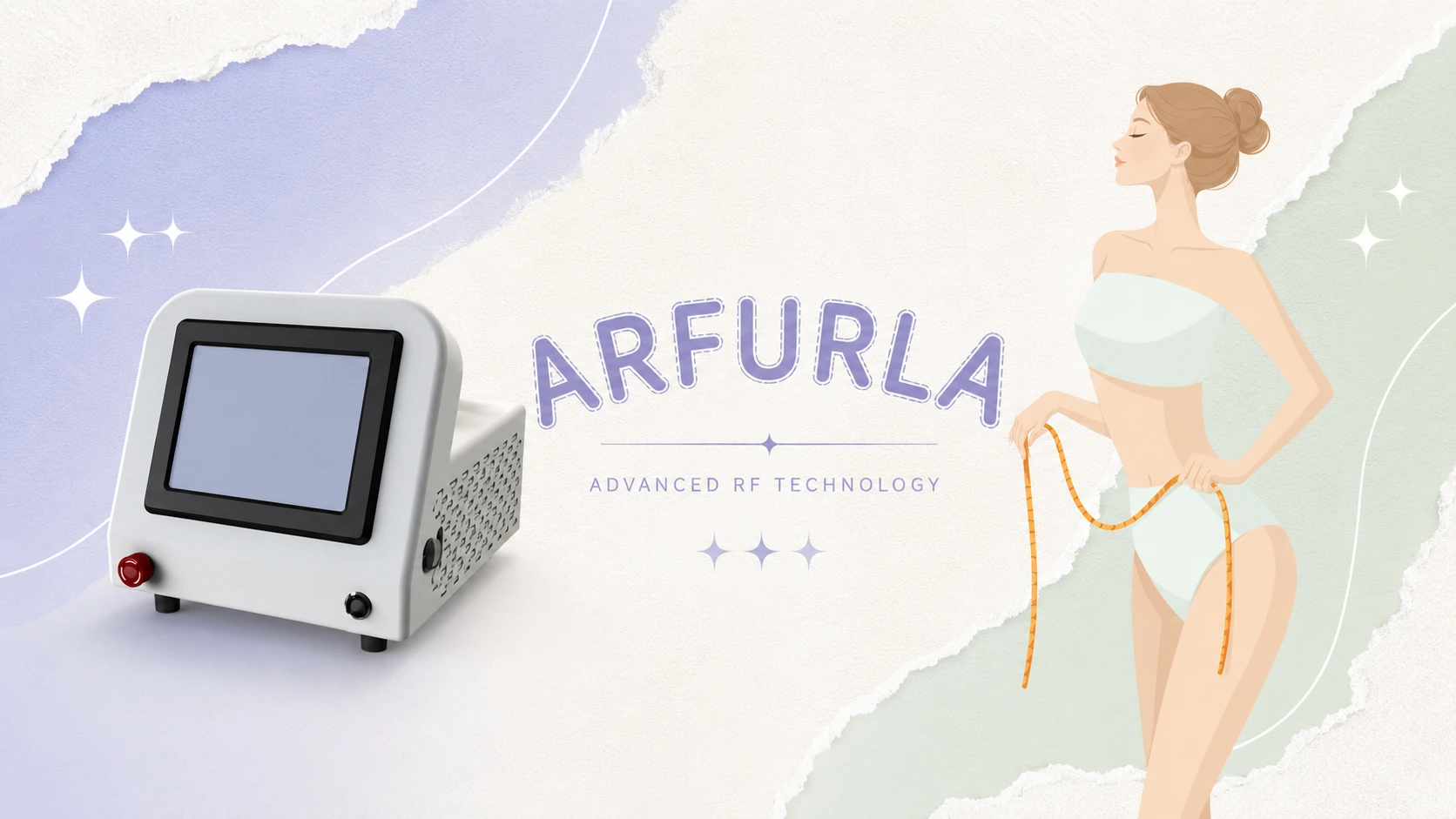
Hangzhou Arfurla Science & Technology Co., Ltd. describes itself as a medical laser and beauty-equipment manufacturer engaged in R&D, production, sales, and after-sales service. The company states that it operates an in-house R&D department and factory and offers OEM/ODM services for distributors.
The Arfurla 12-in-1 platform combines 980nm and 1470nm diode laser capabilities with a broad accessory ecosystem. Available accessories listed on the company website include bare fibers, conical fibers, radial fibers, lipolysis handles, lipolysis-liposuction handles, vascular handles, physiotherapy handles, gynecology handles, dental handles, ENT handles, and soft-tissue cutting handles.
The company website also lists a two-year warranty, online technical support, spare-parts service, and support from engineering, logistics, sales, and after-sales teams. An independent marketplace listing categorizes the business as a manufacturer/factory and identifies liposuction laser equipment among its principal products.
Technical specifications, certificate scope, compatible fibers, electrical standards, packaging, lead time, training, and after-sales terms should be confirmed during procurement.
FAQ
Is laser lipo the same as an external lipo laser treatment?
No. Minimally invasive laser lipolysis places an optical fiber beneath the skin. External body-slimming devices operate through the skin and use a different treatment protocol.
Why are 980nm and 1470nm wavelengths used?
The 980nm wavelength has established use in soft-tissue procedures and laser-assisted lipolysis. The 1470nm wavelength is strongly absorbed by water and is used in fiber-based medical procedures. Regulatory indications differ by device and country. For example, one FDA-cleared dual-wavelength device specifies laser-assisted lipolysis under its 980nm indication while assigning a different clinical indication to its 1470nm output. That clearance applies to the named device, not automatically to every dual-wavelength system.
Does the Arfurla 12-in-1 machine only perform lipolysis?
No. Arfurla markets the platform for 12 clinical and aesthetic categories using different fibers, handpieces, and protocols.
Can laser lipo replace traditional liposuction?
Not in every case. Laser-assisted lipolysis is generally suited to localized contouring and skin-contraction objectives. Conventional liposuction remains more appropriate for many large-volume procedures.
What should distributors verify before ordering?
Model-specific certification, wavelength and power specifications, fiber compatibility, included accessories, training, warranty, spare parts, OEM/ODM scope, lead time, and import requirements are key checks.
Partner with Arfurla — Laser Lipo Machine Manufacturer, Supplier and Factory
Arfurla serves distributors, importers, procurement teams, clinic groups, and OEM/ODM partners seeking 980nm 1470nm diode laser systems and compatible accessories. Factory-based production, in-house development, configurable accessories, technical support, and private-label services support regional distribution and portfolio expansion.
Product specifications, distributor pricing, customization options, certification documents, training arrangements, and quotations are available from Hangzhou Arfurla Science & Technology Co., Ltd.
Email: info@arfurla.com
Phone/WhatsApp: +86-1830-1023-578