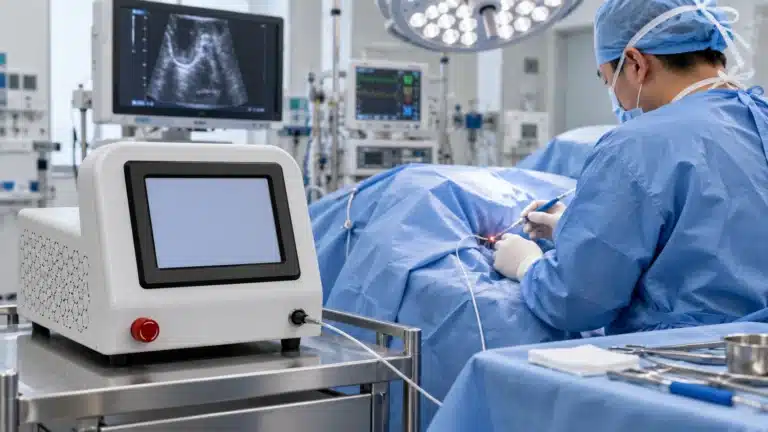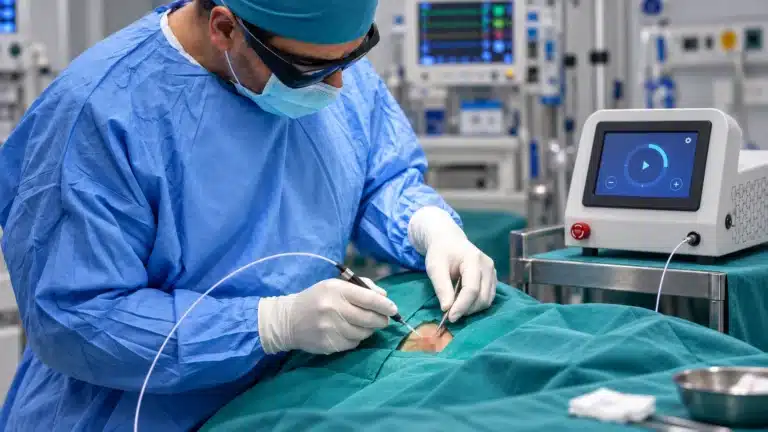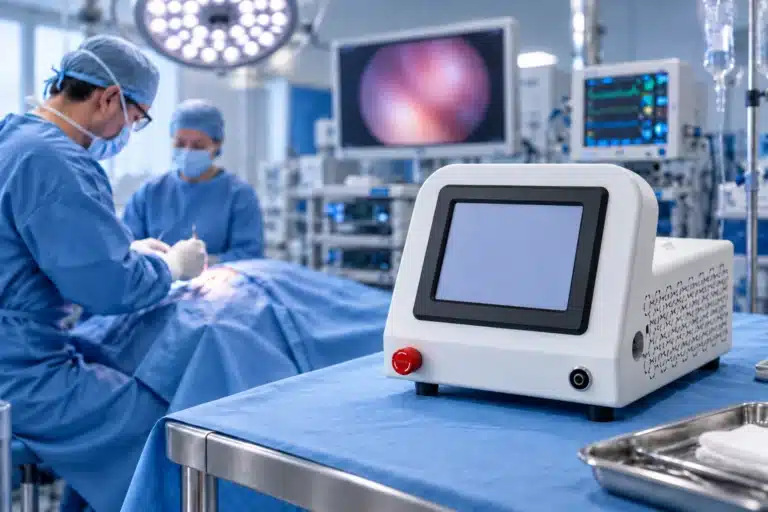
Laser technology has changed veterinary medicine by giving exact, low-injury choices for both healing treatments and cutting operations. Vet experts now use diode laser systems more often for pain control, swelling cutback, faster recovery, and soft tissue work in dogs. These systems send focused light power that helps cell fixes and limits harm more than old ways.
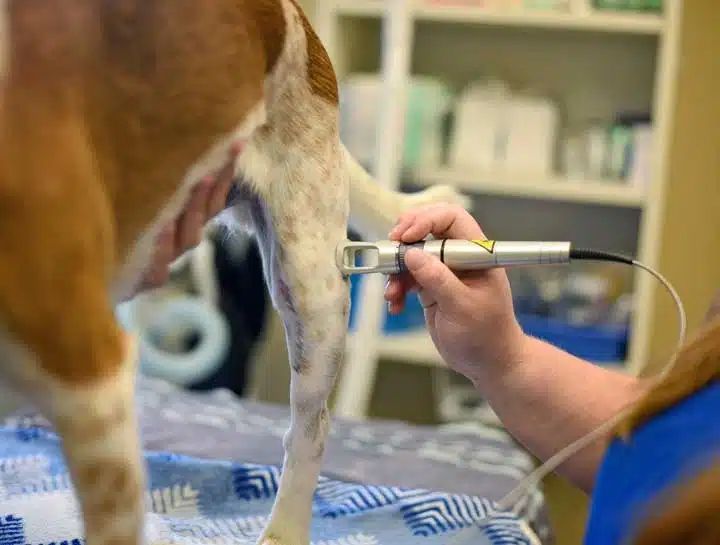
What Is Laser Therapy for Dogs?
Laser therapy for dogs, also known as photobiomodulation (PBM) or low-level laser therapy (LLLT) in healing settings, uses certain light waves to start healing at the cell level. Healing uses focus on non-heat effects that cut pain and swelling. Meanwhile, stronger power levels allow exact cuts for soft tissue work.
Diode lasers that work at waves like 980nm and 1470nm go into tissues well. In healing mode, they boost ATP making in mitochondria. They also improve blood flow and adjust swelling replies. For cutting, these waves give good slicing and clotting skills with less blood loss and quicker get-back times.
How Does Laser Therapy Work in Dogs?
The main way it works is photobiomodulation. Laser light bits get taken in by color parts in cells, mainly cytochrome c oxidase in mitochondria. This link raises cell energy making. It also lowers stress from oxidation and starts anti-swelling chains.
Importance of Wavelength Selection
Picking the right wave is key for best results. Near-infrared waves (near 800–980nm) go deeper into muscles, joints, and bones, so they fit bone and soft tissue problems. Higher take-in at 1470nm helps good clotting and steam-off in cutting uses.
Treatment Parameters
Treatment settings—like power, pulse length, rate, and total energy sent (in joules per cm²)—get changed by the dog’s size, fur thickness, color, and issue. Fur color can affect light pass. Darker fur takes in more energy. Class IV healing lasers give higher power for deeper reach and shorter time slots.
Clinical Applications and Functions for Veterinary Use
Laser systems fill two jobs in vet work: healing and cutting.
Soft Tissue Surgery
Tumor Removal
Exact removal with little blood loss and less pain after.
Wound Management
Good cleaning, close help, and lower infection chance.
Precise Cutting and Coagulation
Diode lasers limit harm to nearby tissues while handling blood loss well.
Ophthalmic and Dental Surgery
Lasers fix eye back problems, help cataract work, do gum shaping, and aid tooth pulls with better blood stop and recovery.
Dermatology Applications
Skin tumor removal, long-term skin swelling, hot spots, lick granulomas, and acral lick dermatitis get better, often with less marks and repeat cases.
Pain Management and Physiotherapy
Low-level laser therapy handles long-term pain, joint wear, after-work unease, and muscle-bone problems well by raising blood flow and cutting swelling.
Evidence-Based Benefits in Musculoskeletal Conditions
Laser Therapy for Canine Arthritis and Joint Disease
Many vet studies show that photobiomodulation cuts limpness, pain levels, and need for NSAIDs in dogs with bone joint wear. This includes hip and elbow OA. Doses of 8–20 J/cm² put on hurt joints and nearby muscles bring clear gains in move and work.
Post-Surgical Recovery and Wound Healing
Laser use on cut sites, like after hemilaminectomy for IVDD or TPLO work, speeds up nice healing and betters mark quality. Daily treatments at about 8 J/cm² for the first week after show big gains by day 7 and 21.
Neurological and Soft Tissue Support
Laser therapy helps get-back in disc spine disease, edge nerve hurts, and tendon/ligament problems by pushing tissue fixes and cutting swelling.
What Conditions Does Laser Therapy Treat in Dogs?
Laser work handles many short and long issues:
- Arthritis, hip dysplasia, and degenerative joint disease
- Intervertebral disc disease and back pain
- Acute and chronic wounds, burns, ulcers, and post-surgical sites
- Soft tissue injuries, sprains, and tendonitis
- Skin conditions including hot spots, lick granulomas, and dermatitis
- Dental and gingival issues
- Otitis and anal gland inflammation
- Additional indications such as calcinosis cutis and certain inflammatory dermatoses
Choice work like spay/neuter and mass excisions also gain from laser help.
Benefits of Laser Therapy for Dogs
Pain Relief
Stops pain signs and starts endorphin let-out while lowering nerve feel.
Reduced Inflammation
Adjusts immune reply and swelling.
Accelerated Healing
Boosts collagen making, fibroblast work, and tissue new growth.
Minimal Invasiveness
Less harm, puff, and marks.
Shorter Procedure and Recovery Times
Quick blood stop cuts sleep time.
Versatility
Changeable settings fit different dog types and sizes.
Cost Efficiency
Lower problem rates and strong parts.
Clinical Advantages of Veterinary Diode Lasers
- Superior precision and safety with controllable power settings
- Reduced procedure time through effective coagulation
- Broad species versatility
- Cost-effective operation with reusable fibers
- Enhanced patient comfort via photobiomodulation
Treatment Protocols and Safety Considerations
Typical Treatment Protocols
Short issues often need daily or every-other-day times at first. Long issues like arthritis gain from a start phase (2–3 times weekly for 2–4 weeks), change, and keep-up.
Times last 5–30 minutes by area. Energy amounts often go from 4–10 J/cm² for top issues to 10–20 J/cm² for deeper joints.
Safety Profile
Laser therapy shows a great safety list when done by trained experts. No-go uses include direct light on eyes, tumors, or gonads, and care in animals with young. Right eye guard for staff and patients is key.
No sleep aid is usually needed, and treatments get taken well.
Arfurla Veterinary Laser Solutions
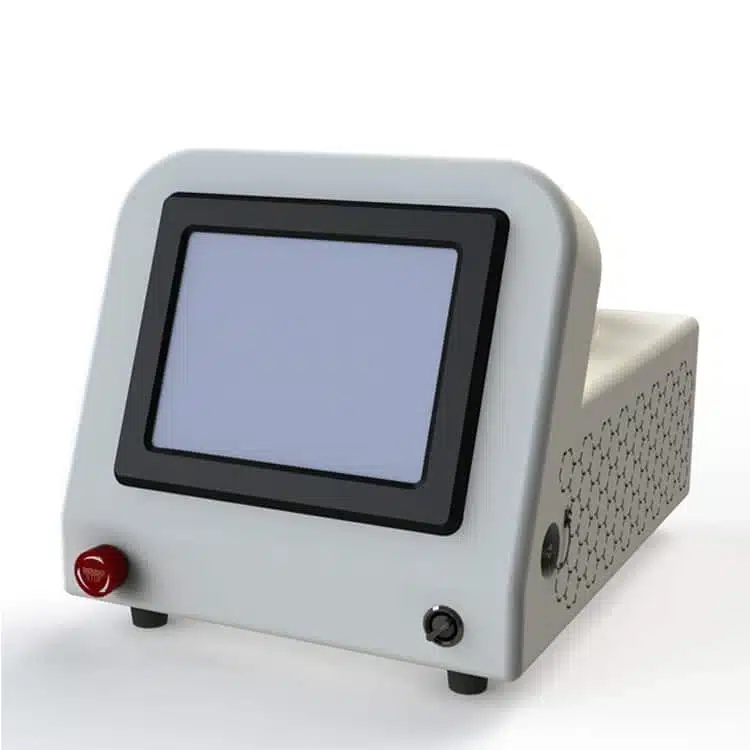
Vet clinics and distributors count on good diode laser setups for steady work. The AFL Medical 12-in-1 system with 980nm and 1470nm mixes healing physio modes with cutting exactness. It backs pain control, wound recovery, soft tissue work, and more in many vet uses.
As a professional manufacturer, supplier, and factory, Hangzhou Arfurla Science & Technology Co., Ltd. gives high-quality medical laser gear with OEM/ODM skills, good factory-direct prices, and full world help for vet work and distributors.
FAQ
Is laser therapy effective for arthritis in dogs?
Yes, clinical studies show reduced pain, lameness, and improved mobility as part of multimodal management.
How many sessions are typically needed?
Acute cases may improve in 3–6 sessions. Chronic conditions often require 6–12 initial treatments followed by maintenance.
Can the same machine support both therapy and surgery?
Yes, multifunction systems like the 980nm and 1470nm platforms handle both low-level photobiomodulation and higher-power surgical applications.
What factors influence treatment success?
Wavelength, dosage (J/cm²), coat color, and consistent protocols tailored to the individual dog.
Are there risks with veterinary laser treatment?
Risks are minimal with proper training and safety protocols.
Veterinary equipment distributors, clinic chains, and wholesalers seeking high-performance diode laser solutions should contact Arfurla for bulk procurement, OEM customization, and factory-direct pricing on the advanced 980nm 1470nm veterinary laser therapy and surgery machine.
Enhance your product portfolio with this reliable veterinary diode laser therapy machine backed by professional manufacturing expertise.
Reach out via email at info@arfurla.com or phone +86-1830-1023-578 to discuss distribution opportunities for the 980nm 1470nm multifunction veterinary laser therapy machine.