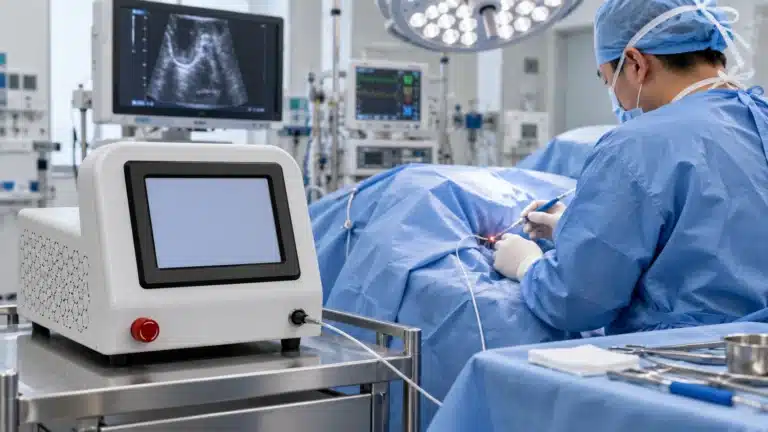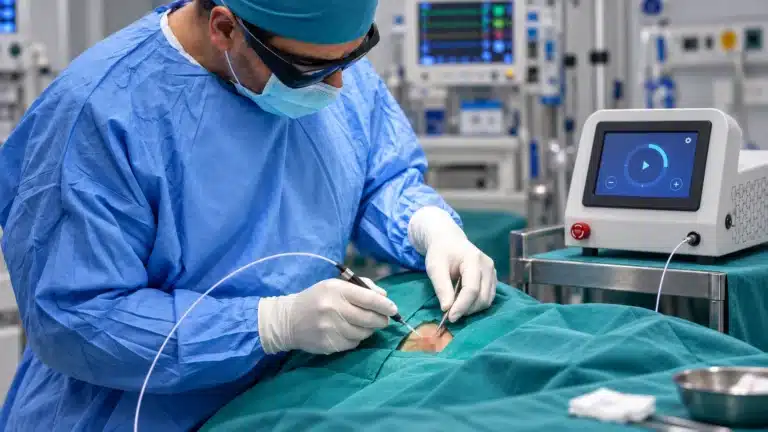
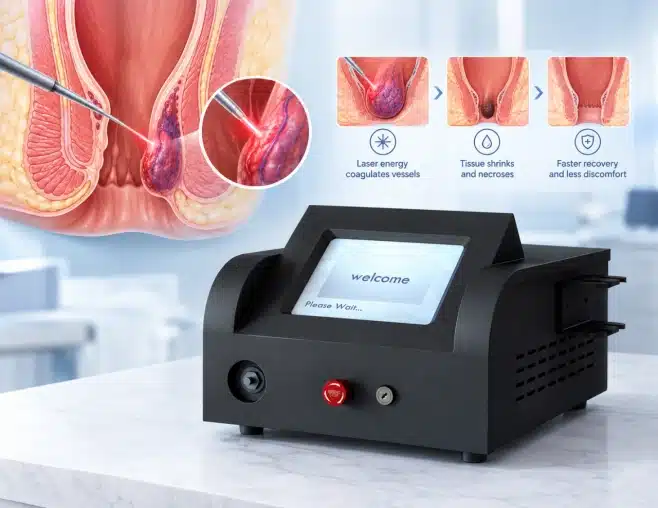
Anal fissure laser surgery is best evaluated as a clinical technology pathway, not as a universal replacement for established treatment. A diode laser platform can support controlled energy delivery, tissue coagulation, and minimally invasive access, but the useful result depends on diagnosis, patient selection, wavelength, output, fiber or handpiece, anesthesia, and the clinician’s protocol. For clinics and distributors, the central question is therefore not simply whether a laser can be used for a fissure. It is whether the complete system can be configured and supported for the intended proctology workflow.
Arfurla's AFL Medical 12 In 1 platform is presented as a multifunctional medical and beauty diode laser system with 650 nm, 980 nm, and 1470 nm platform wavelengths and twelve listed clinical functions. Its proctology application is one part of a wider platform that also includes vascular, surgical, gynecological, dental, physiotherapy, and veterinary applications. That breadth can be useful for a multi-service clinic, but each application still requires its own verified accessories, settings, training, and clinical controls.
What Anal Fissure Laser Surgery Involves
An anal fissure is a tear in the anoderm that can become chronic when pain and internal sphincter spasm maintain a cycle of trauma and delayed healing. In a laser-based approach, energy may be used to treat selected tissue, support hemostasis, or deliver a controlled therapeutic effect, depending on the technique. The term laser surgery is therefore too broad on its own. A clinician should define the target tissue, the intended endpoint, and whether the protocol is ablative, coagulative, or a non-ablative photobiomodulation approach.
This distinction matters when a clinic compares a diode laser with other surgical or conservative options. A device page may describe a wavelength and a proctology indication, while the actual procedure requires a specific fiber geometry, delivery route, energy pattern, and perioperative plan. The same console may also be used for hemorrhoid or fistula procedures, but that does not mean the same protocol can be transferred to an anal fissure without clinical validation.
How Diode Wavelengths Support Proctology Workflows
Wavelength selection is a practical design issue because tissue absorption influences how energy is delivered. In a dual-wavelength proctology system, 980 nm is commonly considered for vascular absorption and coagulation priorities, while 1470 nm is associated with strong absorption in water-rich tissue. These are not interchangeable labels: the desired clinical endpoint, tissue condition, power, pulse or continuous mode, and delivery accessory must be confirmed together.
For the device buyer, the useful specification is not a wavelength printed on a brochure. It is the degree of control available at the point of care. Ask whether the console supports independent selection of the advertised wavelengths, whether the interface makes output and mode changes clear, whether the system accepts the required fiber or handpiece, and whether the supplier can document the configuration for the intended market. The public proctology laser treatment overview describes 980 nm and 1470 nm as serving different absorption priorities, which is a useful starting point for a technical discussion rather than a substitute for a protocol.
Clinical Applications Beyond the Fissure
A proctology laser platform may be evaluated across several anorectal applications, but the clinical responsibility remains indication-specific. The public Arfurla application page identifies hemorrhoids, anal fissures, fistulas, and pilonidal sinuses within laser proctology. In practice, these conditions differ in anatomy, tissue target, access, and follow-up requirements.
Hemorróidas
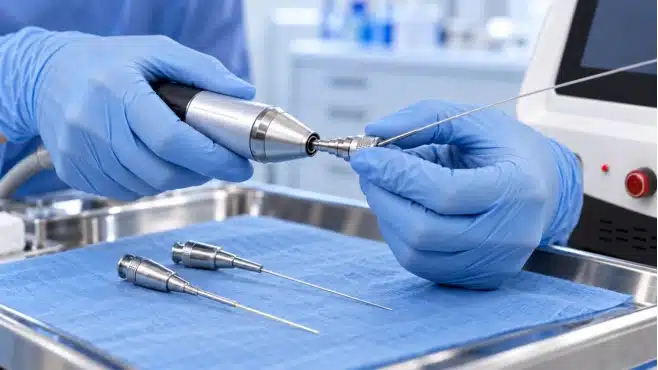
Laser hemorrhoido-plasty approaches use interstitial energy to treat selected hemorrhoidal tissue while aiming to limit disruption of the anoderm and mucosa. Device selection should focus on controlled delivery and compatible fibers or handles. A useful accessory reference is the hemorrhoids handle and fiber options, which helps buyers discuss the console and the delivery pathway as one system.
Anal Fistula and Pilonidal Sinus
Fistula and pilonidal sinus procedures involve tract management and are not simply variations of fissure treatment. They may require different access tools, fiber designs, and postoperative assessment. A supplier should explain which accessories are intended for each application and which claims are supported by the product’s labeling, training material, and local regulatory pathway.
Multi-Disciplinary Use
The 12-in-1 concept is most relevant when a clinic can actually use more than one clinical function. The platform page lists EVLT, surgery, ENT, gynecology, dentistry, PLDD, veterinary treatment, physiotherapy, and other applications in addition to proctology. The commercial value comes from a coherent configuration and utilization plan, not from counting functions that will never be used. Treatment-specific wavelength, output, and accessory requirements should be confirmed before procurement.
What Clinics Should Verify Before Adoption
Before adding an anal fissure laser surgery capability, a clinic should review the complete workflow from consultation to follow-up. The following questions keep the evaluation practical:
- Clinical scope: Which fissure, hemorrhoid, fistula, or pilonidal sinus procedures is the system intended to support, and which uses are outside the supplied documentation?
- Energy control: What wavelength, output range, operating mode, and aiming or feedback features are available for the selected configuration?
- Delivery accessories: Which fibers, handles, needles, or other accessories are compatible, and how are single-use or reusable items managed?
- Workflow: Can the console, footswitch, display, and accessories be integrated into the clinic’s room layout and sterile process?
- Training and service: What onboarding, troubleshooting, spare-part, warranty, and technical support arrangements are included for the target market?
- Compliance: Which labeling, documentation, electrical requirements, and local device obligations must be completed before clinical use?
What the Evidence Does and Does Not Show
Laser treatment for anal fissure remains a technique-sensitive area. A peer-reviewed report on laser treatment for anal fissure pain described meaningful pain reduction in its study population and reported no change in fecal continence over the follow-up period. The authors also identified important limitations, including a relatively small cohort, mixed acute, chronic, and postoperative cases, and the need for larger randomized studies with longer follow-up.
For equipment buyers, that evidence supports a measured position. It shows why clinicians may investigate laser-based options, but it does not establish one universal laser setting, guarantee an outcome, or prove that every diode console is equivalent. The supplier’s role is to provide a clearly defined system, application information, and technical support. The clinician’s role is to determine whether the technique is appropriate for a particular patient and practice.
Conclusão
Anal fissure laser surgery can be a relevant application for a diode laser platform when the clinical technique, wavelength, delivery accessory, and training pathway are aligned. A 980 nm and 1470 nm proctology system may also support a broader anorectal portfolio, but the value of a multifunction platform is realized only when each application is configured and governed separately. Clinics should compare controllability, accessory compatibility, workflow, evidence, service, and compliance rather than relying on a wavelength or a low headline price.
Perguntas frequentes
Is diode laser the same as traditional fissure surgery?
No. Laser-based techniques and conventional surgery have different mechanisms, instruments, and clinical protocols. The appropriate option depends on the diagnosis, patient factors, clinician expertise, and local practice standards.
Can a proctology laser used for hemorrhoids also treat anal fissures?
A platform may list both applications, but the indication does not automatically define the protocol. Verify the treatment method, accessory, energy parameters, training, and labeling for each use.
Does a 12-in-1 machine use one wavelength for every function?
Not necessarily. Multifunction platforms can use different wavelengths, outputs, modes, and accessories by clinical area. Ask for an application-specific configuration rather than assuming that one setting covers every treatment.
What should a distributor request from the manufacturer?
Request the intended-use statement, configuration options, compatible fibers and handles, training scope, service process, warranty terms, and market-specific documentation before presenting the system to a clinic.
Request an Application Fit Check
For a technical discussion, contact Arfurla’s technical team with the target clinical area, intended procedures, market, quantity, and preferred accessory configuration. The team can then confirm which 12-in-1 configuration should be evaluated rather than sending a generic machine description.