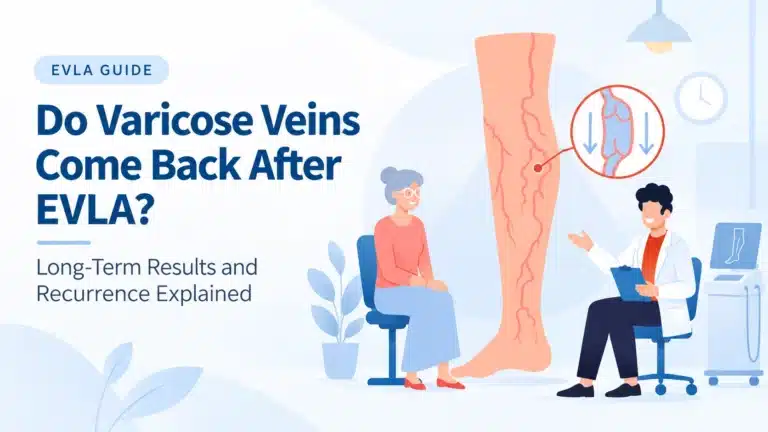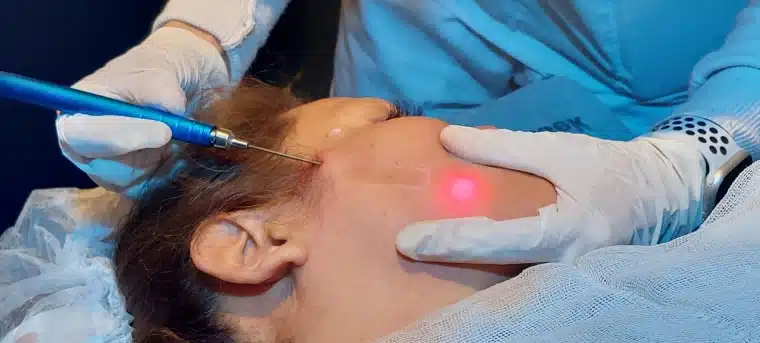
Varicose veins can come back after Endovenous Laser Ablation (EVLA), but recurrence does not always mean that the treated vein has reopened.
This distinction is important when evaluating EVLA recurrence and long-term treatment results. A vein successfully closed by EVLA may remain closed for years, while reflux later develops in another part of the venous system. In other cases, part of the treated vein may recanalize and regain blood flow.
For clinics, medical equipment distributors, and procurement teams, long-term EVLA results are therefore influenced by several factors: venous anatomy, accurate diagnosis, treatment planning, operator technique, follow-up, and consistent treatment delivery from the EVLT laser system.
Understanding these factors provides a more useful answer to the question: Do varicose veins come back after EVLA?
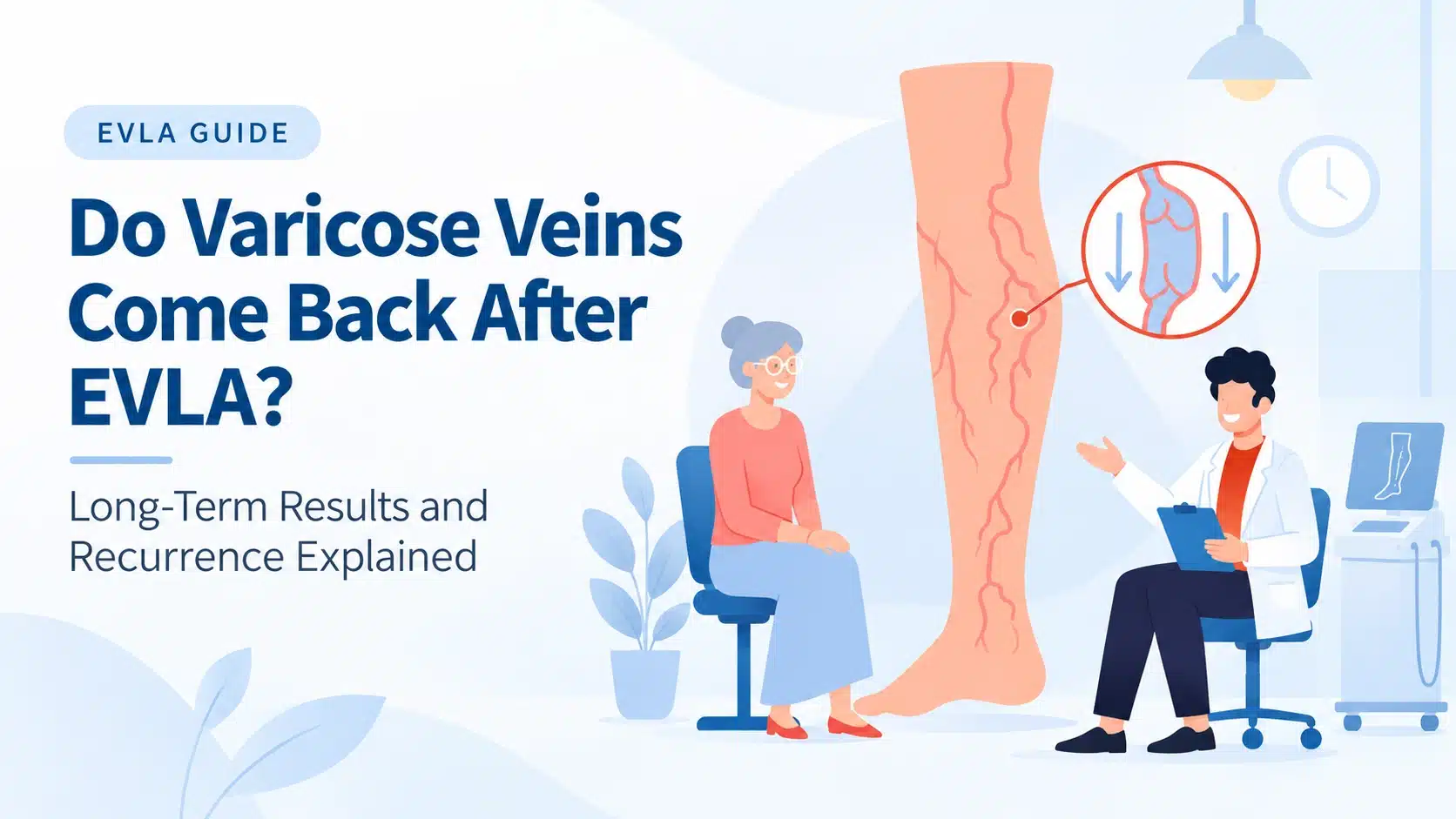
Can a Treated Vein Reopen After EVLA?
Yes. A previously treated vein can sometimes reopen after EVLA. This is called recanalization.
Recanalization can be partial or complete. Duplex ultrasound may show restored blood flow through a short segment or a larger part of the treated vein.
However, recanalization does not always mean that clinically significant varicose veins have returned.
Clinical significance depends on whether meaningful reflux has developed, how much of the vein has reopened, and whether the recurrent flow contributes to symptoms or visible varicosities.
Long-term EVLA studies therefore often distinguish between:
- Anatomical recanalization
- Recurrent venous reflux
- Clinically recurrent varicose veins
These outcomes should not be treated as interchangeable measures of treatment success.
A Reopened Vein vs New Varicose Veins: What’s the Difference?
This is one of the most important concepts in understanding varicose veins coming back after EVLA.
Recanalization of the Treated Vein
Recanalization means that blood flow returns through a previously closed vein segment.
If significant reflux develops within that segment, it may contribute to recurrent varicose veins. In other cases, a small reopened segment may have limited clinical significance.
New Reflux in Another Vein
A different form of recurrence occurs when the original treated vein remains closed but another vein becomes incompetent.
Research examining recurrence after EVLA has found that new reflux in the anterior accessory saphenous vein and small saphenous vein can be important causes of recurrent varicose veins. Recanalization of the previously treated segment is another possible pattern.
This creates an important distinction:
A successfully treated vein can remain closed while new varicose veins develop elsewhere.
For this reason, clinical recurrence does not automatically indicate failure of the original EVLA procedure.
Why Can Varicose Veins Return After EVLA?
Chronic venous disease can continue to progress after treatment.
EVLA closes a selected refluxing vein, but it cannot permanently eliminate the possibility that reflux may later develop in another venous pathway.
Potential causes of recurrence include:
- Partial or complete recanalization of the treated vein
- New anterior accessory saphenous vein reflux
- New small saphenous vein reflux
- Other untreated or newly developed reflux pathways
- Changes in venous anatomy over time
- Progression of chronic venous insufficiency
- Differences in initial diagnosis and treatment planning
- Variations in treatment delivery and technique
A systematic review of randomized trials found that recurrence after endovenous ablation can arise from several mechanisms. Recanalization was one important cause, while development of anterior accessory saphenous vein incompetence was another.
Long-term recurrence is therefore better understood as an outcome involving the whole venous system, rather than simply a question of whether a laser machine closed one vein.
What Do Long-Term Studies Show About EVLA?
Long-term studies indicate that EVLA can provide durable vein closure, although recurrent varicose veins can still develop.
In a randomized study involving 500 patients, the estimated five-year GSV recanalization rate after EVLA was approximately 6.8%.
In the same study, the estimated rate of recurrent varicose veins in the EVLA group was 38.6%.
The difference between these figures is highly relevant.
It demonstrates that clinical recurrence is not equivalent to reopening of the treated vein. A substantial proportion of recurrent veins can arise through other venous pathways.
Ten-year randomized data also support the durability of endovenous treatment. One study reported clinical recurrence in 37% of the EVLA group compared with 59% after conventional surgery, with long-term quality-of-life improvements maintained in both groups.
These percentages should not be treated as universal performance figures for every EVLT laser machine. Studies differ in patient selection, venous anatomy, treatment technique, laser technology, fiber design, follow-up duration, and definitions of recurrence.
What Factors Affect Long-Term EVLA Results?
Long-term treatment results depend on both clinical and technical factors.
Venous Anatomy and Diagnosis
Different reflux patterns require different treatment strategies.
Accessory veins, tributaries, junctional anatomy, and other refluxing segments can influence the likelihood of later recurrence. Accurate duplex mapping is therefore important for identifying the relevant venous pathways before treatment.
If another clinically important reflux source remains untreated, new varicosities can develop even when the original EVLA-treated vein stays closed.
Treatment Planning and Technique
Treatment length, fiber positioning, energy delivery, and clinical technique can affect how consistently the target vein is treated.
This is where the EVLT laser system becomes relevant. Equipment does not independently determine long-term recurrence, but it forms part of the treatment-delivery process.
Equipment and Treatment Consistency
A medical laser system should support repeatable treatment protocols through stable output and precise parameter adjustment.
For EVLT programs, relevant equipment characteristics can include:
- Stable laser energy output
- Accurate power adjustment
- Predictable energy delivery
- Compatible optical fibers
- Reliable procedural accessories
- Consistent operation across repeated treatments
These characteristics cannot prevent progression of venous disease, but they can help support standardized treatment delivery.
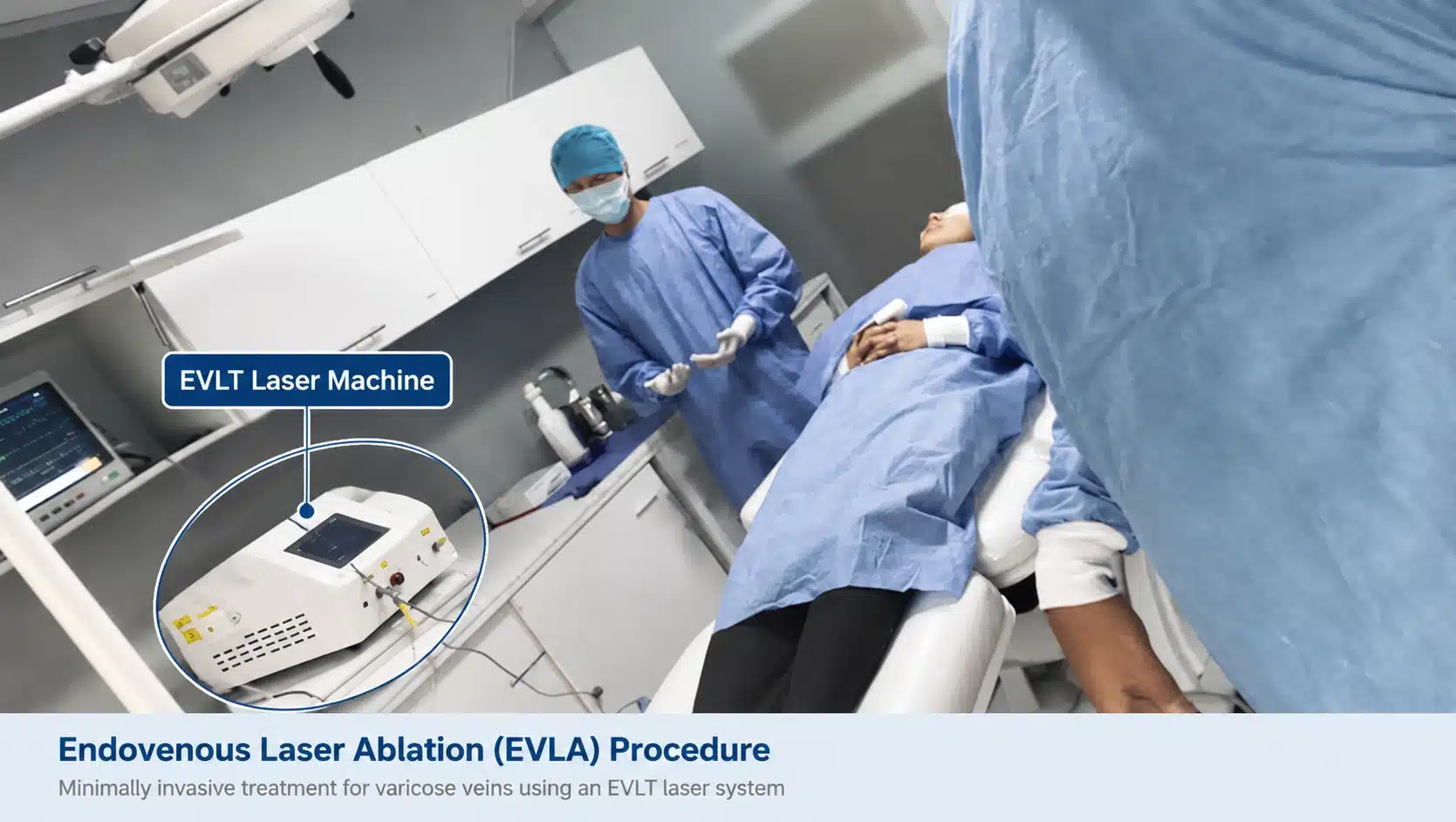
How EVLT Equipment Supports Consistent Treatment Delivery
An EVLT laser machine is not simply a source of laser energy. It is part of a treatment system involving the laser generator, optical fiber, catheter or introducer, ultrasound guidance, accessories, and trained clinical operators.
Stable and Adjustable Laser Output
Controlled treatment depends on the ability to select and maintain appropriate operating parameters.
Stable power output helps support consistent energy delivery throughout a procedure. For distributors and hospitals, this makes equipment reliability an important purchasing consideration alongside nominal power specifications.
Compatible Radial Fibers and Accessories
Laser energy must be delivered through an appropriate fiber system.
Arfurla’s EVLT configuration uses 1470 nm diode laser energy and lists a 600 μm radial fiber together with introducer catheters for endovenous applications. Its product information describes radial delivery as a method of distributing energy around the target vein wall.
For a distributor, compatibility between the laser platform, fibers, catheters, and other consumables is important because clinical customers require ongoing accessory supply after the initial equipment purchase.
Reliable System Performance
An EVLT machine may remain in clinical use for years. Long-term commercial value therefore depends not only on the original specifications but also on operational stability, servicing, replacement parts, and technical support.
This is particularly relevant to distributors managing multiple installed systems across hospitals or clinics.
Why Duplex Follow-Up Matters
When varicose veins appear again after EVLA, duplex ultrasound helps determine the actual source of recurrence.
Follow-up imaging can distinguish between:
- Recanalization of the previously treated vein
- Recurrent reflux within the treated segment
- New reflux in another saphenous vein
- Other newly developed venous pathways
This distinction is important because visible recurrent varicose veins alone do not identify the underlying mechanism.
Studies of post-EVLA recurrence have shown that new reflux in other saphenous veins can account for many recurrent varicosities.
Duplex follow-up therefore provides information that cannot be obtained from appearance alone.
Can EVLA Recurrence Be Completely Prevented?
No EVLA system or treatment protocol can guarantee that varicose veins will never return.
EVLA can provide durable closure of a selected refluxing vein, but chronic venous disease may progress elsewhere.
For this reason, claims that a particular laser machine can completely eliminate long-term recurrence should be treated cautiously.
A more accurate assessment considers three separate outcomes:
- Whether the treated vein remains closed
- Whether new reflux develops in another vein
- Whether clinically significant recurrent varicose veins appear
Reliable equipment can support consistent treatment delivery, but venous anatomy, diagnosis, disease progression, clinical technique, and follow-up remain important determinants of long-term outcomes.
What Should EVLT Equipment Buyers Look For?
For medical equipment distributors, importers, hospital procurement departments, and private-label partners, an EVLT laser machine should be evaluated as a complete long-term treatment platform rather than as a single capital purchase.
Stable Energy Delivery
The laser system should support reliable and controllable output suitable for standardized treatment protocols.
Fiber and Accessory Compatibility
Availability of compatible fibers, introducer catheters, and procedural accessories is important for supporting ongoing clinical use.
Long-Term Consumable Supply
A distributor needs continued access to commonly replaced components after systems have been installed in the market.
Supply continuity can therefore be as important commercially as the machine specification itself.
Training and Technical Support
Product installation, operating guidance, technical troubleshooting, application training, and after-sales service can help distributors support their clinical customers.
Manufacturer and OEM/ODM Capability
For regional distribution and private-label projects, factory capability, engineering support, customization, documentation, and quality-management processes are important procurement factors.
Arfurla states that it has its own R&D department, factory, and engineering teams and provides OEM and ODM services for distributors worldwide. The company’s OEM/ODM information also states that it has obtained ISO 9001:2015 certification.
Arfurla EVLT Laser Platform for Medical Equipment Distributors
Com Arfur provides EVLT capability within its medical diode laser portfolio.
Its EVLT configuration incorporates 1470 nm laser energy, a 600 μm radial fiber, and introducer catheter accessories for endovenous treatment.
Arfurla also offers a multifunction medical diode laser platform. Its physiotherapy wavelengths include 810 nm, 980 nm, and 1064 nm, while the 650 nm physiotherapy laser has an output power of 500 mW. The 1470 nm wavelength is used for EVLT and is not part of the physiotherapy configuration.
For this recurrence-focused topic, however, the number of functions is not the main consideration. For EVLT distributors, the more relevant purchasing factors are treatment consistency, fiber compatibility, accessory availability, equipment reliability, technical training, and long-term supplier support.
FAQ About EVLA Recurrence
Do varicose veins come back after EVLA?
Yes. Varicose veins can develop again after EVLA. Recurrence can result from reopening of the treated vein or from new reflux developing in another venous pathway.
Does recurrence mean the EVLA treatment failed?
Not necessarily. The treated vein may remain completely closed while another vein develops reflux. Clinical recurrence and treated-vein recanalization are therefore different outcomes.
What is recanalization after EVLA?
Recanalization means that blood flow returns through part or all of a vein previously closed by EVLA. Its clinical importance depends on the amount of reopening and whether significant reflux develops.
Can new varicose veins develop when the treated vein remains closed?
Yes. New reflux can develop in other veins, including accessory or small saphenous veins. This is one established mechanism of recurrent varicose veins after EVLA.
Does the EVLT laser machine affect treatment results?
The machine is one part of the treatment system. Stable laser output, accurate parameter control, compatible fibers, and reliable accessories can support consistent treatment delivery. Long-term results also depend on anatomy, diagnosis, treatment planning, operator technique, and disease progression.
Is 1470 nm used for EVLT treatment?
1470 nm diode laser systems are used for endovenous applications. Arfurla’s EVLT configuration uses 1470 nm laser energy together with a 600 μm radial fiber and introducer accessories.
Partner with an EVLT Laser Manufacturer and Supplier
Arfurla provides EVLT laser systems, radial fibers, accessories, OEM/ODM services, and technical support for distributors and medical equipment buyers.
For EVLT laser wholesale, distributor cooperation, OEM/ODM, or quotation requests, contate Arfurla for more information.