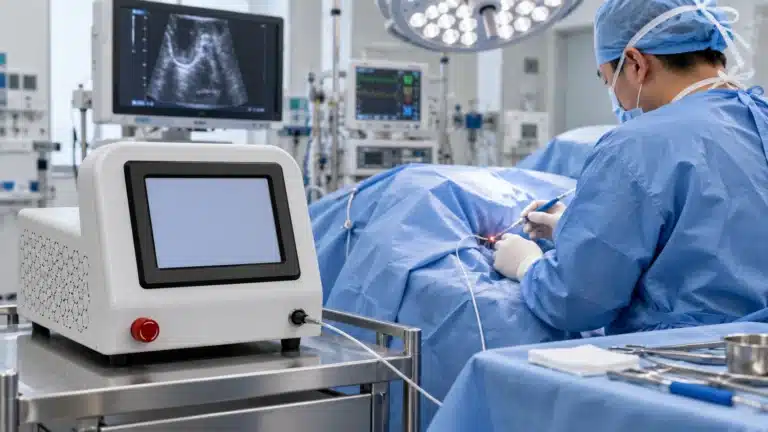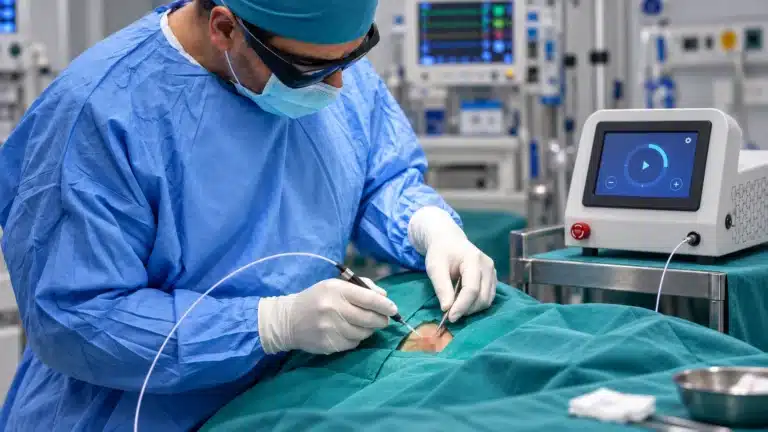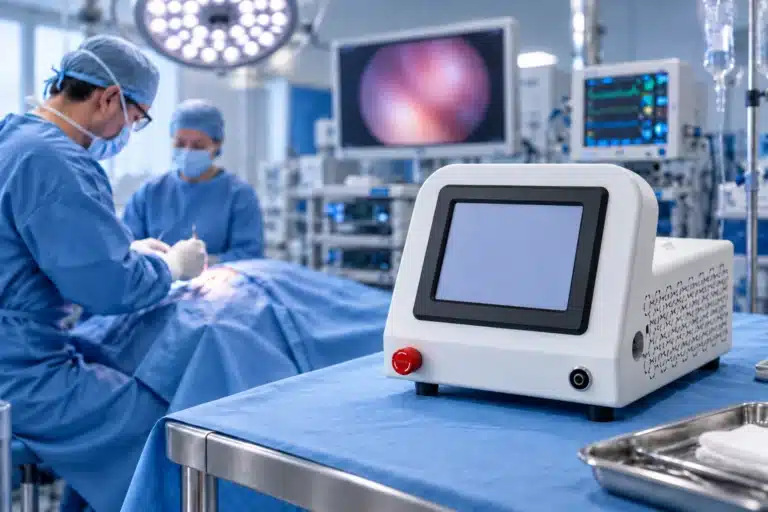
Endovenous laser ablation is usually referred to as EVLA and is also known as endovenous laser treatment or EVLT. In contrast to surgery to strip away the vein, a laser fiber is inserted into the vein and energy is applied to close the vein. The vein closes down, and blood flows into other veins.
From a hospital’s, vein clinic’s, distributor’s, and purchasing staff’s perspective, knowing the clinical process will help in evaluating the equipment. Wavelength, fiber compatibility, output management, accessory kits, training, services, and regulatory documentation all contribute to the value of an EVLT laser device.
What Is Endovenous Laser Ablation (EVLA)?
EVLA is used for the treatment of varicose veins that are connected to venous reflux/insufficiency. Valves that do not work properly can lead to reverse blood flow that causes blood pooling and enlargement of superficial veins as well as heaviness, ache, swelling and skin alterations.
EVLA uses laser energy to heat up the vein wall and cause controlled closure. Remodeling of the vessel occurs after closure by the body and circulation through other healthy vessels goes on. According to the NICE, endothermal ablation which includes EVLA should be used as an intervention for the treatment of proven varicose veins with truncal reflux.
Modern technology uses a 1470nm diode laser with a radial fiber. The comparison studies have shown less pain and bruising after using the 1470nm laser and radial fiber in comparison with 980nm laser and bare-tip fiber without compromising the closure rate.
The EVLA Procedure
Pre-Procedure Preparation
Normally, preparation starts with a medical assessment and a duplex ultrasound. Ultrasound scans are used to detect the presence of reflux and determine the target vein for therapy. Treatment targets usually include the great saphenous vein, small saphenous vein, and some accessory veins.
Other issues considered during the preparation phase include medication, allergies, past thrombosis, and others which might influence the therapy process. Preparation must be done according to the physician’s instructions.
Procedure Overview
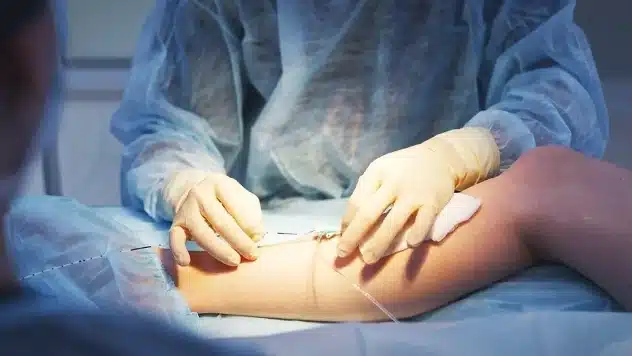
EVLA is generally performed as an outpatient procedure under local or tumescent anesthesia with ultrasound guidance. The workflow typically includes:
- Vein access:A needle and introducer are placed into the selected vein through a small skin puncture.
- Laser fiber insertion:A thin optical fiber is advanced through the catheter to the planned position.
- Tumescent anesthesia: Dilute local anesthetic is delivered around the vein for comfort and thermal protection.
- Laser energy delivery:Energy is applied while the fiber is withdrawn, causing the vein wall to contract and close.
- Fiber removal and dressing:The devices are removed, the access site is dressed, and compression may be applied.
- Early mobilization:Walking is commonly encouraged soon after treatment.
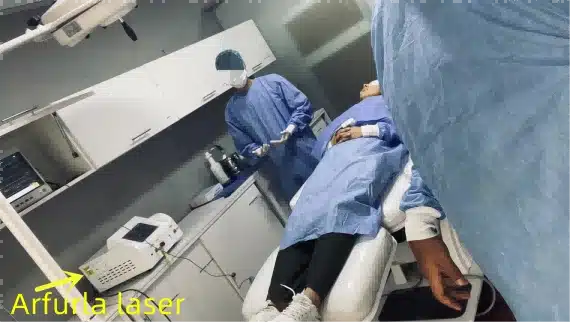
EVLA treatment commonly takes approximately 30 to 60 minutes, depending on the vein anatomy and number of segments being treated. Arfurla’s EVLT application information presents an approximately 45-minute, ultrasound-guided procedure using local anesthesia and a 1470nm laser.
Recovery After EVLA
Immediate Post-Procedure
The EVLA procedure is usually performed without the need for staying at the hospital for an overnight stay. Most patients are able to resume their normal activities very quickly; however, depending on the individual needs, work, the amount of veins being treated, anesthesia, and recovery period, this might vary. The NHS recommends that patients should be able to return home on the same day of the procedure and resume most of their normal activities almost instantly.
It is recommended that the patient walk, while avoiding exercises, lifting of heavy weights, immobilization, and standing for a few days.
Managing Discomfort and Swelling
Temporary bruising, tightness, tenderness, or a pulling sensation along the treated vein can occur. Pain and bruising are among the most frequently reported short-term effects.
A recovery plan may include:
- Wearing compression stockings or bandages for the prescribed period
- Taking approved pain relief according to medical instructions
- Walking regularly and avoiding prolonged sitting
- Keeping the puncture site clean
- Delaying intense exercise until clinically cleared
However, complications are rare and can include deep vein thrombosis, neural symptoms, burns to the skin, infections, and/or phlebitis. Any new leg swelling, chest pain, trouble breathing, excessive bleeding, fever, or increasing pain should be evaluated by a medical professional immediately.
Post-Procedure Follow-Up
Follow-up practice differs among clinics. Duplex ultrasound may be used to confirm vein closure and check for thrombotic complications. Clinical review can also assess bruising, pain, puncture-site healing, residual tributary veins, and symptom improvement.
Additional treatment may be required for visible branch varicosities. EVLA closes the refluxing source vein, but it does not guarantee that every surface vein will disappear after one session.
Long-Term Recovery
Most short-term discomfort improves over days or weeks. Symptom relief and cosmetic change may continue as the treated vein is remodeled. EVLA has demonstrated strong closure outcomes, but venous disease can progress and new refluxing veins may develop over time.
Why Choose Arfurla for EVLT/EVLA Laser Equipment?
Arfurla markets a 650nm, 980nm, and 1470nm multifunction medical diode laser platform with 12 selectable applications. Its published range includes EVLT, vascular treatment, lipolysis, physiotherapy, proctology, ENT, dentistry, gynecology, PLDD, surgery, and veterinary use.
For EVLT applications, the company highlights 1470nm operation, a 600μm radial fiber, and introducer catheters.
For distributors and procurement buyers, a multifunction platform may support broader portfolio planning and allow one equipment category to address several clinical departments. Each application still requires suitable accessories, treatment protocols, clinician training, and market-specific regulatory authorization.
Arfurla describes itself as a high-tech equipment company with in-house research and development, production, sales, after-sales service, and its own factory. The company also states that OEM and ODM services are available for distributors.
Its official website lists a two-year warranty, online technical support, and spare-parts assistance.
Before placing an order, procurement teams should confirm:
- Exact wavelength and power configuration
- Continuous and pulsed operating modes
- Radial-fiber sizes and connector compatibility
- Included catheters, introducers, and accessories
- Electrical standard and interface language
- Operator training and technical support
- Warranty coverage and spare-parts availability
- Production lead time and packaging requirements
- Model-specific regulatory documents for the destination market
FAQ
Is EVLA the Same as EVLT?
EVLA and EVLT generally describe the same endovenous thermal laser technique. “Ablation” emphasizes closure of the vein, while “treatment” is an alternative term commonly used in clinical and commercial materials.
Why Is 1470nm Commonly Used for EVLA?
The 1470nm wavelength is strongly absorbed by water, supporting efficient heating of the vein wall. When paired with a radial fiber, energy can be distributed circumferentially around the vessel.
Comparative studies have reported less postoperative pain and bruising with 1470nm radial-fiber treatment than with 980nm bare-tip treatment.
How Long Does an EVLA Procedure Take?
Treatment time depends on anatomy and the number and length of veins. Many clinical resources describe an outpatient procedure completed in approximately 30 to 60 minutes.
How Fast Is Recovery After EVLA?
Many patients walk soon after treatment and resume routine activities quickly. Minor pain, bruising, or tightness can persist for several days or weeks. Return-to-work timing depends on physical demands and clinical instructions.
What Should B2B Buyers Evaluate in an EVLT Laser Machine?
Key criteria include wavelength, stable power delivery, pulse modes, radial-fiber compatibility, catheter options, safety controls, serviceability, operator training, clinical documentation, OEM/ODM capability, warranty coverage, and regulatory suitability for the destination market.
Buyers should also evaluate the supplier’s production capacity, response time, accessory availability, technical support process, and experience serving international distributors.
Partner With an EVLT Laser Manufacturer, Supplier, and Factory
Arfurla supports medical equipment distributors, importers, clinic groups, and procurement organizations seeking a direct EVLT laser manufacturer and supplier.
As a factory with in-house R&D, production, OEM/ODM capability, and after-sales support, Arfurla can provide equipment configuration details, radial-fiber and catheter options, technical documents, quotations, branding solutions, and distributor cooperation information.
For product specifications and commercial terms, contact Hangzhou Arfurla Science & Technology Co., Ltd. at info@arfurla.com or +86-1830-1023-578, or submit the clinical-area inquiry form through the official contact page.