A clinic should select a HIFU cartridge by matching four things: the approved host system, the intended treatment zone, the manufacturer-defined focal depth, and the cartridge’s verified operating life. A depth label alone is not a compatibility guarantee. Connectors, cartridge recognition, software, firing format, counter logic, and regional configuration can all differ between systems that look similar. The safest purchasing rule is simple: identify the exact machine and handpiece first, then ask the supplier to confirm the specific cartridge code in writing.
This HIFU cartridge guide focuses on equipment configuration and clinic operations. It does not replace the device manual, local regulations, or patient-specific clinical training. Those sources must control treatment planning and operation.
What HIFU cartridge labels tell you
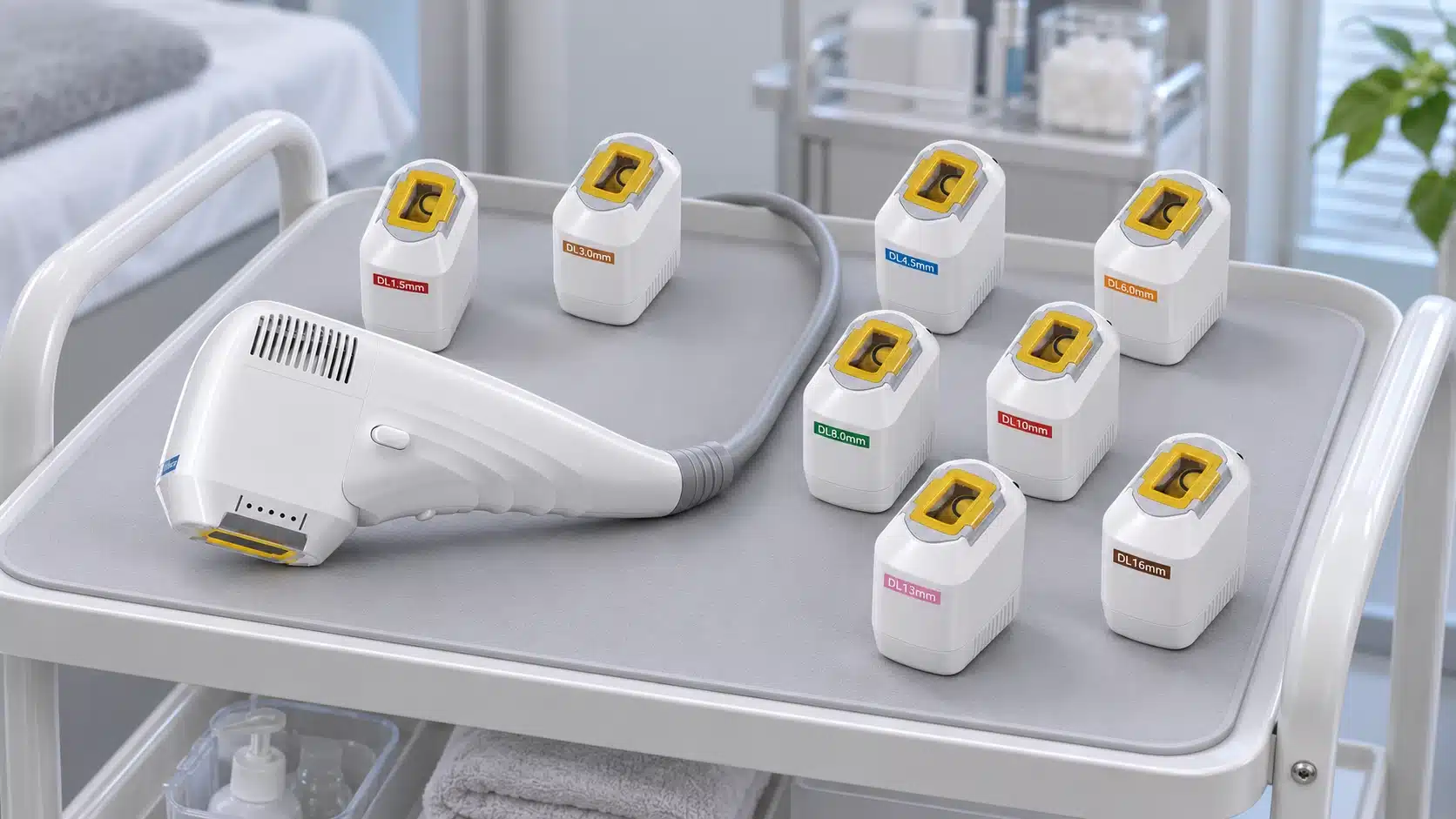
The millimeter value on a cartridge normally identifies its nominal focal depth. It is not an energy setting and should not be interpreted as a universal treatment prescription. A clinic must still use the parameters, approved indications, and operating method specified for its exact system.
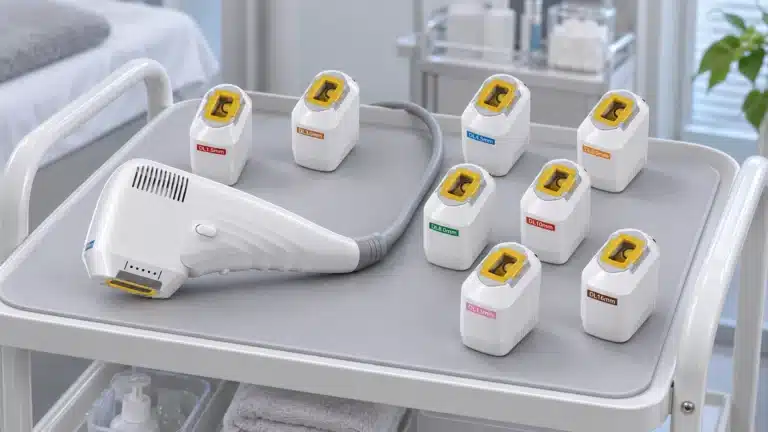
Der Arfurla ICE HIFU 12 cartridge page lists 1.5 mm, 3.0 mm, and 4.5 mm face cartridges, plus 6.0 mm, 8.0 mm, 10 mm, 13 mm, and 16 mm body cartridges. That range helps a buyer see how one platform may cover different working depths. It does not mean every depth is suitable for every patient, anatomical area, or market. Before ordering, the clinic should map each cartridge to the approved use shown in the supplied manual and training materials.
Terminology also varies. One manufacturer may describe a cartridge, transducer, probe, or treatment head, while another uses those terms for different components. Use the product code, serial information, connector type, and host-system name as the purchasing identifiers. Do not rely on a generic listing title such as 7D HIFU cartridge.
Build a compatibility matrix before ordering
A short compatibility matrix prevents most accessory purchasing errors. Start with the machine name, model number, serial number, software version, handpiece version, and market configuration. Add the cartridge part number, connector or locking format, supported depth, recognition method, and expected counter behavior. Ask the supplier to approve the completed matrix rather than giving a general verbal assurance that the cartridge will fit.
Compatibility should cover more than physical connection. Some systems identify a cartridge electronically, store usage data, or limit operation when its counter reaches an endpoint. A cartridge that attaches but is not recognized correctly is not compatible.
Use the same process for every module on a multifunction system. Arfurla’s portable 7 in 1 aesthetic platform combines HIFU with other handpieces, so its asset list should separate HIFU accessories from RF, Liposonic, EMRF, and cooling components.
Verify shot count and service life definitions
Search results often advertise a cartridge by a large number of shots, lines, or dots. These terms are not automatically equivalent. Ask the supplier what the counter measures, whether one trigger can produce multiple treatment points, where the remaining count is displayed, and whether the count is stored in the cartridge, handpiece, or host machine.
The quoted count should be treated as a model-specific rated capacity, not a universal promise. Usable life may also be limited by the manual’s inspection criteria, storage requirements, physical condition, recognition status, or a confirmed fault. A clinic should never continue using a cartridge simply because the screen shows remaining counts when the accessory is damaged or behaves abnormally.
Request a screenshot or video showing recognition and the remaining count on the exact machine. Ask whether replacement requires activation and what evidence supports a warranty claim.
Replacement triggers
Replace or quarantine a cartridge when it reaches the manufacturer’s stated endpoint, fails recognition, has a damaged housing or connector, produces repeated fault messages, or shows another condition identified in the manual. Stop operation and contact technical support if the system reports unstable output, unusual noise, overheating, or another unexplained change. Do not refill, open, reseal, or repair a cartridge unless the manufacturer has supplied a documented procedure and has authorized the person performing it.
Match the cartridge set to the service mix
Buying every available depth is not always the best opening configuration. Review the clinic’s approved service menu, expected appointment mix, practitioner training, room schedule, and reorder lead time. A clinic focused on facial services may need a different starting inventory from a center that has trained staff, suitable protocols, and demand for body applications.
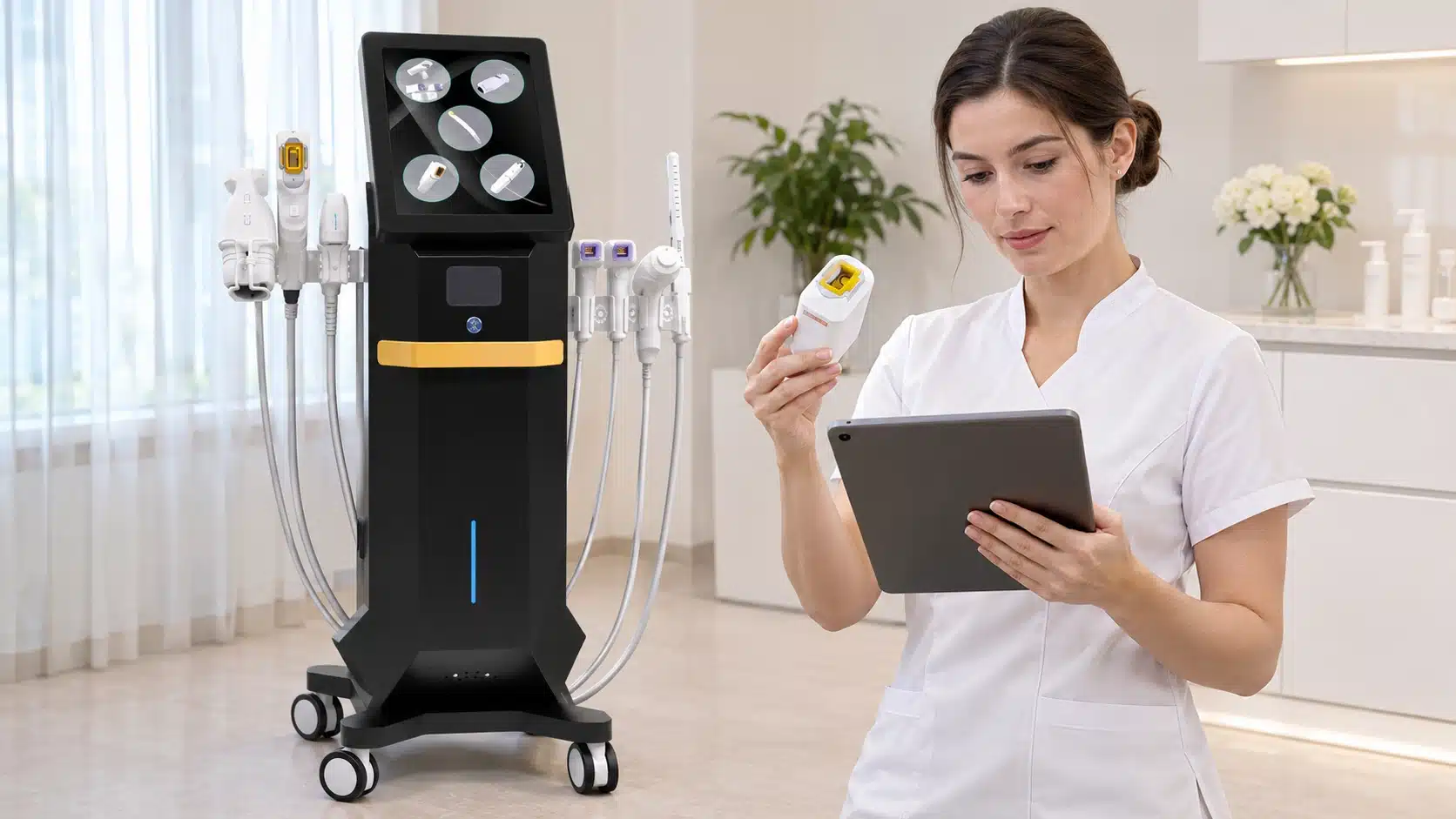
For each planned service, record the required cartridge category, expected monthly use, minimum backup quantity, and supplier lead time. Keep at least one clear record of which machine accepts each stocked cartridge. If a clinic operates both a vertical 7 in 1 aesthetic platform and another HIFU system, store cartridges separately unless the supplier confirms cross-compatibility in writing.
Compare cost per usable unit
Purchase price alone can be misleading. Calculate cost using the confirmed rated count, the clinic’s actual usage records, expected wastage during setup, freight, import charges, replacement lead time, and warranty conditions. The useful comparison is cost per usable line or per planned appointment under the clinic’s own protocol, not the largest advertised count.
Keep the calculation conservative until the clinic has real usage data. A low price may be offset by poor documentation, slow replacement, or recognition errors.
Inspect cartridges when they arrive
Receiving staff should compare the shipment with the purchase order before it enters clinical stock. Confirm the product code, depth, host model, connector, serial or batch information, packaging, count, and documentation.
Perform the acceptance check using the supplier’s instructions and without delivering a treatment. Confirm that the host recognizes the cartridge, displays the correct depth and count, and shows no fault. If any field differs from the order, quarantine the accessory and resolve the discrepancy before use.
Request operating, cleaning, storage, and replacement instructions during procurement. Arfurla describes manuals and technical assistance on its service and support page. Confirm which terms apply to the specific model, country, and sales agreement.
Use a cartridge purchasing checklist
Before approving a HIFU cartridge order, verify the following points:
- Exact host-machine model, serial number, software version, and handpiece generation
- Cartridge part number, focal-depth label, connector, and electronic recognition method
- Approved face or body use according to the supplied manual and local requirements
- Definition of a shot, line, or dot and the location of the usage counter
- Rated count, replacement criteria, shelf or storage conditions, and warranty scope
- Included consumables and any separate films, seals, or coupling accessories
- Reorder lead time, backup-stock recommendation, and evidence required for a claim
- Training, acceptance-test instructions, and escalation contact for technical faults
Abschluss
A reliable HIFU cartridge decision begins with system identification and ends with documented acceptance. Depth, advertised count, and price matter, but none of them can replace verified compatibility. Clinics that maintain a model-specific matrix, define count terminology, track real usage, and separate incompatible stock can reduce ordering mistakes and make cartridge costs easier to forecast.
For a cartridge configuration review, send Arfurla the machine model, handpiece details, required depths, expected service mix, and destination market through the product inquiry page.
Häufig gestellte Fragen
Are all HIFU cartridges interchangeable
No. Similar depth labels or housings do not prove compatibility. The host model, handpiece generation, connector, recognition method, software, and approved accessory code must match.
What do 1.5 mm 3.0 mm and 4.5 mm mean on a HIFU cartridge
They normally refer to nominal focal depths defined for that system. They should not be treated as universal energy settings or patient-selection rules.
How long does a HIFU cartridge last
Service life is model-specific. Confirm how the manufacturer defines and records shots or lines, then follow the stated count limit, inspection criteria, storage instructions, and fault guidance.
Should a clinic buy every available cartridge depth
Not automatically. The opening set should reflect the clinic’s approved services, staff training, expected demand, treatment-room workflow, and replacement lead time.
Can a clinic refill a HIFU cartridge
Only when the manufacturer provides a documented procedure and authorizes the person performing it. Unapproved opening or refilling can affect performance, safety, traceability, and warranty coverage.