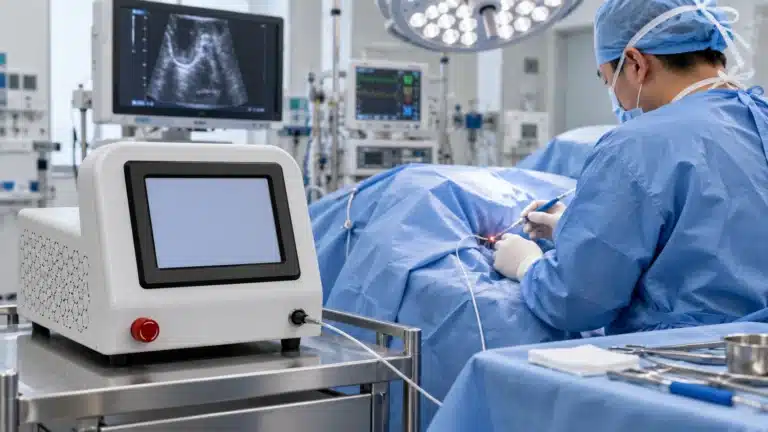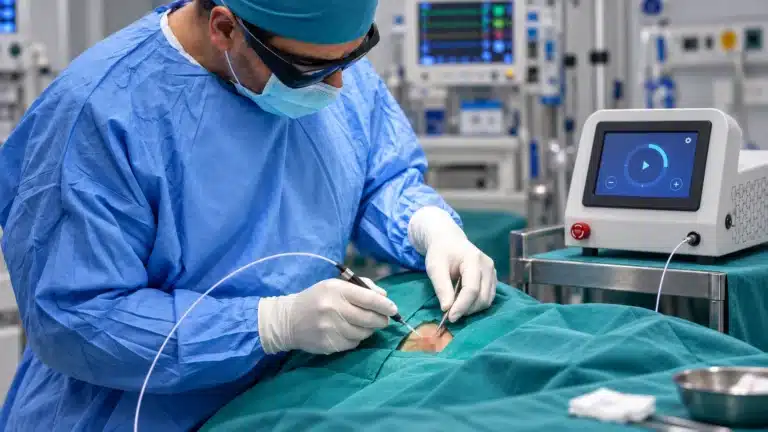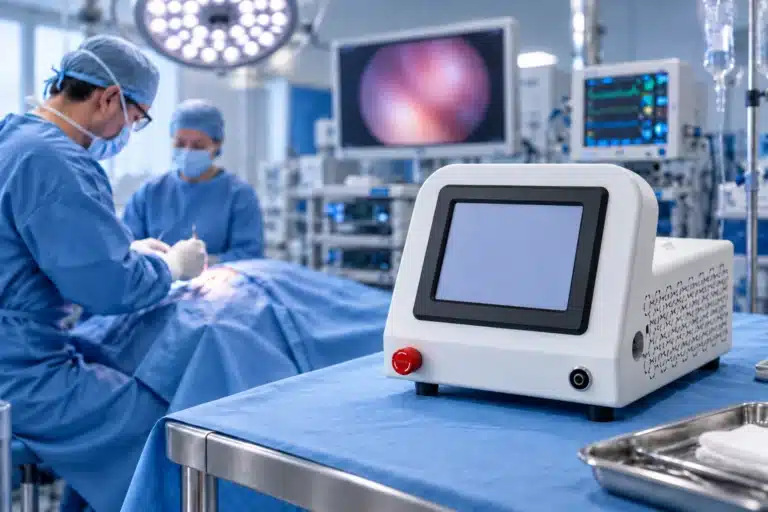
Varicose veins develop when superficial leg veins become enlarged and dysfunctional, often because venous valves no longer prevent backward blood flow effectively. Venous reflux may contribute to bulging veins, aching, swelling, heaviness, and skin changes. Endovenous laser therapy, abbreviated as EVLT and also called endovenous laser ablation or EVLA, treats an incompetent vein from inside the vessel with controlled thermal energy. Clinical guidance recognizes endothermal ablation as a leading option for suitable patients with confirmed truncal reflux.
For medical equipment distributors, hospital purchasing departments, vascular clinics and regional medical equipment, equipment and supplies suppliers, EVLT is a well known, minimally invasive procedure and therefore a well known category of equipment and supplies. A complete EVLT solution includes a diode laser system, fibers, introducer sheath, etc. as well as training, instructions, consumables, and maintenance support.
Understanding Endovenous Laser Therapy
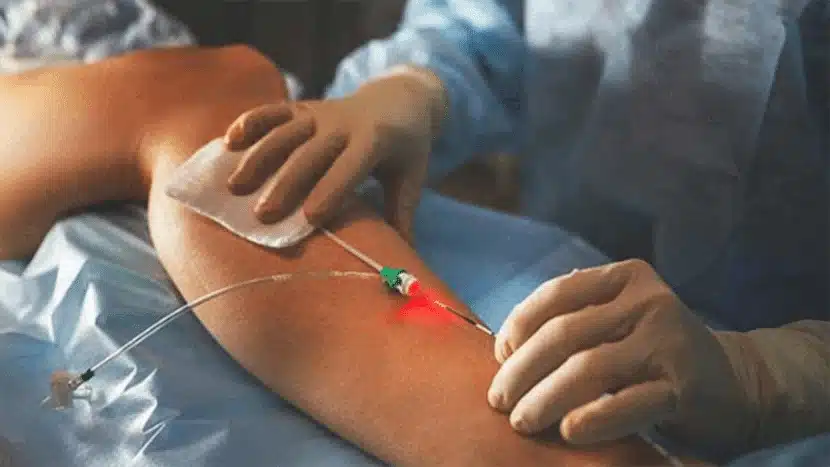
EVLT is a catheter-based procedure used to close an incompetent superficial vein. Under ultrasound guidance, a clinician advances a laser fiber through the target vessel and delivers energy while withdrawing the fiber. The energy heats the vein wall, causing contraction and eventual fibrotic closure. Blood is then redirected through functioning veins.
What is Varicose veins
Varicose veins are often a visible sign of venous reflux. Healthy valves support one-way blood flow toward the heart. When valves become incompetent, blood can move backward and increase pressure within superficial veins. Closing the refluxing trunk can reduce abnormal flow and support symptom improvement in appropriately selected cases.
Duplex ultrasound maps venous anatomy, confirms reflux, identifies the target segment, and supports procedural planning. Treatment selection depends on anatomy, symptoms, comorbidities, local clinical standards, and regulatory requirements. NICE defines truncal reflux as valve incompetence in vessels such as the great saphenous, small saphenous, or anterior accessory saphenous vein.
The Role of 1470nm Laser Energy and Radial Fibers
A 1470nm diode laser is widely associated with modern EVLT systems because its energy is absorbed by water-rich tissue in the vein wall and blood. Radial fibers distribute energy around the vessel circumference rather than primarily forward from the fiber tip. Clinical studies have evaluated 1470nm EVLA with radial fibers and reported effective vein closure with favorable tolerability.
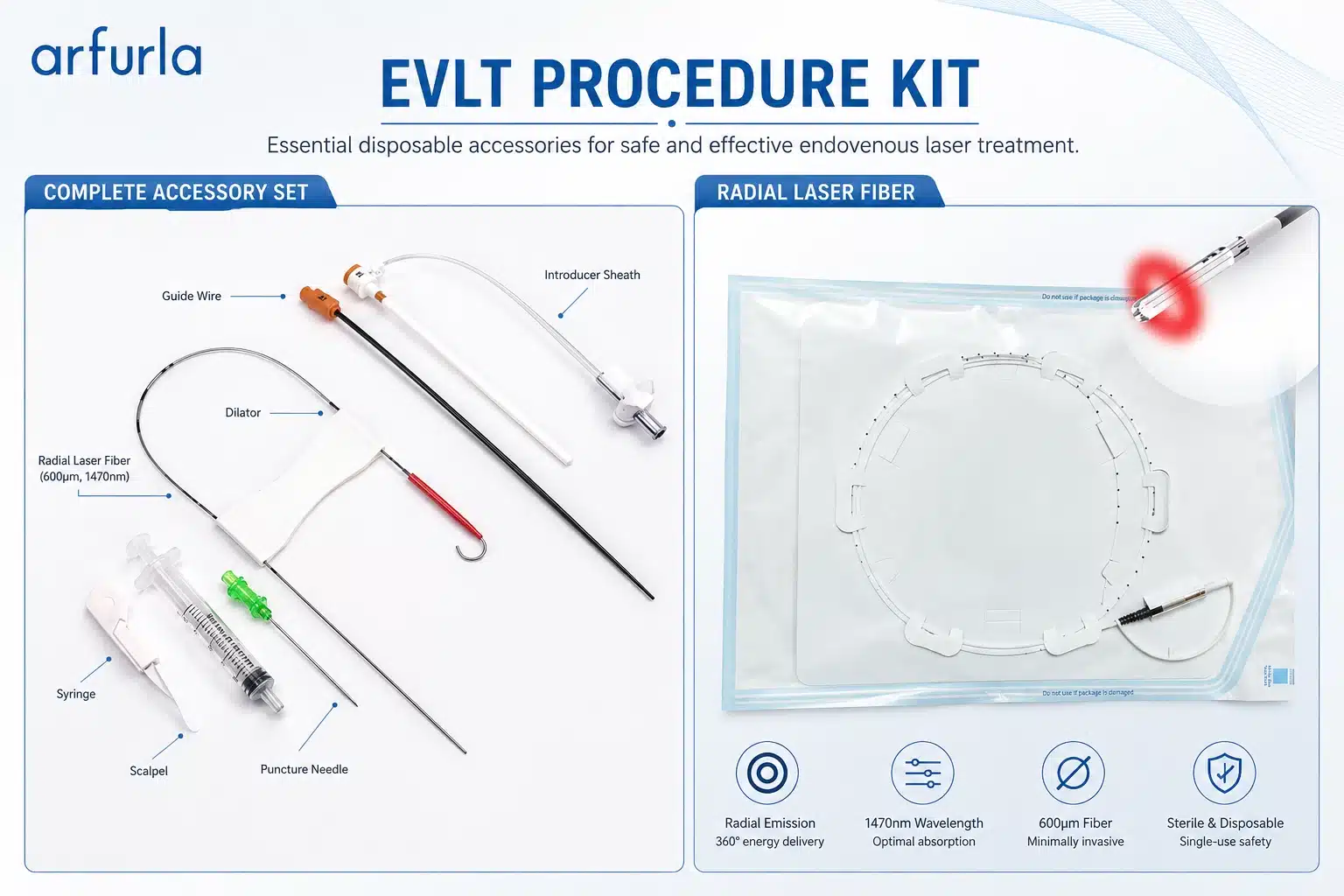
Arfurla is offering an EVLT configuration using 1470nm diode laser energy delivered through a 600μm radial fiber and an introducer catheter. Additionally, Arfurla is offering 650nm, 980nm and 1470nm three-wavelength 12-in-1 diode laser system for various medical, esthetic and veterinary applications including EVLT, physiotherapy, lipolysis, spider vein treatment, onychomycosis, proctology, ENT, gynecology, dentistry, PLDD, soft-tissue surgery and veterinary treatments.
EVLT Procedure Overview
The EVLT workflow typically includes several coordinated stages. Exact protocols, energy parameters, accessories, and disposables vary according to the laser system, vein anatomy, and clinician preference.
1. Consultation and Assessment
A vascular specialist assesses your symptoms, medical history, previous treatments and risks. Duplex ultrasound of the superficial and deep venous systems can identify reflux in the great saphenous vein, small saphenous vein and even the accessory saphenous veins.
2. Preparation and Local Anesthesia
Before treating the targeted vein it is important to clearly mark the treatment area with temporary marker and set up in a sterile field. As mentioned before local or tumescent anesthesia is often injected along the length of the targeted vein to deliver local analgesia during the procedure.
3. Catheter and Laser Fiber Placement
Venous access is gained by a small skin puncture. A introducer catheter or sheath is advanced within the affected vein under ultrasound guidance and the laser fiber is positioned correctly, especially when in close proximity to a venous junction with the deep venous system.
4. Laser Activation and Controlled Withdrawal
The laser is fired as the fiber is slowly withdrawn from the treatment area at a controlled rate. The heat from the laser causes the vein wall to contract and causes permanent change/ damage to the vessel resulting in closure. A radial fiber is used to deliver energy circumferentially around the entire wall of the vessel. It is essential that all parameters are set in line with the manufactures instructions, used by trained clinicians, for the correct vessel size and in line with the relevant treatment guidelines.
5. Post-Procedure Care and Follow-Up
After fiber removal, the access site is dressed. Walking is commonly encouraged following treatment, while compression practices differ according to clinical judgment and local guidance. Follow-up ultrasound may be used to confirm vein closure and evaluate for complications.
Potential risks include bruising, pain, nerve irritation, skin injury, inflammation, burns, and blood clots. All risks, contraindications, and post-treatment instructions must be assessed and managed by appropriately qualified medical professionals.
How 1470nm EVLT laser Treats Varicose veins
EVLT addresses venous reflux by eliminating the abnormal flow pathway rather than physically stripping the entire vein from the leg. The treated vein collapses, seals, and is gradually remodeled by the body. Blood continues to circulate through healthier venous channels.
Treating the Source of Reflux
Some tributaries may be visible but connect to an incompetent truncal vein. By closing the refluxing trunk, the abnormal pressure that is feeding these branches is eliminated. Remaining surface varicosities can then be treated with a phlebectomy or with an ultrasound-guided sclerotherapy.
Thermal Closure and Blood Rerouting
Laser energy is absorbed by the target tissue and converted into heat, resulting in a controlled photothermal effect. This effect causes denaturation of collagen in the endothelium and vein wall resulting in contraction and subsequent fibrosis. As a result of these changes the treated vein is occluded and no longer permits abnormal retrograde flow. Blood is then rerouted through surrounding functional veins.
Benefits of 1470nm EVLT Laser for Vein Treatment
EVLT offers several advantages in terms of clinical benefits and operating convenience for the appropriate patient treated by the adequately trained professional.
- Minimally invasive access: A small percutaneous entry point replaces the larger incisions associated with traditional vein stripping.
- Ultrasound-guided precision: Ultrasound is used to guide procedures such as Acupoint Stimulation under real-time imaging to map out veins, position fibers and to monitor the procedure.
- Local-anesthesia workflow: Most EVLT procedures can be done with local anesthesia.
- Outpatient potential: Most treatments are of the office-based or ambulatory type and do not require an overnight stay in the hospital.
- Reduced recovery burden: Patient return to routine activity is generally achieved in a short period of time. Individual patient recovery is variable.
- Established clinical role: NICE recommend endothermal ablation as the first interventional treatment for suitable patients with confirmed varicose veins and truncal reflux.
- Platform value for B2B buyers: A multifunction diode laser system can support a larger equipment base when the laser wavelengths, accessories, documentation for clinical use and regulatory status for the intended market all match.
For distributors and procurement teams, clinical capability is only one part of equipment evaluation. Purchasing criteria should also cover laser output specifications, radial fiber compatibility, disposable supply, quality-control documentation, certification scope, warranty terms, installation, training, maintenance, spare parts, OEM/ODM options, and technical response times.
FAQ About EVLT
Is EVLT the Same as EVLA?
EVLT means endovenous laser therapy or endovenous laser treatment, while EVLA means endovenous laser ablation. Both terms generally describe the same catheter-based laser procedure used to close an incompetent vein.
Why Is 1470nm Commonly Used for EVLT?
1470nm has high water absorption to enable controlled thermal interaction with the vein wall. The same parameters as for effects – pulse parameters, withdrawal speed, vessel diameter and fiber – determine the energy that is delivered.
What Is the Function of a Radial Fiber?
Radial fibers emit laser energy in a circular fashion around the end of the fiber, as opposed to forward emitting bare fibers. This form of fiber distribution is superior for distributing energy evenly along the inner wall of the vein, during procedures such as EVLT. 600μm radial fibers are commonly used for 1470nm EVLT and a model of these fibers are listed by Arfurla.
Does EVLT Remove Every Visible Varicose Vein?
No, the EVLT treatment closes the source of the refluxing vein. Any remaining surface tributaries could be treated with phlebectomy or with sclerotherapy, as determined by your clinical plan.
Partner with an EVLT Laser Manufacturer, Supplier, and Factory: Arfurla
Hangzhou Arfurla Science & Technology Co., Ltd. is a well-known medical and aesthetic laser manufacturer, supplier, factory, research and development, production, sales and after-sales service company. Arfurla factory has its own engineering team which supports OEM and ODM projects for local distributors from all over the world.
Arfurla 980nm/1470nm multifunction medical diode laser platform for EVLT with 1470nm, radial fiber and introducer for distribution in vascular, physiotherapy, surgical, aesthetic, dental, gynecological, proctological, orthopedic and veterinary medicine, 3-wavelengths 12-in-1 distribution platform to be registered in local markets and used in intended applications.
Distributors | Medical equipment importers | Procurement teams | Wholesalers | Private-label partners
- Full machine specifications and available configurations
- Certification and quality-control documents
- Radial fiber and catheter accessory lists
- OEM/ODM branding options
- Distributor pricing and wholesale quotations
- Product installation and operation training
- Warranty and technical support terms
- Consumable and spare-parts supply plans
Looking for quotes for EVLT laser treatments, would like to cooperate with distributor or would like to get some quotation from OEM/ODM, please feel free to Kontaktieren Sie Arfurla info@arfurla.com / +86-1830-1023-578.