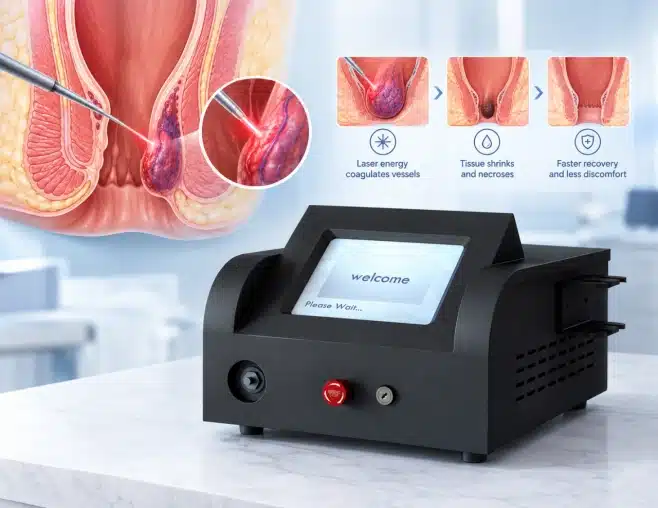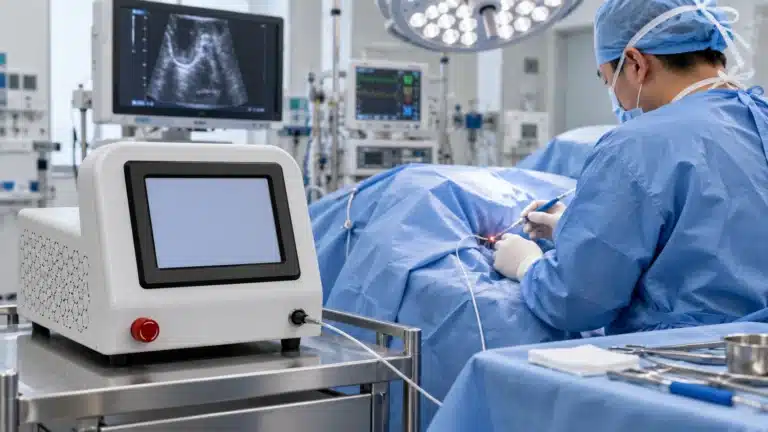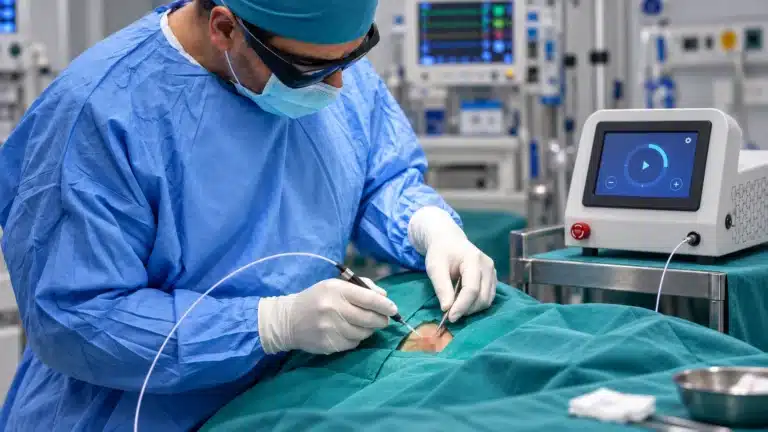
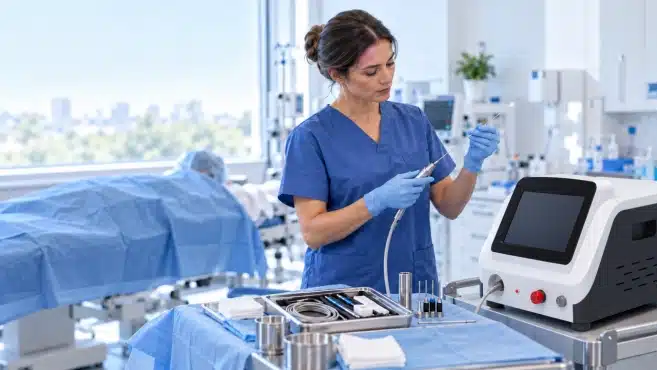
Proctology laser machine cost is difficult to compare from a single listing price. A clinic is not buying a console in isolation; it is buying a configured workflow that may include wavelength options, fibers, handpieces, safety controls, training, documentation, warranty, and technical support. A distributor must also consider packaging, market requirements, replacement accessories, and customer support. The most useful comparison is therefore a like-for-like total acquisition and ownership review.
Arfurlas 980nm and 1470nm diode laser machine category presents a multifunction medical platform rather than a single-purpose proctology console. The related AFL Medical 12 In 1 platform lists three wavelengths and twelve functions, including proctology, EVLT, surgery, physiotherapy, dentistry, gynecology, ENT, PLDD, and veterinary treatment. Its value depends on actual use of those applications and accessories.
Why Headline Prices Are Not Comparable
Two suppliers can describe products as proctology laser machines while offering very different systems. One quote may include a basic diode source with limited accessories. Another may include dual-wavelength control, delivery tools, application support, and a broader platform. The difference may appear before freight, taxes, installation, training, or compliance work.
Online listings also make comparison harder because price can be tied to a minimum order, a specific power level, a single fiber, or a non-clinical demonstration configuration. The buyer should treat any public listing as an initial reference only. A defensible purchase decision requires a written quote that identifies the exact model, wavelength, output, accessories, service scope, and commercial terms.
The Main Cost Drivers to Compare
1. Laser Source and Control Architecture
Start with the source, not the product name. Confirm whether the quote includes 980 nm, 1470 nm, or both; whether output can be adjusted for the intended application; and whether operating modes, aiming functions, alarms, and safety interlocks are part of the supplied configuration. A higher-cost system may be justified when control and repeatability reduce workflow friction, while a lower-cost system may be unsuitable if the required wavelength or output range is missing.
2. Fibers, Handles, and Treatment Accessories
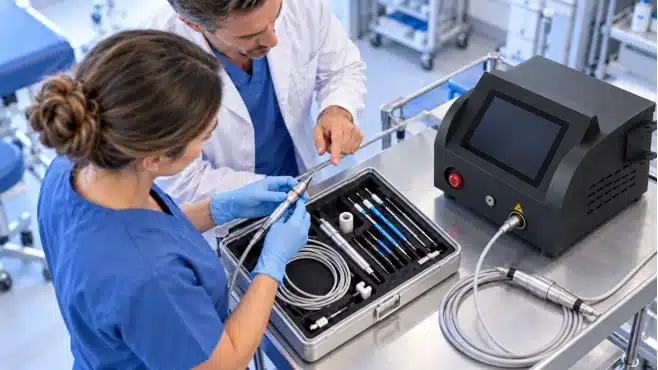
Accessories can materially change the delivered cost. Proctology may require a hemorrhoids handle, compatible fibers, and other procedure-specific tools. Compare what is included, what is optional, how each item is packaged, and whether replacement items are readily available in the target market. Arfurla’s hemorrhoids handle and fiber reference is a useful example of why the delivery accessory should be evaluated alongside the console.
3. Number of Functions That Will Actually Be Used
A 12-in-1 platform can be commercially attractive when a clinic or distributor serves multiple specialties. However, a function should count as value only when the buyer can identify the related clinical demand, accessory set, training pathway, and service plan. If the customer only needs hemorrhoid or fissure procedures, a broader platform may still be useful, but the additional functions should not be used to obscure missing proctology requirements.
4. Training, Documentation, and Service
The purchase price is only one part of implementation. Ask what product orientation is included, who provides technical troubleshooting, how software or hardware issues are handled, what warranty coverage applies, and whether spare parts or replacement accessories are available. Clinics should also clarify which clinical training is expected to come from the treating physician’s own institution or local education pathway. A supplier should not imply that equipment training is a substitute for clinical qualification.
5. Compliance and Market Readiness
A quote should identify the documentation available for the destination market, including labeling, manuals supplied at the appropriate stage, electrical specifications, packaging, and any importer or distributor responsibilities. Requirements vary by country and intended use. If a supplier cannot clearly state which documents are included and which must be completed locally, the apparent low cost may simply transfer work and risk to the buyer.
Clinic and Distributor Priorities Are Different
A clinic normally evaluates the system through daily use: procedure fit, ease of setup, staff training, room footprint, accessory availability, cleaning workflow, service response, and the confidence that the quoted configuration matches the intended procedures. The decision may also include whether one platform can support several departments without creating a complicated handover between teams.
A distributor has an additional layer of commercial risk. The distributor must understand which configurations can be sold in each market, whether OEM or ODM customization is available, how product naming and packaging will be managed, and how technical questions will be escalated. Arfurla identifies OEM and ODM cooperation as part of its business offering, so distributors should ask which customization options are practical for the selected platform and which changes affect documentation or lead time.
Build an Apples-to-Apples RFQ
Before requesting or comparing quotations, prepare a short specification brief. It should include:
- Target applications: for example, hemorrhoids, anal fissure, fistula, pilonidal sinus, EVLT, or other clinical areas.
- Required wavelength and output configuration, including whether one or multiple wavelengths are needed.
- Accessory list: fibers, handles, needles, adapters, footswitches, and any procedure-specific consumables.
- Quantity, destination country, shipping terms, packaging requirements, and expected replacement-part demand.
- Training, warranty, service response, spare-parts plan, documentation, and the point of contact for technical support.
- Any branding, language, labeling, or OEM/ODM requirements for a distributor or private-label program.
Then ask each supplier to separate the quote into the console, accessories, training, shipping, and optional items. This format makes it easier to identify whether a low price reflects a lean configuration or simply excludes important parts of the implementation.
How to Think About Total Cost of Ownership
A practical total-cost model includes the system, required accessories, replacement items, shipping and import costs, training, service, warranty, and downtime exposure. Distributors should also include demo inventory, local support, translation or labeling, and replacement-stock costs. The purpose is to avoid comparing a complete clinical package with a base-unit listing.
A multifunction platform can reduce the need to buy several separate consoles, but that benefit depends on utilization. If the same clinic can use proctology, EVLT, soft-tissue surgery, and other listed functions, shared equipment may improve asset utilization. If the additional functions are never used, the broader platform may add complexity without creating operational value. Ask for an application map and a configuration-specific quote before making that judgment.
Questions to Ask Before Accepting a Quote
- Which exact wavelengths and output controls are included in this quotation?
- Which proctology procedures and accessories does the quoted configuration support?
- Which items are included, optional, consumable, or replacement parts?
- What training is provided for operation and maintenance, and what remains the clinic’s clinical responsibility?
- What documentation is available for the destination market and which obligations fall to the importer?
- What is the process for technical support, warranty service, spare parts, and configuration changes?
Abschluss
There is no universal proctology laser machine cost that can be judged without a configuration. Clinics and distributors should compare the complete system: source and wavelength control, procedure-specific accessories, real application needs, training, service, documentation, and total ownership exposure. A multifunction 12-in-1 platform may be a strong fit when its clinical functions can be used and supported. The right next step is a configuration-specific RFQ, not a decision based on the lowest number in a marketplace listing.
Häufig gestellte Fragen
Why do proctology laser machine prices vary so much?
Prices may reflect different wavelengths, output levels, accessories, service packages, order quantities, shipping terms, and market documentation. A base console and a complete clinical package are not equivalent.
Is a 12-in-1 laser machine always more cost-effective?
Not automatically. It can be valuable when a clinic or distributor will use several supported functions. If only one narrow application is needed, compare the broader platform’s complexity and accessory requirements against the expected utilization.
Should a clinic buy the laser and accessories from different suppliers?
It may be possible, but compatibility, warranty responsibility, training, and service become more difficult to manage. A single coordinated quote can make the system boundary clearer.
What information should a distributor include in a quotation request?
Include target applications, market, quantity, wavelength and output needs, accessories, branding or labeling requirements, shipping destination, and the expected service and documentation package.
Request a Configuration-Based Quote
To compare a proctology laser machine fairly, contact Arfurla with your application and RFQ details. Include the destination market, clinical areas, quantity, preferred wavelength, accessory needs, and any OEM or distributor requirements so the quotation can be matched to a real configuration.