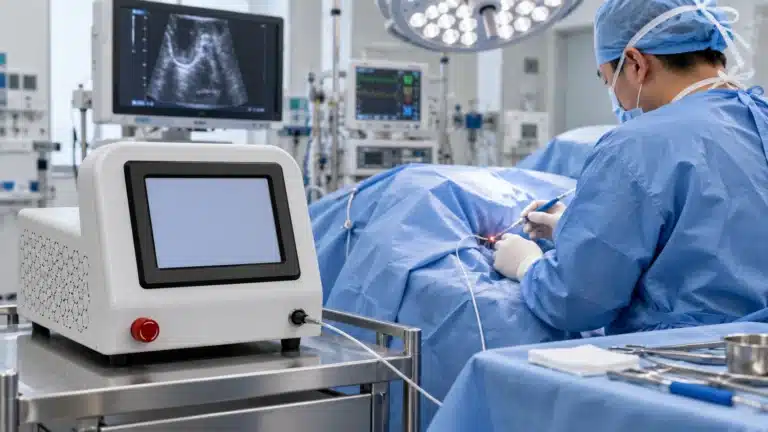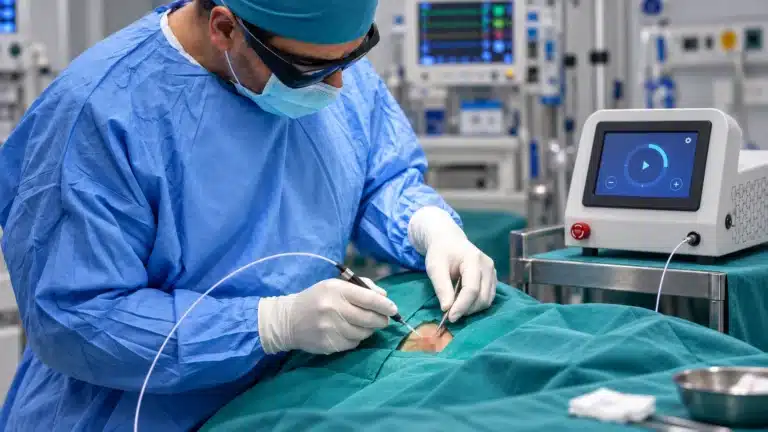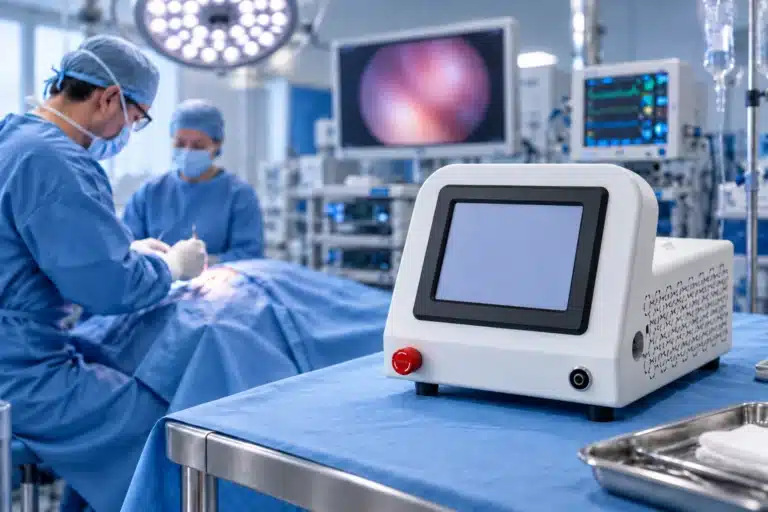
Class IV lasers have emerged as one of the most significant classes of technology for use by physical therapy clinics, pain management facilities, sports medicine physicians, orthopedics, and even distributors of medical devices. These high-power lasers are capable of delivering clinically determined levels of energy to a wider surface area within a reasonable period of time.
For B2B buyers, purchasing decisions require more than a wattage figure. Wavelengths, operating modes, accessories, safety controls, training, regulatory documentation, service capacity, and total platform utilization all influence commercial value.
Why High-Power Laser Matters in Modern Spine Care
Laser treatment is often employed as part of an adjunct procedure in a broader framework of rehabilitation. Controlled trials among patients suffering from chronic low back pain and neck pain have demonstrated improvements in pain, functional disabilities, and mobility, but outcomes differ depending on protocol, diagnosis, comparison group, and study design. Class IV laser treatment can be a useful component in musculoskeletal care, but proper marketing must not promise any guarantee.

Photobiomodulation and Tissue Response
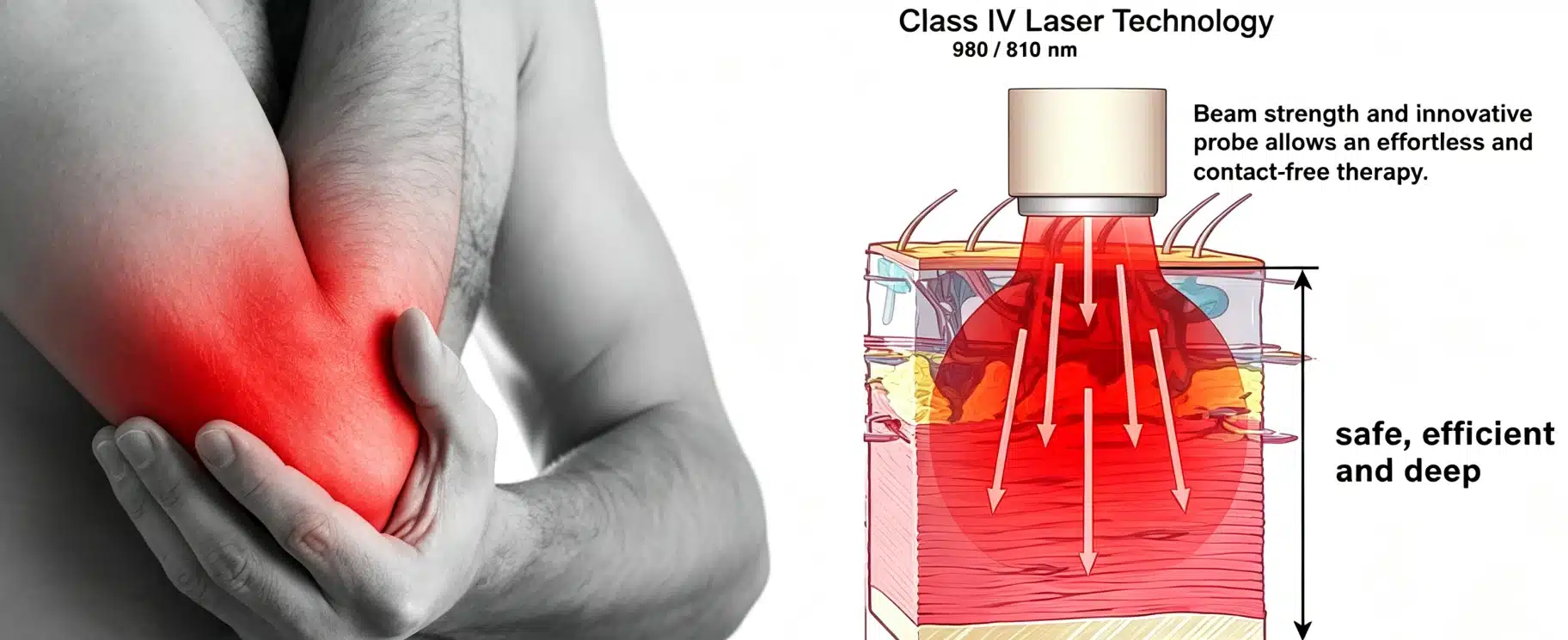
Photobiomodulation refers to biological responses that occur due to the absorption of light at specific wavelengths in the tissues. In this physiotherapy platform, the available near-infrared wavelengths are 810nm, 980nm, and 1064nm. Studies in vitro have revealed that exposure to red and near-infrared light can produce biological responses related to the mitochondria, metabolism, membrane potential, and oxidative-reductive activities. Nevertheless, all these depend on the wavelength and dosage of light.
Relevant treatment variables include:
- Delivered energy and power density
- Wavelength and absorption characteristics
- Spot size and applicator movement
- Continuous or pulsed operation
- Tissue depth and treatment area
- Clinical indication and treatment objective
Commercial Value of a High-Power Platform
For clinics and distributors, high-power equipment can support:
- Efficient energy delivery over broad treatment areas
- Adjustable protocols for different tissue targets
- Integration with exercise, manual therapy, and rehabilitation
- Greater daily utilization when multiple applications are supported
This combination can help distributors position Máquinas de terapia láser de clase IV as clinical workflow platforms rather than single-purpose devices.
Frequency of Treatments for Back and Neck Pain
Frequency of treatment is also not standardized. In practice, clinical and commercial protocols for the treatment will generally involve short cycles lasting over several weeks with subsequent assessment as the condition of pain and mobility improves. However, the exact treatment cycle is up to a licensed therapist based on the machine’s user manual and the diagnosis.
Protocol Variables for Clinics
A responsible protocol framework considers:
- Acute versus chronic presentation
- Treatment location and estimated tissue depth
- Wavelength and output mode
- Total joules and treatment duration
- Pain score and range of motion
- Functional response after earlier sessions
- Concurrent exercise or physical therapy
- Contraindications and medication history
Programmable presets can simplify operator onboarding and improve workflow consistency. However, presets should not replace clinical judgment, product-specific training, or market-specific operating requirements.
How Many Sessions Are Needed?
Number of sessions is contingent on individual patient’s reaction and not on some pre-sales promise of a certain number of treatments. Research protocols may vary greatly, and some clinics will analyze pain, mobility, disability scores, ability to tolerate activities, and side effects following the initial block of treatment.
This fact has great relevance for procurement processes. It is necessary that a laser therapy machine class IV should have controllable parameters, consistent output, comfortable applicators, and educational material. Also, it is recommended to check from distributors whether the language of software and treatment interface, handpieces, presets, and manuals are suitable for the market.
It is better to position treatment packages as a program of clinicians’ recommendations and not a certain number of treatments.
Cost and Insurance Realities
For healthcare providers, the economic case may be based on cash-pay services, packaged rehabilitation programs, or inclusion within a broader treatment plan. Reimbursement differs by country, payer, indication, and coding policy, so universal insurance claims are inappropriate.
B2B buyers should calculate total cost of ownership, including:
- Machine, accessories, consumables, and replacement fibers
- Shipping, import duties, and product registration
- Operator and distributor training
- Warranty, maintenance, and technical support
- Expected daily treatment volume
- Revenue from additional approved applications
Safety Profile, Side Effects, and Drawbacks
Class IV is a laser hazard classification, not an efficacy rating. The FDA states that Class IV lasers can present immediate eye and skin hazards from direct or reflected exposure and may also create a fire hazard. Professional operation therefore requires engineering controls, appropriate wavelength-specific eyewear, warning labels, controlled treatment areas, trained personnel, and documented procedures.
Temporary warmth, redness, discomfort, or symptom aggravation may occur when parameters are unsuitable. More serious injury can result from incorrect technique, excessive energy, damaged accessories, stationary application, or inadequate eye protection.
Essential Procurement Safety Checks
A distributor or procurement team should request:
- Laser classification and labeling information
- Output calibration and quality-control records
- Emergency stop and key-switch details
- Interlock and foot-control information
- Protective eyewear specifications
- Contraindication and risk-management documentation
- Installation and maintenance procedures
- Operator and distributor training materials
- Destination-market regulatory documents
Medical laser requirements vary by jurisdiction. For example, the FDA requires laser products marketed in the United States to satisfy applicable radiation-emitting product and medical-device regulations.
Conditions Treated in Orthopedic Spine Care
Class IV laser therapy is commonly positioned for musculoskeletal and rehabilitation applications such as:
- Nonspecific low-back or neck pain
- Muscle strain and myofascial pain
- Tendon and ligament rehabilitation
- Joint stiffness and mobility programs
- Sports-related recovery
- Selected postoperative rehabilitation pathways
Clinical trials have examined high-intensity laser therapy in chronic back pain, chronic neck pain, myofascial pain, and cervical radiculopathy. Results are promising in some populations, but dosing methods and comparative outcomes remain heterogeneous.
Clinical claims should remain aligned with the registered indications of the specific machine. Evidence from one device, wavelength, or treatment protocol should not be extended automatically to every high-power laser system.
Choosing a Trusted Class IV Laser Manufacturer and Supplier
A reliable supplier should provide more than a product catalog. Long-term B2B value depends on traceable manufacturing, configuration control, documentation, spare-parts availability, technical response times, and OEM/ODM capability.
Arfurla identifies itself as a Hangzhou-based manufacturer with in-house research and development, its own factory, engineering teams, production, sales, and after-sales service. The company states that OEM and ODM services are available for international distributors.
Arfurla’s official OEM/ODM page also describes ISO 9001:2015 certification, product customization, and support for market-specific certification projects. An external Made-in-China profile separately lists Hangzhou Arfurla as a manufacturer/factory focused on medical and beauty equipment, including diode and fiber-coupled laser systems.
Procurement teams should still request current copies of certificates, device-specific test reports, exact wavelength and power configurations, accessory lists, warranty terms, production lead time, and regulatory status for the destination country.
Putting It All Together: A B2B Path to High-Tech Pain Relief
Class IV laser therapy can add a differentiated modality to rehabilitation and pain-management portfolios. Commercial success depends on evidence-aware positioning, safe clinical use, structured training, responsive after-sales support, and a product configuration suited to local demand.
Arfurla’s multifunction diode-laser concept offers broader utilization than a single-purpose physiotherapy machine. For distributors, hospital procurement teams, clinic groups, and private-label brands, the decisive issue is whether the manufacturer can support safe implementation, repeatable performance, regulatory preparation, and scalable market development.
Preguntas frecuentes
¿Qué es la terapia láser de clase IV?
Class IV laser therapy uses a high-power laser system to deliver selected light energy under professional control. The classification primarily describes laser hazards and safety-management requirements. Clinical performance depends on wavelength, energy dose, protocol, device design, and indication.
Why does a 12-in-1 laser platform matter for distributors?
A multi-application platform can expand the addressable customer base and improve console utilization across rehabilitation, aesthetic, surgical, dental, ENT, gynecology, vascular, proctology, and veterinary channels. Relevant accessories, professional training, and regulatory authorization remain necessary for each application.
Partner with Arfurla: Class IV Laser Manufacturer, Supplier, and Factory for Global Distributors
Hangzhou Arfurla Science & Technology Co., Ltd. supports distributors, importers, procurement organizations, clinic groups, and private-label brands seeking multifunction medical diode-laser solutions.
B2B discussions can cover:
- 810nm, 980nm, and 1064nm physiotherapyproduct configurations
- OEM and ODM customization
- Private-label branding
- Application-specific accessory packages
- Distributor and operator training
- Wholesale quotations and order quantities
- Production lead times
- Warranty and after-sales support
- Documentation for destination-market preparation
For commercial inquiries, Arfurla lists info@arfurla.com y +86-1830-1023-578 as its official contact channels. A detailed inquiry should include the destination market, intended clinical applications, required wavelengths, anticipated purchasing volume, certification requirements, and private-label specifications.