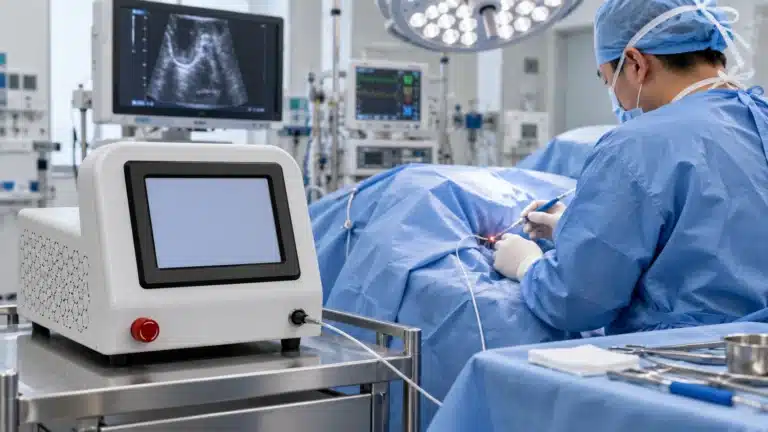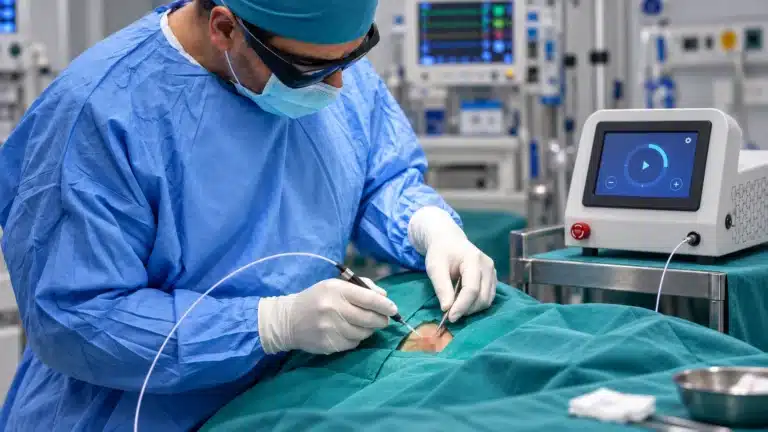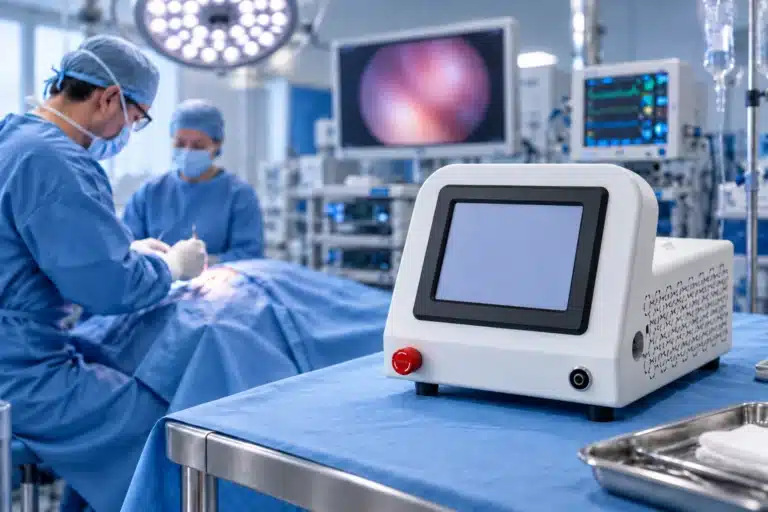
Le traitement des varices a fortement évolué vers des procédures mini-invasives, des temps de récupération plus courts et des modèles de traitement ambulatoire. thérapie par ablation laser endoveineuseL'EVLT, également connue sous le nom d'EVLA, est l'une des technologies les plus importantes de cette évolution. Elle utilise l'énergie laser délivrée par un cathéter et une fibre optique introduits dans la veine malade pour la fermer de l'intérieur.
Pour les hôpitaux, les cliniques spécialisées dans les varices, les centres de médecine esthétique et les distributeurs de matériel médical, l'EVLT représente bien plus qu'une simple procédure clinique. Il s'agit également d'une catégorie d'équipement très demandée, liée au traitement vasculaire, au confort du patient, à l'efficacité de la clinique et à la rentabilité à long terme de l'investissement. Un système laser à diode fiable de 1470 nm, associé à une fibre radiale adaptée, permet une fermeture précise des veines tout en minimisant l'impact thermique sur les tissus environnants.
Que sont les varices ?
Les veines sont des vaisseaux sanguins qui ramènent le sang vers le cœur. Les veines saines possèdent de petites valvules unidirectionnelles. Ces valvules s'affaiblissent ou s'abîment. Le sang reflue alors dans la veine et la remplit. Celle-ci se dilate et se tord. La veine dilatée peut même devenir visible sous la peau.
Les varices apparaissent le plus souvent dans les jambes car le sang, dans les membres inférieurs, doit remonter contre la gravité. Lorsque les valvules veineuses sont défaillantes, le sang stagne davantage dans les mollets et les cuisses. Il peut en résulter des veines bleues ou violettes visibles, une sensation de jambes lourdes, des douleurs, des gonflements et des préoccupations esthétiques.
Symptômes
Les varices sont souvent visibles sous forme de cordons tortueux et saillants sous la peau. Chez certains patients, ce changement visible constitue le principal problème, tandis que chez d'autres, il peut engendrer une gêne limitant leur mobilité dans leurs activités quotidiennes.
Les symptômes courants comprennent :
- Veines bleues, violettes, tortueuses ou dilatées
- Jambes lourdes ou fatiguées
- Douleurs lancinantes, brûlantes ou pulsatiles
- Démangeaisons autour de la veine affectée
- Enflure de la cheville ou du bas de la jambe
- Changements de couleur de la peau près de la veine
- Crampes nocturnes ou agitation dans les jambes
Les formes plus avancées d'insuffisance veineuse chronique peuvent provoquer des saignements, un durcissement des veines, une inflammation cutanée et/ou des lésions, généralement près de la cheville. Ces affections doivent être évaluées par un professionnel de santé qualifié avant tout traitement.
Qu’est-ce que la thérapie par ablation laser endoveineuse (EVLT) ?
L’ablation endoveineuse au laser est un traitement mini-invasif des varices éligibles. L’intervention est généralement réalisée sous contrôle échographique. Le médecin insère un cathéter dans la veine affectée, guide une fibre laser jusqu’à la position souhaitée et délivre une énergie laser contrôlée le long de la paroi veineuse.
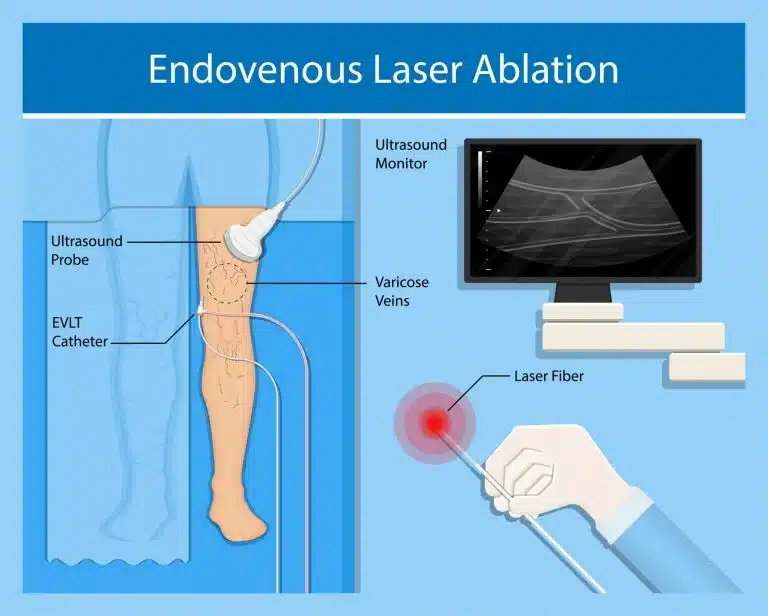
Le laser chauffe l'intérieur de la veine. Cet effet thermique endommage la paroi de la veine malade, ce qui entraîne son rétrécissement, son affaissement et sa fermeture. Une fois la veine fermée, le sang est redirigé vers des veines saines. Avec le temps, la veine traitée est progressivement résorbée par l'organisme et devient moins visible.
L'EVLT est généralement appliquée aux segments plus rectilignes des canaux veineux, tels que les troncs principaux et les affluents plus importants.
- Grande veine saphène, VGS
- Veine saphène externe, VSE
- Veine saphène accessoire antérieure, AASV
- Veines affluentes importantes sélectionnées
Pour les acheteurs d'équipements, la longueur d'onde du laser, la stabilité de la puissance de sortie, la compatibilité avec les fibres optiques, le contrôle de l'énergie et l'ensemble des accessoires sont des éléments essentiels de la performance du traitement.
Comment fonctionne le traitement laser EVLT à 1470 nm ?
Les systèmes EVLT de nouvelle génération, utilisant l'énergie d'un laser à diode de 1470 nm, tirent parti de la forte absorption de cette longueur d'onde par l'eau. L'eau présente dans la paroi veineuse ainsi que le sang circulant dans le vaisseau permettent à la longueur d'onde de 1470 nm de produire un effet photothermique efficace au sein du vaisseau traité.
L'un des avantages de la fibre radiale par rapport aux anciens systèmes à fibre nue est qu'elle diffuse l'énergie laser de manière plus homogène aux zones environnantes de la paroi veineuse. Ce faisceau d'émission, distribué de façon circulaire, réduit les points chauds, contrôle le degré de fermeture de la veine et minimise la dispersion de la chaleur vers les zones voisines.
Accès veineux sous contrôle échographique
Commencez par localiser la veine cible par échographie et déterminez son trajet. L'utilisation de l'échographie pour le positionnement du cathéter et de la fibre optique accroît la précision de la procédure et prévient les traumatismes tissulaires inutiles.
Pose de cathéter et de fibre
Une petite ponction ou incision est pratiquée pour insérer le cathéter. La fibre laser est ensuite introduite dans la veine malade à l'aide d'un système EVLT de 1470 nm. La fibre utilisée est une fibre radiale de 600 μm. Ceci permet un contrôle précis de l'énergie et une bonne navigation dans le vaisseau.
Distribution d'énergie laser
La fibre est retirée lentement le long de la veine, délivrant progressivement de l'énergie laser à sa paroi. La portion de veine traitée se contracte à mesure que la paroi du vaisseau se rétracte. La veine obturée ne conduit plus un flux sanguin anormal et le sang est redirigé vers des veines saines de la zone.
L’EVLT est-elle adaptée aux patients éligibles ?
Le traitement endoveineux au laser (EVLT) est généralement envisagé chez les patients présentant des varices symptomatiques dues à un reflux veineux. Il peut être indiqué lorsque l'échographie confirme que la veine cible est appropriée pour une fermeture laser par cathéter.
L'intervention se déroule généralement en salle de soins plutôt qu'en salle d'opération traditionnelle. Une anesthésie locale est couramment utilisée et, dans de nombreux contextes cliniques, l'intervention dure moins d'une heure. Après le traitement, il peut être conseillé aux patients de porter des bas de contention et de revenir pour une échographie de contrôle.
Facteurs cliniques de sélection des patients
L'évaluation médicale doit prendre en compte :
- Diamètre et anatomie des veines
- Localisation et gravité du reflux
- Symptômes du patient
- affection cutanée
- Antécédents de caillots sanguins
- État de grossesse
- Santé vasculaire générale
- Aptitude à l'anesthésie locale
- Risque de récidive ou de complications
L’EVLT est une procédure médicale qui doit être réalisée par un professionnel de santé qualifié, dans le cadre de son autorisation d’exercer. La procédure doit être conforme à la réglementation en vigueur et réalisée selon les protocoles cliniques approuvés.
3 avantages de l'EVLT
L'EVLT s'est largement répandue car elle pallie plusieurs limitations de la chirurgie traditionnelle des varices. Pour les acheteurs d'équipements B2B, ces avantages expliquent également pourquoi les cliniques veineuses et les services vasculaires continuent d'investir dans les plateformes laser à diode.
1. Ne prend qu'une heure environ à réaliser.
L'EVLT est généralement une intervention courte. De nombreux traitements peuvent être réalisés en moins d'une heure, selon la longueur de la veine, son anatomie, la technique de l'opérateur et l'organisation du service.
Un temps d'intervention plus court contribue à une meilleure efficacité de la clinique. Cela permet également aux cliniques de planifier des séances de traitement plus prévisibles. Pour les distributeurs, il s'agit d'un argument de vente important, car les propriétaires de cliniques évaluent souvent les nouveaux équipements en fonction du nombre de patients pris en charge, des besoins en formation, et traitement Utilisation de la pièce.
2. Ne nécessite qu'une petite incision.
La technique traditionnelle de stripping veineux peut nécessiter de multiples incisions et une plus grande perturbation des tissus. L'EVLT ne requiert généralement qu'un petit point d'accès pour l'insertion du cathéter et de la fibre.
Cette approche mini-invasive permet de réduire les saignements, les cicatrices et l'inconfort post-opératoire. Un laser diode de 1470 nm avec fibre radiale assure une diffusion thermique contrôlée, permettant au praticien de cibler la paroi veineuse tout en limitant les effets indésirables sur les tissus environnants.
Pour les équipes d'achat, la qualité de la fibre est primordiale. Une fibre radiale durable de 600 μm doit garantir une transmission d'énergie stable, une grande flexibilité, une manipulation aisée et des performances fiables tout au long de la procédure.
3. Permet une récupération rapide et une activité normale
L'EVLT ne nécessite généralement pas d'hospitalisation. De nombreux patients peuvent reprendre des activités légères peu après l'intervention, selon les recommandations du médecin et leur état de santé.
Une récupération rapide contribue à la satisfaction des patients et à la réputation de la clinique. Elle permet également aux cliniques spécialisées dans les varices de positionner l'EVLT comme une alternative moderne aux interventions chirurgicales plus invasives. Pour les distributeurs, cet avantage clinique peut enrichir la formation produit, les présentations commerciales et les supports de formation destinés aux utilisateurs finaux.
Accessoires pour les traitements EVLT et EVLA
Une solution EVLT complète ne se limite pas à un simple générateur laser. Ses accessoires doivent également s'intégrer facilement à votre pratique clinique.
Les accessoires importants comprennent :
- Fibre radiale
- cathéter introducteur
- pièce à main en fibre
- lunettes de protection
- Pédale
- Logiciel de traitement
- Préréglages des paramètres
- système de connexion fibre optique
- Matériel de formation
Endolaser de 1470 nm et fibre radiale de 600 μm
L'endolaser à 1470 nm est un outil largement reconnu pour l'absorption d'eau. La fibre radiale de 600 μm délivre l'énergie selon un motif circulaire sur la zone cible de la paroi veineuse.
Les principaux avantages d'une fibre radiale de 600 μm sont les suivants :
- Distribution d'énergie plus uniforme
- Meilleur contrôle à l'intérieur de la veine cible
- Mouvement flexible à travers le vaisseau
- Risque moindre de zones à risque concentrées
- Performances fiables lors du repli
- Compatibilité avec le flux de travail EVLT standard
Pour les importateurs et distributeurs de fibres optiques et d'équipements connexes, la disponibilité des fibres et la continuité des approvisionnements sont des facteurs clés de succès. Les accessoires consommables peuvent également générer des revenus supplémentaires après-vente importants.
FAQ
Pourquoi la fibre radiale est-elle importante en EVLT ?
La fibre radiale répartit l'énergie laser selon un motif circulaire autour de la fibre, permettant un chauffage plus uniforme de la paroi de la veine, une fermeture contrôlée et moins de points chauds localisés qu'avec une fibre nue.
L'équipement EVLT est-il adapté aux distributeurs ?
La technologie EVLT convient aux distributeurs ciblant les groupes de clientèle suivants : cliniques veineuses, centres de chirurgie vasculaire, hôpitaux, centres de médecine esthétique et autres marchés médicaux liés à la réadaptation. Pour assurer la pérennité de leur activité, les distributeurs doivent proposer un service après-vente performant et un stock important d’accessoires.
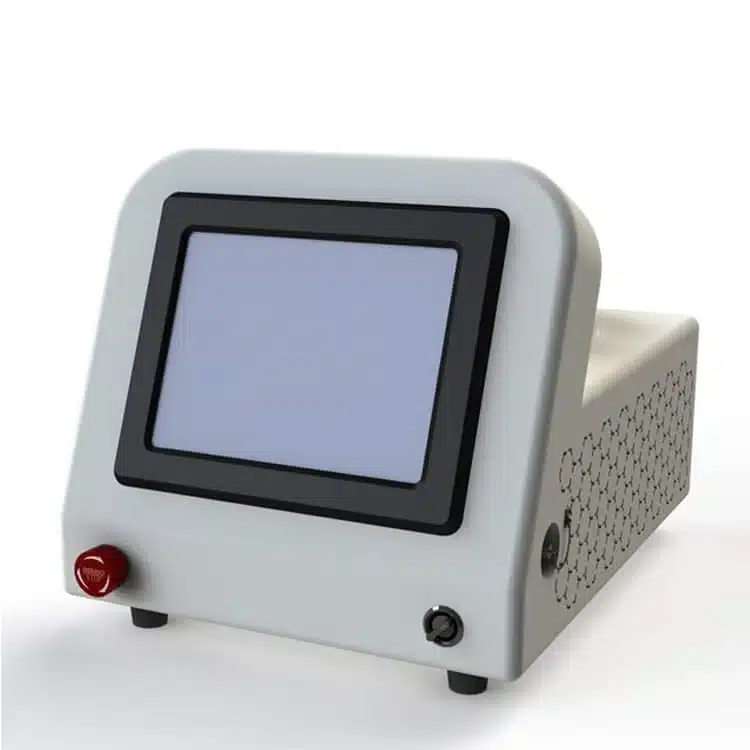
Avec ArfurArfurla, fabricant et fournisseur de haute technologie d'équipements laser médicaux et esthétiques basé à Hangzhou, opère sous le nom de Hangzhou Arfurla Science & Technology Co., Ltd. et possède une expertise en R&D, production, marketing et service après-vente. Arfurla dispose de son propre département R&D, de sa propre usine et propose des services OEM/ODM à des distributeurs du monde entier. La machine laser diode médicale multifonction 12 en 1 Arfurla 980 nm/1470 nm est idéale pour les distributeurs, les équipes d'approvisionnement et les revendeurs d'équipements médicaux. Grâce à sa conception flexible pour l'EVLT/EVLA et de nombreux autres traitements médicaux, cette plateforme laser 12 fonctions prend en charge 3 longueurs d'onde : 650 nm, 980 nm et 1470 nm. La fonction EVLT est fournie avec un endolaser 1470 nm et une fibre radiale de 600 μm, idéale pour le traitement des varices. Les distributeurs d'équipements médicaux souhaitant obtenir plus d'informations techniques ou une assistance concernant la technologie EVLT peuvent également nous contacter. Contactez-nous à Arfurla pour la formation aux devis de coopération OEM/ODM et autres informations sur l'approvisionnement à long terme.