Perkenalan
The 980nm 1470nm diode laser is a major platform for soft tissue procedures that provides precise cutting, coagulation, effective hemostasis and minimal invasion. As a practical product category for medical equipment distributors, procurement teams and regional suppliers alike, the 980nm 1470nm diode laser has high clinical value and strong market demand.
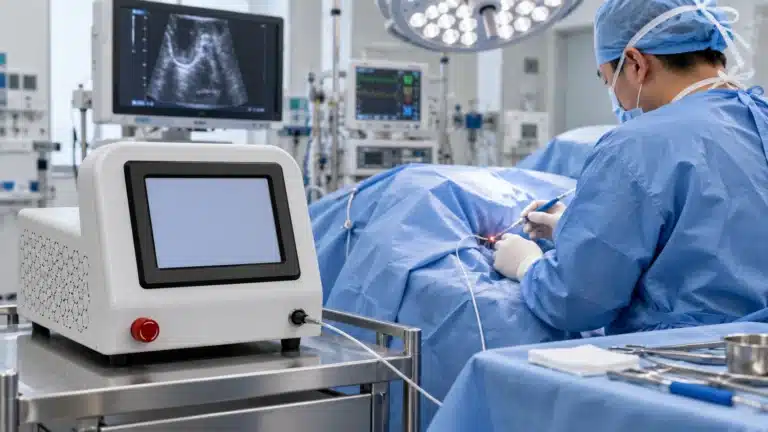
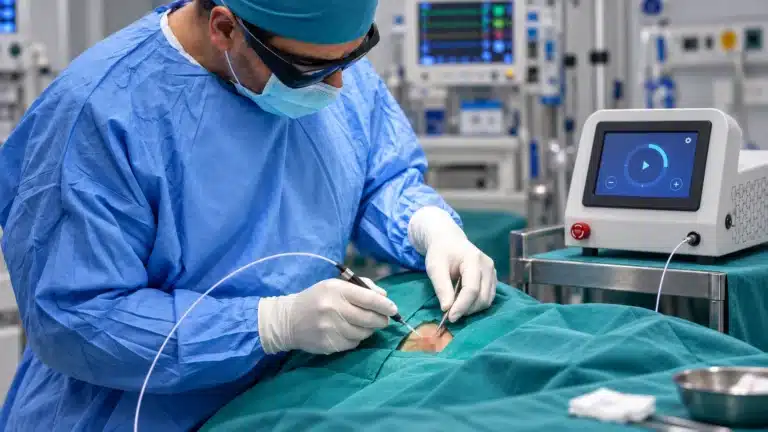
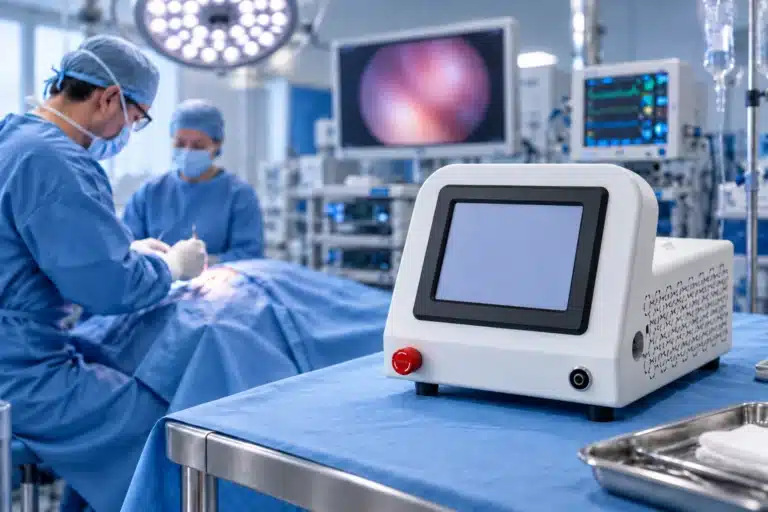
Arfurla 980nm and 1470nm diode laser technology is a soft tissue cutting laser designed for use in a variety of medical specialties, including treatment of hemorrhoids and proctology as well as dental, dermatological, urological, ENT, gynecological and minimally invasive surgical procedures. The interaction of these wavelengths with tissue components such as water and hemoglobin provides a safe and effective cutting and coagulation of soft tissues with minimal bleeding and excellent visibility.
How Does the Dual-Wavelength System Achieve Tissue Effects?
The 980nm and 1470nm wavelengths in soft tissue treatments have different tissue interactions. The combined technology enables cutting, vaporizing, and ablation as well as coagulation and hemostasis.
Wavelength and Tissue Interaction
| Panjang gelombang | Primary Absorption Target | Tissue Interaction | Main Functional Value |
| 980nm | Water and hemoglobin | Cutting, coagulation, vaporization | Balanced action in vascularized soft tissue |
| 1470nm | Air | Superficial heating and precise coagulation | Controlled cutting with reduced thermal spread |
980nm is a good compromise between water and hemoglobin absorption. For highly vascularized tissues where a procedure can require both cutting and coagulation, 980nm can be a good option. 1470nm has high water absorption and is ideal for delivering shallow penetrating energy in delicate tissues that are very wet.
1. Vaporization and Cutting
980nm Diode Laser Cutting
980nm diode laser has all the parameters needed for soft tissue incision, excision, vaporisation and ablation. This wavelength is used for soft tissue cut and coagulation in surgical practice. Vascularised tissues can benefit from the properties of 980nm laser as it allows for a clean surgery field.
Key functional points include:
· Contact and non-contact soft tissue procedures
· Cutting of small prominent lesions
· Vaporization of selected tissue areas
· Coagulation support during incision
· Improved visibility through reduced bleeding
1470nm Diode Laser Cutting
The 1470nm wavelength is strongly absorbed by water, which allows energy to remain closer to the target tissue surface. This characteristic supports precision cutting and controlled thermal action in delicate soft tissue applications. In areas such as ENT, dentistry, proctology, and minimally invasive surgery, this wavelength can help reduce unnecessary injury to adjacent structures.
Key functional points include:
· Precise energy delivery in water-rich tissue
· Reduced thermal spread around the target area
· Controlled superficial coagulation
· Suitability for delicate soft tissue work
· Support for minimally invasive procedures
2. Ablation and Coagulation
A function of the 980nm 1470nm diode laser is to support both ablation and coagulation. For soft tissue, ablation will remove or vaporize the tissue and coagulation will close up small blood vessels to achieve hemostasis.
980nm causes tissue cutting and vaporization. 1470nm causes water and superficial coagulation. Both lasers thus deliver a very practical “cut-and-seal” application to a surgeon.
This functional combination is especially relevant for:
· Hemorrhoids and proctology procedures
· ENT soft tissue cutting
· Dentistry and oral soft tissue treatment
· Dermatology lesion removal
· Urology and gynecology tissue treatment
· General soft tissue surgery
3. Hemostasis Mechanism
Hemostasis is one of the most important advantages of diode laser soft tissue cutting. Traditional mechanical cutting methods often require additional tools or suturing to control bleeding. A 980nm 1470nm diode laser can help coagulate small blood vessels during cutting, improving surgical visibility and reducing procedural interruption.
For procurement teams and distributors, this function is a major selling point because clinical users often look for equipment that can simplify workflow, reduce bleeding, and support faster recovery.
Main Applications of Arfurla 980nm 1470nm Diode Laser Soft Tissue Cutting
Arfurla 980nm and 1470nm lasers are positioned for soft tissue procedures in multiple medical fields. The following application areas reflect the functional scope of soft tissue cutting and surgical laser use.
1. General Surgery
In general surgery, diode lasers can support incisions for accessing internal structures or removing selected tissue. The controlled energy delivery helps reduce unnecessary trauma and supports a cleaner cutting field.
2. Dermatology
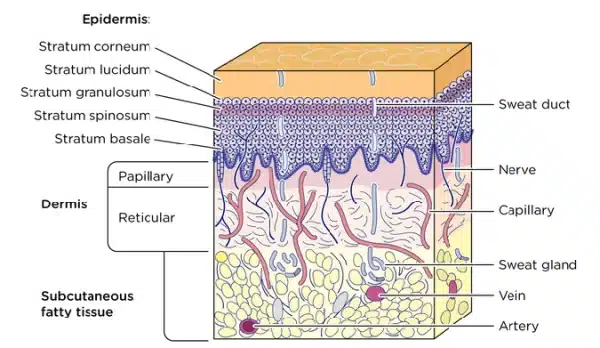
Diode Lasers in Dermatology. The diode laser can be used for selected skin lesions, moles, and cosmetic soft tissue procedures. The laser offers precise treatment to minimize bleeding and swelling.
3. Ophthalmology
In ophthalmic soft tissue surgery, great precision is required. The use of a laser for cutting can be of great value in very delicate work within specific anatomical structures where minimal damage to surrounding tissue is required.
4. ENT Procedures
ENT procedures often involve vascular and delicate tissue. A focused laser beam can cut, vaporize, or coagulate tissue with controlled energy delivery. This makes diode laser technology relevant for procedures involving nasal, throat, and related soft tissue structures.
5. Urology and Gynecology
In urology and gynecology, minimally invasive approaches are increasingly valued. The 980nm 1470nm diode laser can support tissue removal, repair, and coagulation in selected soft tissue procedures, depending on clinical protocol and physician training.
6. Dentistry
Diode laser can be used for dental soft tissue applications. Diode laser can be used for gum reshaping, oral surgery and periodontal procedures. With diode laser one can cut and coagulate precisely which makes it very attractive for dental clinics and oral surgery centers.
Faktor-faktor yang Mempengaruhi Perawatan Laser Pemotongan Jaringan Lunak
1. Tissue Type
Different tissues vary in density, water content, vascularity, and sensitivity. Skin, muscle, fat, mucosa, and oral soft tissue may require different energy settings and technique selection. A dual-wavelength system helps provide flexibility for varied clinical environments.
2. Precision and Control
When cutting soft tissue near structures of high value, great precision is a must. The 1470nm laser provides excellent shallow tissue interaction for great precision while allowing for good cutting with strong coagulation with the 980nm laser.
3. Hemostasis
Bleeding control allows for better visibility and more efficient procedure execution. The coagulation function of the diode laser during cutting allows for reduced bleeding, especially suitable for applications such as ENT, dentistry, proctology and other soft tissue procedures.
4. Thermal Damage
Control of thermal spread to surrounding tissue is critical. The 1470nm wavelength helps to confine the thermal effect to the target area. Appropriate energy settings and safe and competent use by an operator is critical to the clinical use of this technology.
5. Healing and Recovery
Laser soft tissue procedures typically result in less swelling and bleeding and they often do not require sutures when compared with other cutting methods. Such procedures result in rapid healing and patient comfort when proper clinical protocols are followed.
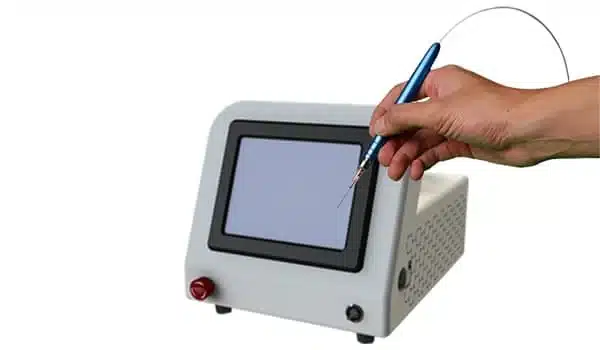
Keunggulan Laser Arfurla 980nm dan 1470nm dalam Pemotongan Jaringan Lunak
Precision Soft Tissue Cutting
Both the 980nm and 1470nm laser wavelengths are capable of performing a targeted cut in soft tissue. The 1470nm laser is preferred for very delicate procedures as it has strong water absorption and as a result penetrates only very shallow into the tissue. It is ideal for clinics where precise clinical outcomes are critical.
Minimally Invasive Soft Tissue Cutting
Laser cutting can also be used to make much smaller cuts in tissue and in this way it can prevent the need for very large incisions in soft tissues, which can cause a lot of trauma to surrounding tissues. The 980nm wavelength creates a coagulated cut in tissue which can aid in a clear surgical site.
Kerusakan Termal yang Berkurang
By delivering energy in a controlled fashion, we can minimize the risk of unwanted thermal injury. The 1470nm wavelength is designed to confine heat to the target tissue, while the 980nm wavelength allows for efficient cutting and effective coagulation. It is still crucial to train a qualified operator to utilize the technology safely and effectively.
Versatility Across Medical Departments
The Arfurla 980nm 1470nm diode laser is suitable for several departments such as proctology, ENT, dental, dermatological, urological, gynecological, general surgical and minimally invasive soft tissue surgeries. For distributors, one platform with various clinical cases to present will increase market coverage and improve the management of the distributor’s inventory.
Peningkatan Hasil Perawatan Pasien
Key factors that contribute to a positive patient experience of Surgical Lasers include reduced bleeding and swelling, fewer and/or no sutures, and controlled tissue interaction. Lower postoperative discomfort and fast recovery are crucial value factors for clinics and hospitals when evaluating surgical Lasers.
Pertanyaan yang Sering Diajukan (FAQ)
1. What are the main functions of a 980nm 1470nm diode laser?
The main functions include soft tissue cutting, vaporization, ablation, coagulation, and hemostasis. The 980nm wavelength supports cutting and coagulation, while the 1470nm wavelength supports precise water-based tissue interaction and superficial coagulation.
2. What medical fields can use the Arfurla 980nm 1470nm diode laser?
Application areas include hemorrhoids, proctology, dentistry, dermatology, urology, ENT, gynecology, general surgery, and minimally invasive soft tissue procedures.
3. Why are 980nm and 1470nm wavelengths combined?
The 980nm wavelength has balanced absorption by water and hemoglobin, making it useful for vascularized tissue. The 1470nm wavelength has strong water absorption, supporting precise cutting and controlled thermal effects. The combination supports cut-and-seal performance.
Bersama Arfur is a manufacturer, supplier and factory of Medical and Aesthetic Equipments with capabilities of R&D, production, sales and after sales service. Arfurla offers solutions for 980nm and 1470nm Diode Laser Machines to B2B distributors, procurement teams and private label medical device manufacturers as well as OEM/ODM services.
Distributors looking for a 980nm 1470nm soft tissue cutting laser supplier, please hubungi Arfurla for details on product, tech data, quotation and market cooperation. Arfurla is providing medical diode laser solutions for various clinical applications to global B2B customers.