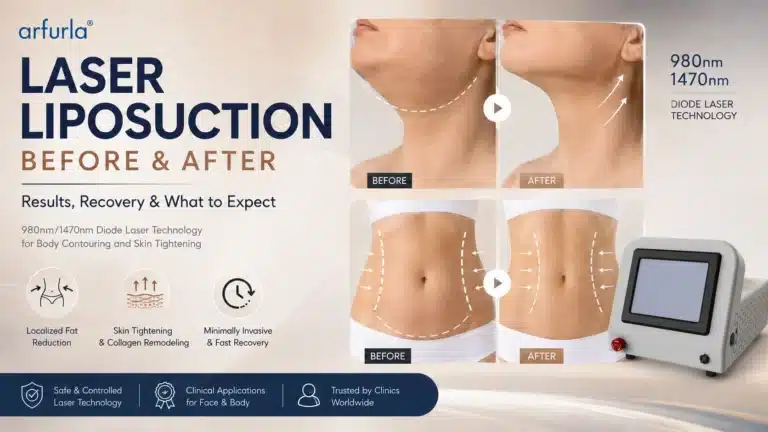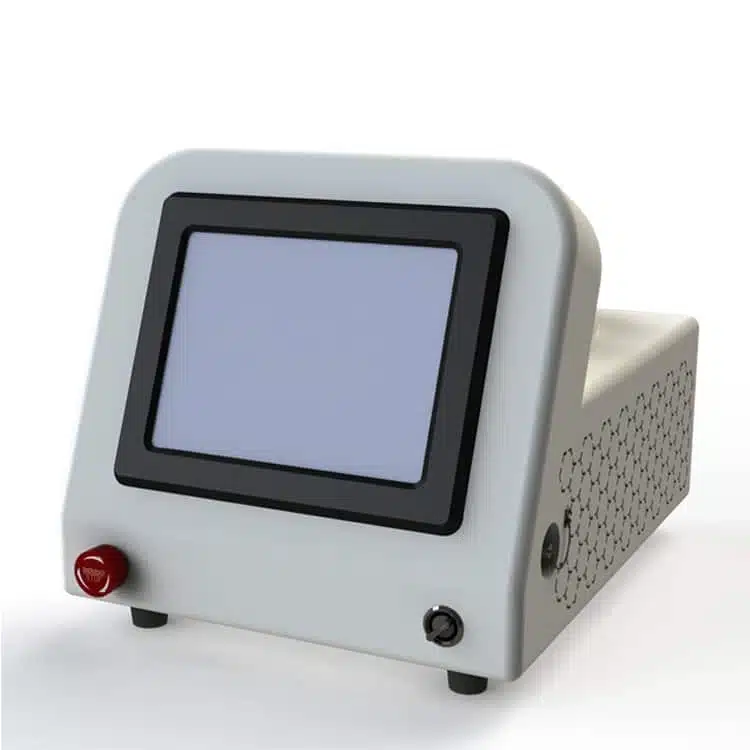
Laser liposuction before and after results are an important point of reference for medical clinics, distributors, and medical equipment buyers when reviewing body contouring technologies. This is also referred to as laser-assisted lipolysis, whereby the technique utilizes laser energy for selective fat reduction and tissue contraction and collagen remodeling.
When choosing a suitable machine for laser lipolysis, B2B buyers have to take into consideration various parameters including the wavelength configuration.
Key Takeaways of Laser Liposuction Before and After
- Laser liposuction is primarily a body-contouring procedure rather than a weight-loss treatment.
- Before-and-after changes may include localized fat reduction, improved body contours, and varying degrees of skin tightening.
- Results generally become more visible as swelling decreases and tissue remodeling progresses.
- Outcomes vary according to patient selection, treatment area, laser parameters, practitioner technique, and aftercare.
- For distributors and procurement teams, wavelength options, accessories, training, after-sales support, OEM/ODM capability, and manufacturing quality are important equipment-selection factors.
Laser Liposuction Plastic Surgery
Laser lipo-sculpture is an advanced body sculpting procedure that uses laser energy for the reduction of localized subcutaneous fat. The typical areas treated with this method could be abdomen, thighs, arms, flanks, neck and submentum.
In the process of the treatment, an optical fiber introduces the laser energy under the skin. Energy is produced in thermal form and affects the fat tissue and the surrounding tissues.
Laser assisted lipolysis should not be used as a weight reduction treatment for obese patients.
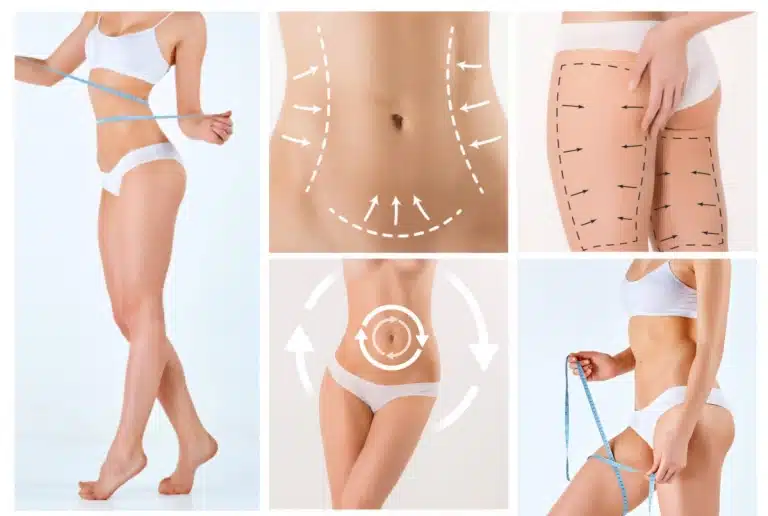
How Laser Liposuction Works
Laser-assisted lipolysis typically involves inserting a thin optical fiber into the targeted subcutaneous layer. Laser energy generates controlled thermal effects that assist with fat treatment and may promote collagen-related tissue remodeling.
Depending on the clinical protocol, treated fat may be aspirated or processed through physiological mechanisms.
More information about the technology and its working principles is available in Arfurla’s guide, Laser Lipo Explained: How It Works and Whether It’s Effective.
Arfurla’s Facial Endo Laser Bodylift/Lipolysis Laser Treatment uses micro-optical fibers for facial and body applications as part of its 980nm/1470nm diode laser platform.
What to Expect Before Laser Liposuction
Successful laser-assisted lipolysis begins with appropriate clinical assessment and realistic treatment expectations.
Preparing for the Procedure
Pre-treatment preparation can involve medical history assessment, medication review, contraindications, areas of treatment, and expected outcomes. Competent medical practitioners will decide whether the application of laser-assisted lipolysis is right for that particular case.
The preparation process can also differ depending on the area of treatment, anesthesia, clinical procedures, and local regulations.
From the procurement standpoint, the device needs to be assessed together with the operator’s education, optical fibers, treatment accessories, technical documentation, and maintenance.
Consultation and Assessment
Clinical consultation aids in setting proper treatment expectations with regard to fat removal, contour changes, skin tightening, and healing process.
Another important element in outcome assessment is standardized before-and-after photography. Proper lighting, posture, distance, angle, and time of picture taking all may help in making proper comparison.
It is essential to understand that before-and-after pictures cannot be seen as guarantees of treatment outcomes, as there is considerable variability between patients.
The Laser Liposuction Process Step by Step
The exact laser liposuction protocol varies according to the device, treatment area, clinical objective, and medical professional.
Laser Application
A small access point allows a fine optical fiber to reach the targeted subcutaneous tissue. Controlled diode laser energy is then delivered throughout the treatment area.
Fat Treatment and Tissue Contraction
Thermal energy assists with localized fat disruption. Depending on the clinical technique, treated fat may subsequently be aspirated or processed naturally.
Controlled heating can also influence collagen-containing tissue, which is why laser-assisted lipolysis is frequently associated with both fat reduction and skin tightening.
Post-Treatment Care
Post-treatment protocols may include compression, activity recommendations, wound care, and scheduled follow-up.
Recovery instructions should always follow professional medical judgment and applicable local regulations.
Recovery Timeline and Aftercare
Recovery from laser liposuction surgery is dependent on the location of the surgery site, quantity of fat removed, laser settings, aspiration procedure, and individual’s healing abilities.
Edema, sensitivity, and bruising may happen post minimally invasive laser lipolysis. Visible contour change may develop as edema subsides, and further tissue contraction and remodeling may take place for a few weeks or even months.
When it comes to B2B buyers and distributors, the marketing message regarding recovery needs to be carefully managed. Identical recovery periods, assured outcomes, and identical treatment results cannot be offered.
Laser Liposuction Before and After Results: What Changes Can Be Seen?
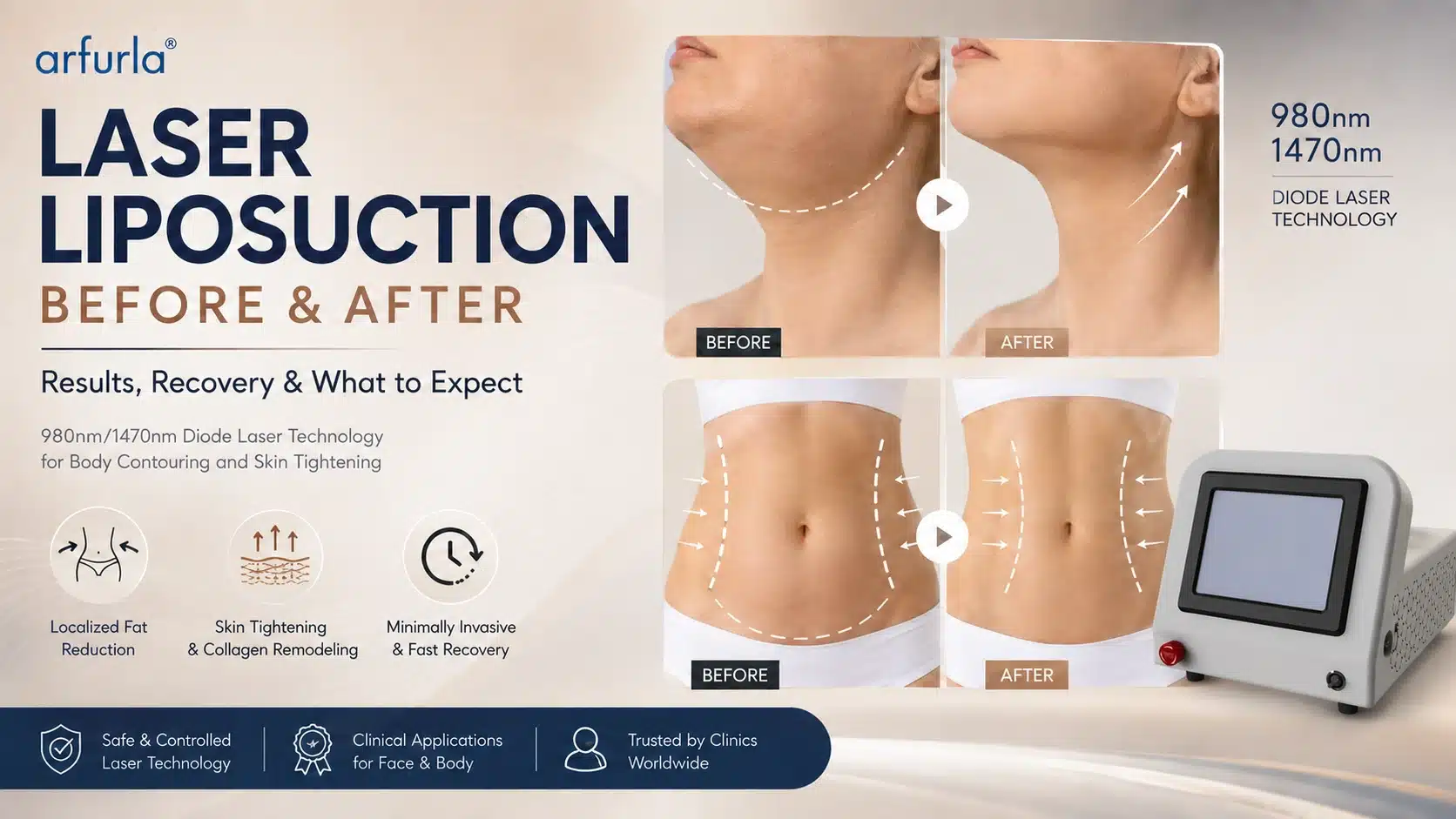
Laser liposuction before and after photographs generally focus on changes in localized contours rather than dramatic reductions in overall body weight.
Possible visible changes may include:
- Reduced prominence of localized fat deposits
- Improved definition of treated areas
- Smoother body contours
- Improved transition between adjacent treatment areas
- Progressive tissue contraction in appropriately selected cases
- More visible contour improvement after swelling decreases
The degree of improvement varies significantly between individuals. Before-and-after photographs therefore demonstrate possible treatment outcomes rather than guaranteed results.
When Do Laser Liposuction Results Become Visible?
Some contour alterations might happen in the initial stages of recovery; however, swelling will make it difficult to see the end results.
With less swelling, the treated zones will be more noticeable. The process of collagen remodeling and tissue tightening is gradual and can take place over an extended time frame, therefore, the results will only be visible weeks or even months after the procedure.
It all depends on the zone of treatment and the procedure.
When Should Before and After Photos Be Taken?
Consistent photography is important when evaluating laser liposuction results.
A typical documentation process may include photographs:
- Before treatment
- During scheduled postoperative follow-up
- After major swelling has resolved
- At a later stage when tissue remodeling has progressed
Using the same lighting, body position, camera distance, and angle helps improve comparison accuracy.
For distributors supplying laser lipolysis equipment, standardized photography protocols can also form part of clinic training and treatment documentation.
What Factors Affect Laser Liposuction Before and After Results?
No single laser machine determines the final result. Several factors work together to influence treatment outcomes.
Important factors include:
- Patient selection
- Amount and location of localized fat
- Skin elasticity
- Treatment area
- Laser wavelength and parameters
- Optical fiber technique
- Practitioner experience
- Post-treatment care
- Individual healing response
For medical equipment distributors, this highlights the importance of combining device quality with appropriate training, technical support, and clinical education.
Choosing a Laser Lipolysis Machine for B2B Procurement
For distributors, importers, and procurement teams, equipment evaluation extends beyond before-and-after images.
Important sourcing considerations include:
- Laser wavelength configuration
- Treatment versatility
- Optical fiber and accessory availability
- Device stability and quality control
- Operator training
- Technical documentation
- After-sales service
- Warranty support
- OEM/ODM capability
- Manufacturing capacity
- Regulatory documentation for target markets
Arfurla offers a 650nm, 980nm, and 1470nm multifunction diode laser platform. Its 980nm 1470nm Multifunction Medical 12-in-1 Diode Laser Machine supports Facial Endo Laser Bodylift/Lipolysis as well as additional medical and aesthetic laser applications.
A multifunction system can provide distributors with a broader product portfolio than a single-purpose body-contouring device, particularly when different clinical applications are required within the target market.
FAQ
What results can appear in laser liposuction before and after photos?
Before-and-after photographs may demonstrate localized fat reduction, improved contour definition, smoother transitions, and varying degrees of tissue contraction. Results depend on anatomy, treatment area, laser parameters, practitioner technique, and healing response.
How long does it take to see laser liposuction results?
Early changes may appear after swelling begins to decrease. More complete results can develop gradually over several weeks or months as tissue recovery and remodeling progress.
Is laser liposuction a weight-loss treatment?
No. Laser-assisted lipolysis is primarily intended for localized fat treatment and body contouring rather than major weight loss or obesity treatment.
What wavelengths are used for laser lipolysis?
Different systems use different laser wavelengths. 980nm and 1470nm diode laser technologies are among the wavelengths used in laser-assisted applications. Arfurla’s multifunction platform incorporates 650nm, 980nm, and 1470nm wavelengths, with 980nm/1470nm supporting its lipolysis and bodylift application portfolio.
What should distributors evaluate when sourcing a laser lipolysis machine?
Important considerations include manufacturing capability, wavelength configuration, optical fibers and accessories, quality control, OEM/ODM options, operator training, warranty policy, technical support, and regulatory requirements in the intended market.
Conclusion: Understanding Laser Liposuction Before and After Results
Laser liposuction before and after results can demonstrate meaningful changes in localized fat and body contours, but outcomes vary according to patient characteristics, treatment technique, device parameters, and recovery.
For B2B buyers, equipment value extends beyond visible treatment results. Manufacturing consistency, wavelength configuration, accessories, clinical training, technical service, OEM/ODM capability, and long-term supplier support all contribute to a stronger product offering.
A multifunction 980nm 1470nm diode laser machine can therefore represent a valuable option for distributors and procurement teams seeking broader medical and aesthetic laser applications.
Arfurla Laser Liposuction Machine Manufacturer & Supplier
Hangzhou Arfurla Science & Technology Co., Ltd. is a laser liposuction machine manufacturer and supplier with its own factory, providing 980nm/1470nm diode laser systems for distributors, importers, clinics, and OEM/ODM partners.
The Arfurla 980nm 1470nm Multifunction Medical 12-in-1 Diode Laser Machine supports lipolysis, bodylift, physiotherapy, vascular treatment, and multiple medical laser applications.
Contact Arfurla for wholesale pricing, distributor cooperation, OEM/ODM services, and product specifications.