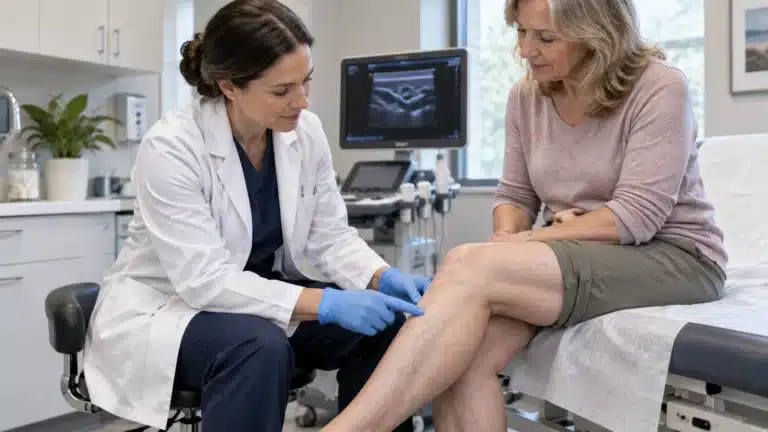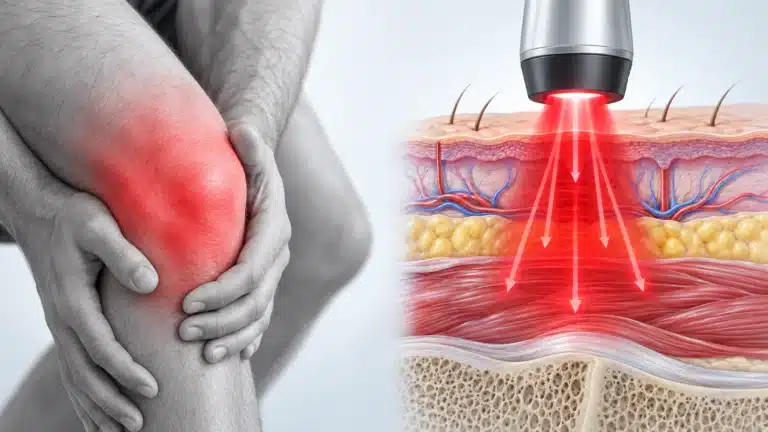
Endovenous laser ablation (EVLA) and traditional vein stripping treat superficial venous reflux in fundamentally different ways. EVLA closes an incompetent vein from inside using laser-generated thermal energy, while vein stripping surgically removes the affected vein.
This difference influences the procedure, anesthesia, treatment environment, recovery, complications, and equipment required by a vascular clinic.
For people with confirmed varicose veins and truncal reflux, NICE recommends endothermal ablation first when clinically suitable, followed by ultrasound-guided foam sclerotherapy when endothermal treatment is unsuitable, and surgery when both are unsuitable. Duplex ultrasound is also recommended for confirming reflux and planning treatment.
For clinics, hospitals, distributors, and procurement teams, the comparison between EVLA vs vein stripping therefore has two dimensions: clinical treatment and clinical equipment workflow.
EVLA vs Vein Stripping at a Glance
| Comparison | EVLA | Vein Stripping |
|---|---|---|
| Treatment principle | Closes the vein with thermal laser energy | Surgically removes the vein |
| Access | Percutaneous catheter access | Surgical incisions |
| Imaging | Ultrasound-guided | Ultrasound for diagnosis and surgical planning |
| Znieczulenie | Commonly local and tumescent | May involve local, regional, or general anesthesia |
| Vein after treatment | Closed and left to remodel | Physically removed |
| Treatment setting | Often outpatient | Surgical setting |
| Powrót do zdrowia | Generally shorter | Generally longer |
| Blizny | Small access site | Surgical scars may occur |
| Main equipment | Laser, fiber, catheter, ultrasound | Surgical instruments and operating-room infrastructure |
The central difference is therefore closing a vein versus removing it.
The Fundamental Difference: Closing a Vein vs Removing It
EVLA Closes the Vein
EVLA is an endovenous procedure. A laser fiber is positioned inside the incompetent vein, normally under ultrasound guidance. Controlled thermal energy is applied to the vein wall, causing the treated vessel to contract and close.
Blood is then redirected through functioning venous pathways while the treated vessel gradually undergoes fibrosis and remodeling.
Vein Stripping Removes the Vein
Traditional stripping follows a surgical approach. The incompetent vein is ligated and a segment is physically removed from surrounding tissue.
NICE defines stripping as a surgical technique in which a truncal or tributary vein is physically removed.
This difference in mechanism explains many of the differences in anesthesia, postoperative management, equipment, and clinical workflow.
EVLA vs Stripping: Procedure and Access
EVLA generally requires needle or catheter access rather than conventional surgical exposure.
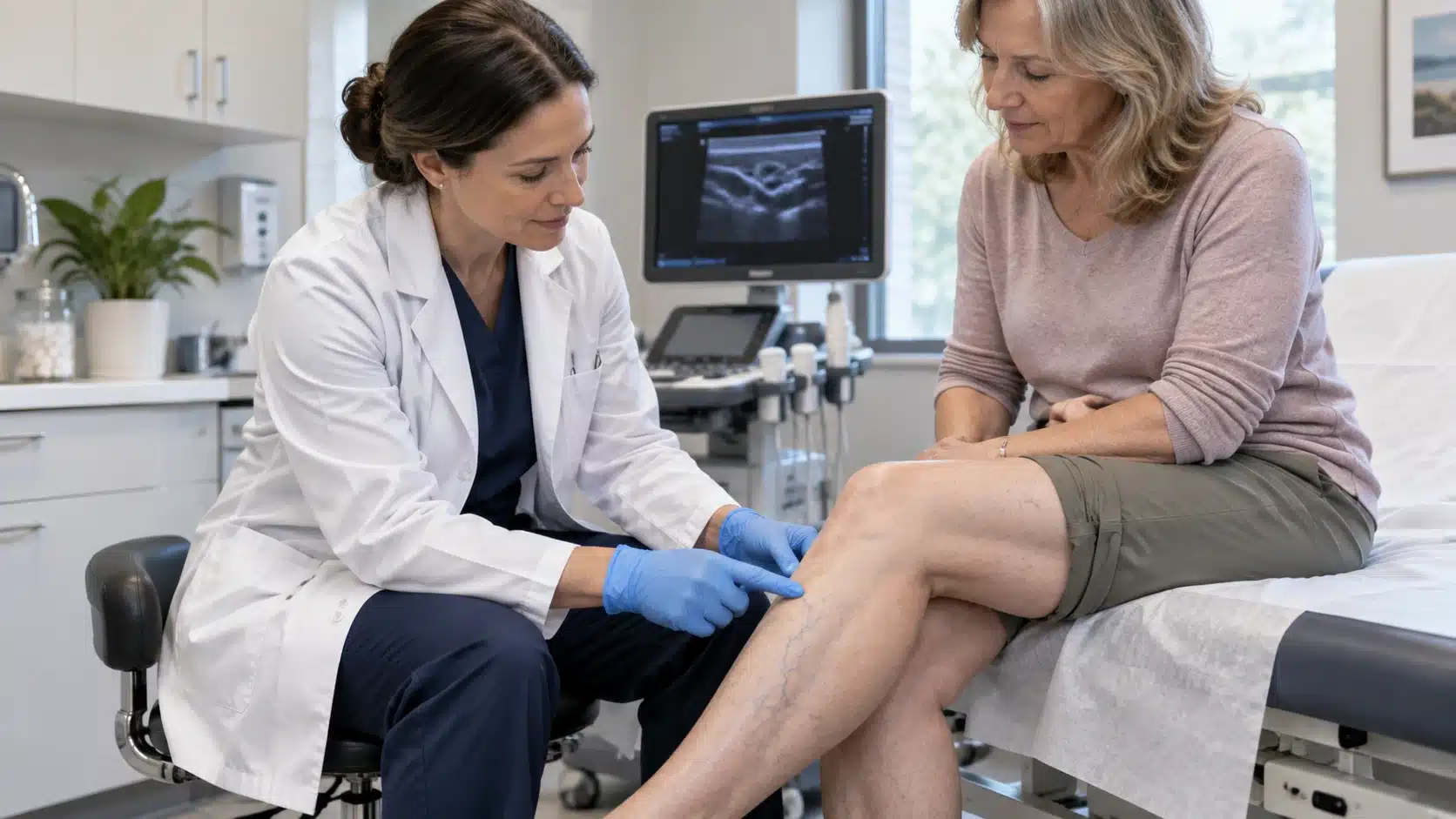
A typical treatment workflow includes ultrasound identification of the target vein, catheter placement, insertion of an optical fiber, tumescent anesthesia, and controlled delivery of laser energy during fiber withdrawal.
Arfurla’s EVLT application similarly describes an ultrasound-guided catheter placed into the varicose vein, with laser energy used to heat and close the vessel.
Vein stripping requires surgical access and physical vein removal. Depending on the treatment plan, phlebectomy may also be performed for visible tributary veins.
Anesthesia and Treatment Setting
The two approaches also create different facility requirements.
EVLA is commonly performed using local anesthesia together with tumescent anesthesia around the target vein. This catheter-based approach can often be integrated into an outpatient vascular treatment environment.
Traditional stripping may require a conventional surgical setting, with anesthesia determined by the procedure, patient condition, and local clinical protocol.
From an operational perspective, this affects treatment-room use, staff requirements, surgical infrastructure, and the equipment a clinic needs to maintain.
Recovery and Return to Normal Activities
Recovery is one of the most searched differences in laser vs surgery for varicose veins.
EVLA generally involves less surgical tissue disruption because the vein is accessed internally rather than physically removed. Normal activities can therefore often resume sooner following an uncomplicated procedure.
Stripping involves incisions and surgical tissue manipulation, so postoperative bruising, wound healing, and discomfort can require a longer recovery period.
Actual recovery after either treatment still depends on vein anatomy, treatment extent, additional procedures, individual health, and postoperative complications.
Pain, Bruising and Scarring
Both techniques can produce temporary postoperative symptoms.
After EVLA, possible effects include tenderness, bruising, tightness along the treated vein, temporary sensory changes, and superficial inflammation. Because catheter access is small, extensive surgical scars are generally avoided.
After stripping, bruising, incision-related discomfort, scars, swelling, or altered sensation may occur because the vein is surgically removed.
These differences result primarily from the method of access rather than from a different treatment goal.
Risks and Complications
Neither procedure is free of risk.
Possible EVLA Complications
Potential complications can include:
- Bruising and tenderness
- Superficial thrombophlebitis
- Temporary sensory changes
- Pigmentation
- Thermal injury
- Thrombotic complications
- Recanalization
- Recurrent venous disease
Possible Vein Stripping Complications
Potential surgical complications can include:
- Bleeding or hematoma
- Zakażenie
- Surgical wound pain
- Blizny
- Nerve injury
- Sensory disturbance
- Thrombotic complications
- Recurrent varicose veins
Clinical assessment, proper technique, ultrasound guidance, and follow-up remain important for either treatment.
Long-Term Outcomes and Recurrence
Both EVLA and stripping are intended to eliminate pathological reflux in the treated vein.
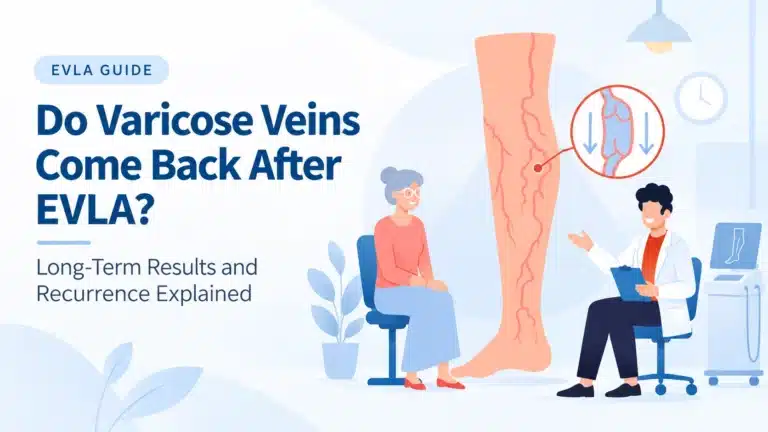
After EVLA, recurrence can occur through recanalization or development of reflux in another venous segment. After stripping, the removed segment cannot reopen, but new reflux or recurrent varicose veins can develop through other venous pathways.
Long-term assessment therefore considers more than whether the original vein was closed or removed. Clinical symptoms, new reflux, recurrent varicosities, and the need for additional intervention can all be relevant.
When Is EVLA Generally Preferred?
For suitable truncal reflux, endothermal ablation has become an established first-line interventional approach.
NICE recommends endothermal ablation for confirmed truncal reflux when the procedure is suitable, while surgery remains further down the treatment pathway.
EVLA may be considered when:
- Duplex ultrasound confirms appropriate truncal reflux
- Endovenous access is technically feasible
- Vein anatomy permits suitable fiber placement
- Thermal ablation is clinically appropriate
- An outpatient treatment approach is suitable
Treatment selection remains a clinical decision rather than an equipment-driven decision.
When Might Vein Stripping Still Be Considered?
Vein stripping continues to have a clinical role and should not be described as universally obsolete.
Surgery may still be considered when:
- Endovenous treatment is unsuitable
- Catheter access is technically difficult
- Vein anatomy prevents appropriate endovenous treatment
- Previous procedures have altered the anatomy
- Other minimally invasive options are unsuitable
- Clinical assessment supports an open surgical approach
This distinction is important because modern guidelines establish a treatment hierarchy based on suitability rather than stating that one technique is appropriate for every case.
What Determines the Right Treatment?
Duplex ultrasound is an important part of selecting between treatment approaches. NICE specifically recommends it to confirm the diagnosis, determine the extent of truncal reflux, and plan treatment.
Relevant factors can include:
- Location of reflux
- Great or small saphenous vein involvement
- Vein diameter
- Vein tortuosity
- Accessibility for catheter treatment
- Previous venous procedures
- Tributary varicosities
- Patient-related risk factors
- Clinical judgment
Closing the refluxing truncal vein also does not necessarily treat every visible tributary. Additional phlebectomy or sclerotherapy may be considered according to clinical findings.
What Role Does an EVLA Laser Machine Play in Treatment?
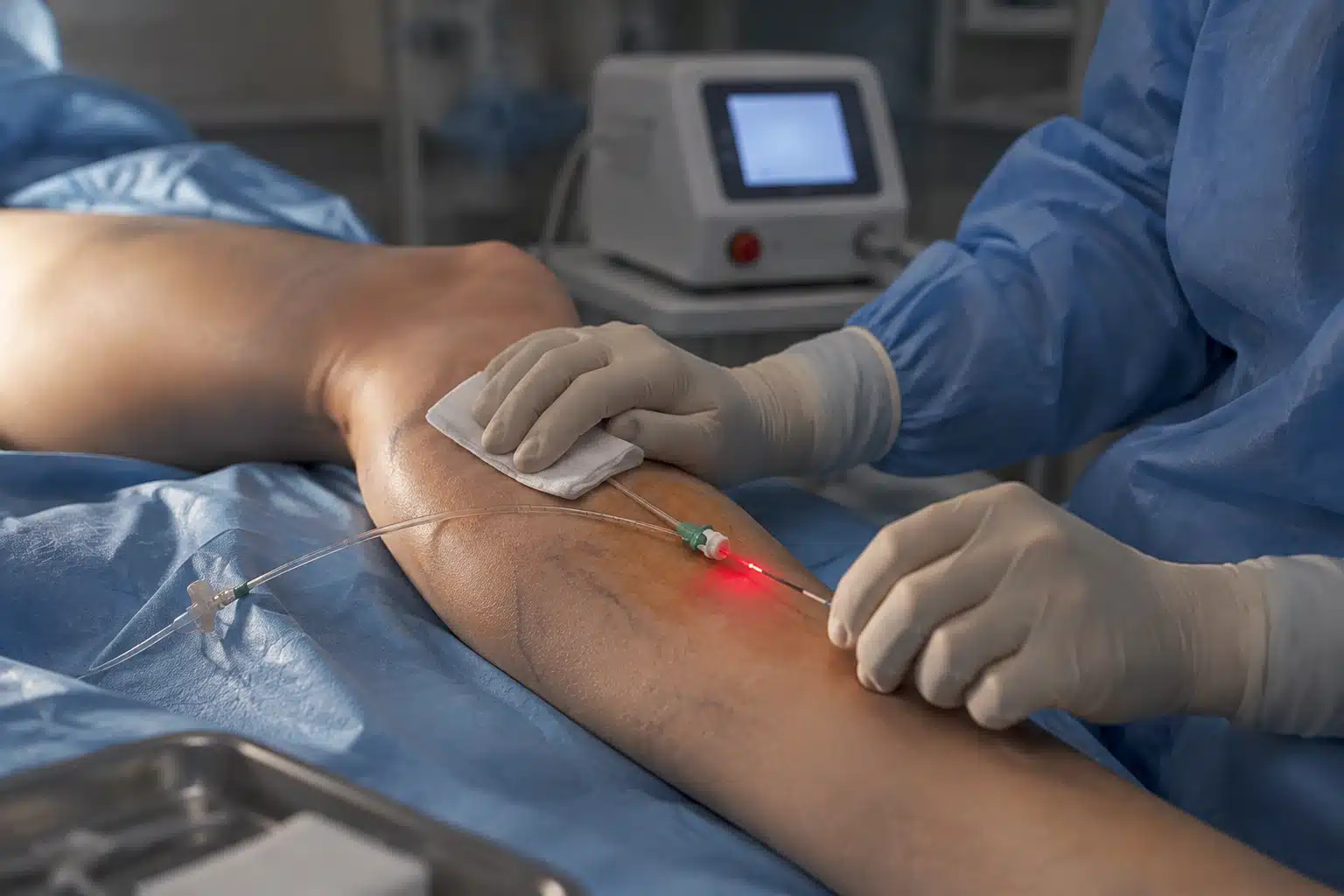
Ten EVLA laser machine provides the controlled laser energy required to thermally close the incompetent vein.
The treatment system normally works as an integrated combination of:
- Medical diode laser generator
- Endovenous optical fiber
- Cewnik wprowadzający
- Ultrasound imaging
- Tumescent anesthesia
- Laser safety accessories
- Procedure-specific consumables
Unlike stripping, where the primary treatment mechanism relies on surgical removal, EVLA depends directly on controlled laser energy delivery.
This makes laser output stability, parameter control, fiber compatibility, and accessory availability relevant equipment considerations for clinics and distributors.
Why Is 1470nm Used in EVLA Systems?
1470nm is one wavelength used in contemporary EVLA systems. Studies of 1470nm diode lasers describe strong absorption by water-containing tissue, while radial fibers can distribute laser energy circumferentially toward the venous wall.
The wavelength should not be evaluated in isolation. An EVLA system also depends on factors such as:
- Adjustable output parameters
- Stable energy delivery
- Fiber design
- Treatment technique
- Fiber withdrawal control
- Accessories and consumables
- Operator training
Arfurla’s EVLT configuration uses a 1470nm diode laser with a 600 μm radial fiber and introducer catheter.
Why Do Radial Fibers Matter in an EVLA System?
The laser generator is only one component of the EVLA equipment ecosystem.
A radial fiber is designed to distribute laser energy around the vessel circumference instead of directing it mainly forward from a bare fiber tip. Clinical studies have evaluated this combination with 1470nm EVLA systems.
From a B2B purchasing perspective, fiber design also creates practical questions:
- Which fibers are compatible with the machine?
- Are radial fibers consistently available?
- Are introducer catheters supplied?
- Can consumables be reordered in volume?
- Is technical documentation available?
- Can distributors maintain local accessory inventory?
Arfurla lists radial fibers and introducer catheters as accessories for its EVLT application.
Key Functions to Evaluate in an EVLA Laser Machine
For equipment buyers, the purchase decision extends beyond wavelength.
Adjustable Laser Output
Controlled parameter adjustment allows the system to support procedure-specific treatment protocols determined by qualified clinicians.
Stable Energy Delivery
Consistent laser output is an important technical consideration during controlled fiber withdrawal.
Fiber Compatibility
The laser platform should support appropriate endovenous fibers, connectors, and procedure-specific accessories.
Treatment Controls
A practical system may include parameter controls, treatment software, footswitch operation, and other workflow features.
Accessory Availability
Fibers, introducers, protective eyewear, handpieces, and replacement components affect long-term equipment use.
Technical and After-Sales Support
Training, troubleshooting, maintenance, spare parts, and distributor support are significant B2B considerations, especially for international procurement.
How EVLA Changes the Equipment Workflow for Vein Clinics
The shift from stripping to EVLA is not only a change in treatment technique. It also changes the equipment ecosystem.
Traditional Surgical Workflow
A stripping procedure may rely on:
Operating room → anesthesia resources → surgical instruments → vein removal → incision care → postoperative wound management
EVLA Workflow
An EVLA service is more likely to involve:
Duplex ultrasound → diode laser system → catheter → laser fiber → tumescent anesthesia → controlled ablation → procedure consumables
For clinics expanding endovenous services, procurement therefore shifts toward laser technology, imaging, compatible fibers, and repeat-use consumable supply.
What Should Distributors Consider When Sourcing EVLA Equipment?
For distributors, importers, clinic groups, and medical procurement companies, the laser generator is only one part of the purchasing decision.
Important considerations include:
- EVLA wavelength configuration
- Output and parameter controls
- Radial fiber compatibility
- Catheter availability
- Repeat-order consumable supply
- Technical documentation
- Product training
- Spare parts
- After-sales service
- OEM and ODM capabilities
- Local regulatory requirements
Z Arfurem‘s multifunction medical diode laser platform is listed with 650nm, 980nm, and 1470nm wavelengths and includes EVLT among multiple medical applications.
For distributors serving several clinical specialties, a multifunction platform may also provide broader product positioning. However, every clinical application still requires appropriate accessories, training, protocols, and market-specific regulatory compliance.
FAQs About EVLA vs Vein Stripping
What is the main difference between EVLA and vein stripping?
EVLA closes the incompetent vein internally using thermal laser energy. Vein stripping surgically removes the affected vein.
Is EVLA considered surgery?
EVLA is generally classified as a minimally invasive endovenous procedure rather than traditional open vein surgery.
Is EVLA always better than vein stripping?
No. Endothermal ablation is generally preferred when clinically suitable, but surgery still has a role when endovenous treatment and other alternatives are unsuitable.
Does EVLA physically remove the vein?
No. The treated vein is thermally closed and remains in the body while undergoing subsequent fibrosis and remodeling.
Can varicose veins recur after EVLA or stripping?
Yes. Recurrent venous disease can occur after either method because reflux may develop in other veins or, after EVLA, a treated segment may recanalize.
What equipment is needed for EVLA?
A typical EVLA workflow includes a medical diode laser, compatible optical fiber, introducer catheter, ultrasound system, appropriate anesthesia equipment, protective accessories, and trained clinical personnel.
Why are 1470nm and radial fibers used in EVLA?
1470nm energy is strongly absorbed by water-containing tissue, while radial fibers are designed to distribute energy circumferentially around the vessel wall.
What should an EVLA equipment distributor evaluate?
Important factors include wavelength, output control, fiber and catheter compatibility, consumable supply, documentation, technical training, after-sales support, and OEM/ODM capability.
PSource EVLA Equipment from an Experienced Manufacturer & Supplier
Arfurla provides 980nm/1470nm medical diode laser systems, EVLT accessories, radial fibers, and OEM/ODM support for distributors, clinics, and medical equipment buyers.
Skontaktuj się z Arfurlą for distributor cooperation, product sourcing, and customized EVLA/EVLT solutions.