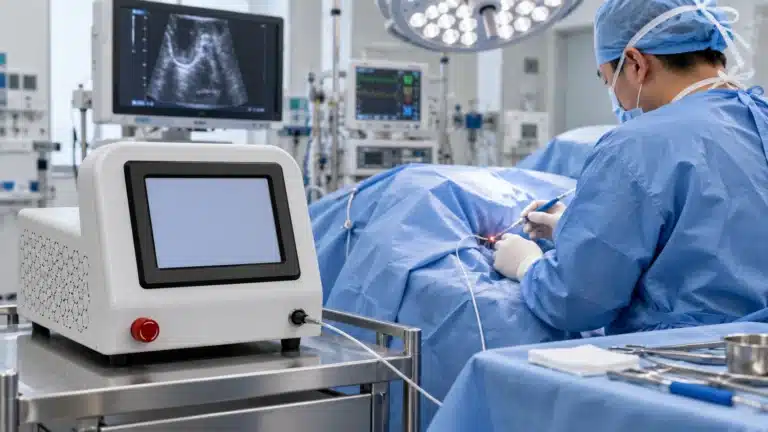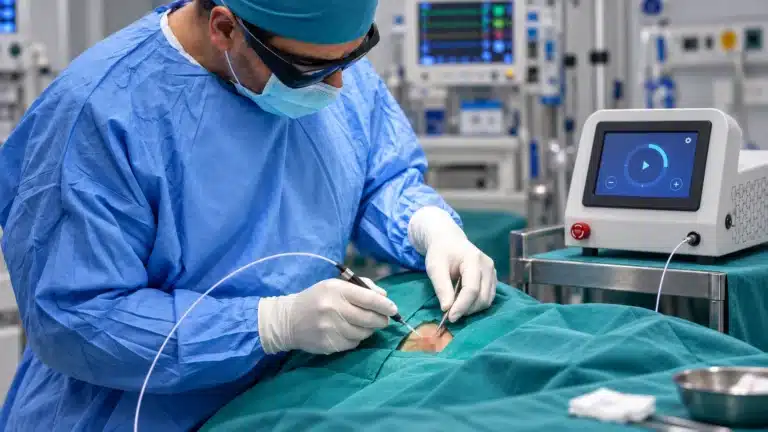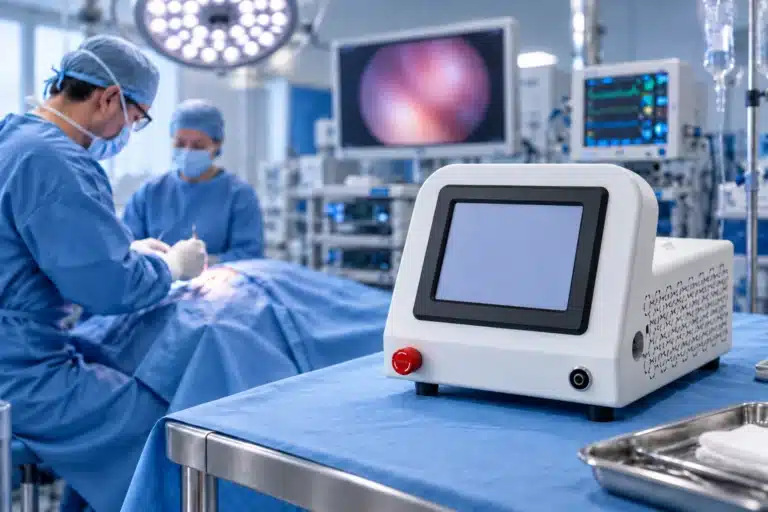
Back pain continues to be one of the leading factors of restricted movement and ongoing rehabilitation requirements. With increasing trends of shifting away from the conventional medicine-based pain treatment approaches, Class IV laser therapy has begun to attract attention in physiotherapy, chiropractic treatments, orthopedic treatments, and sports rehabilitation.
As far as the selection of a physiotherapy laser is concerned, distributors and purchasing units may benefit from a high-powered physiotherapy laser in various applications within the musculoskeletal field.
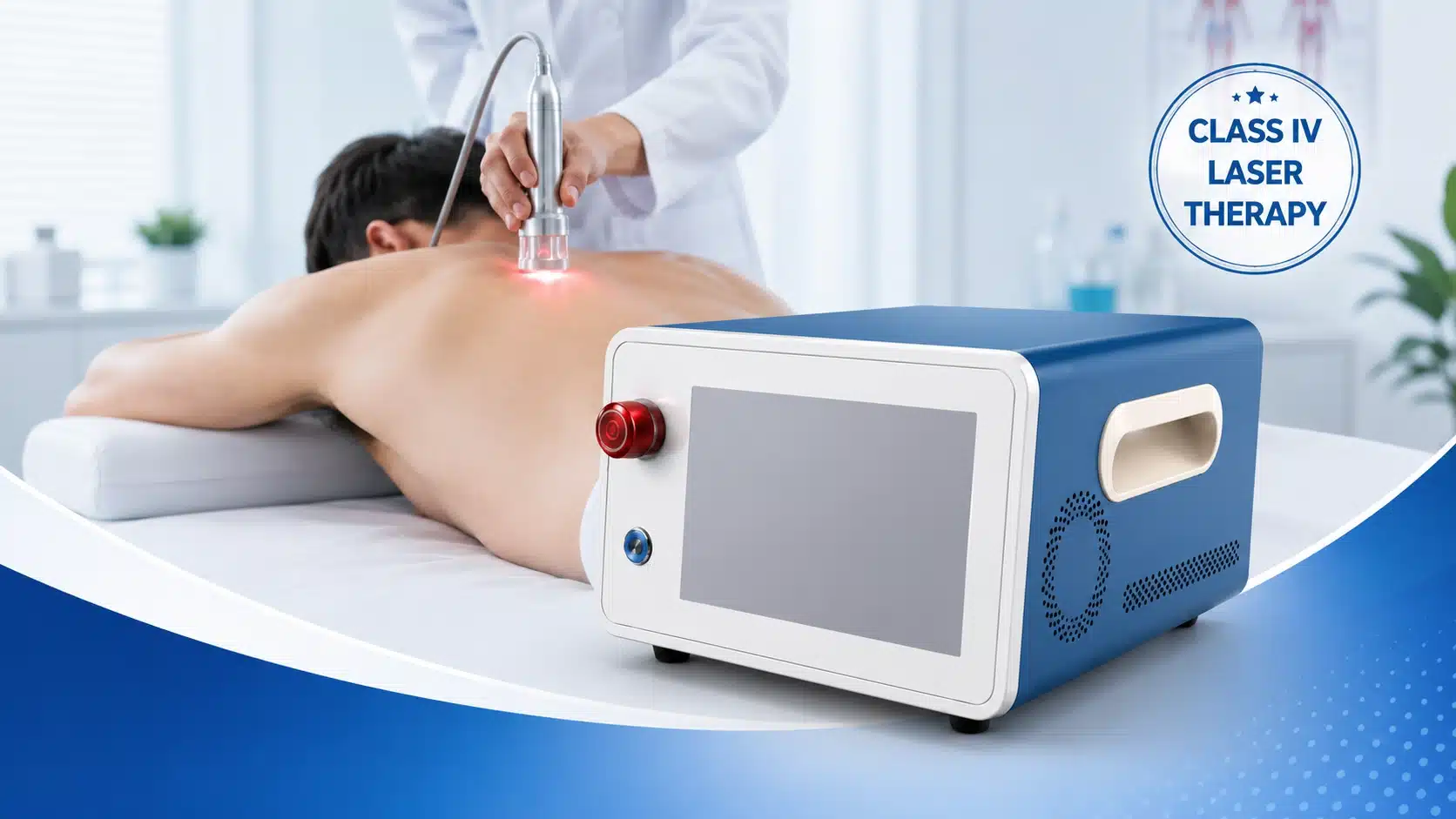
Understanding Class IV Laser Therapy: A Modern Solution for Back Pain
What Is Class IV Laser Therapy?
Terapia laserowa klasy IV uses concentrated red or near-infrared energy to deliver a controlled dose to targeted tissue. It is commonly discussed within photobiomodulation, where absorbed light may influence cellular metabolism, circulation, inflammatory signaling, and tissue repair.
“Class IV” is a laser hazard classification, not proof of clinical superiority. The FDA states that Class IV lasers can present immediate eye and skin hazards from direct or reflected exposure. Protective eyewear, trained operators, and controlled treatment procedures are essential.
Why High Power Matters
Greater production may provide the desired energy dose over a wider area or during less treatment time. This is applicable in the lumbar area and related muscles.
However, it must be noted that power alone does not determine the outcome. Factors like wavelength, spot size, mode, total joules, speed, state of the tissues, and the expertise of the practitioner will affect the energy dosage.
A Non-Invasive Addition to Rehabilitation
Class IV laser therapy requires no injections or incisions and is often integrated with exercise, mobility training, and manual therapy. Research is promising but mixed. Reviews report improvements in some musculoskeletal populations, while other analyses note inconsistent lumbar outcomes, protocol heterogeneity, and low certainty of evidence.
How Class IV Laser Therapy Works to Accelerate Healing and Relieve Pain
Photobiomodulation and Cellular Activity
Laser photons can react with the chromophores of cells and impact mitochondrial functions and ATP synthesis.
These mechanisms can aid in normal repair processes for muscles, ligaments, tendons, fascia, and other tissues linked with lower back pain.
The treatment protocols are aimed at promoting circulation, oxygenation, and inflammatory response management, which can be the explanation for the research on pain relief and tissue healing with lasers.
Four-Wavelength Coverage from Superficial to Deep Tissue
Arfurla’s Class IV physiotherapy laser combines 200mw at 500mW, 810nm at 8W, 980nm at 10W, and 1064nm at 10W. According to the manufacturer’s specifications, each wavelength is positioned for different tissue depths and treatment objectives.
- 650nm:Superficial tissue, microcirculation, wound support, and surface discomfort.
- 810nm:Mid-depth soft tissue, nerve modulation, muscle strain, and tendinitis.
- 980nm:Deeper circulation and inflammation-focused protocols, including lower-back pain, arthritis, and muscle spasm.
- 1064nm:Deeper targets associated with chronic pain, sciatica, and sports injuries.
This configuration provides protocol flexibility across superficial and deep-tissue applications without relying on one wavelength for every treatment area.
Clinical Applications and Benefits of Class IV Laser Therapy for Back Pain
Back Pain, Sciatica, and Rehabilitation
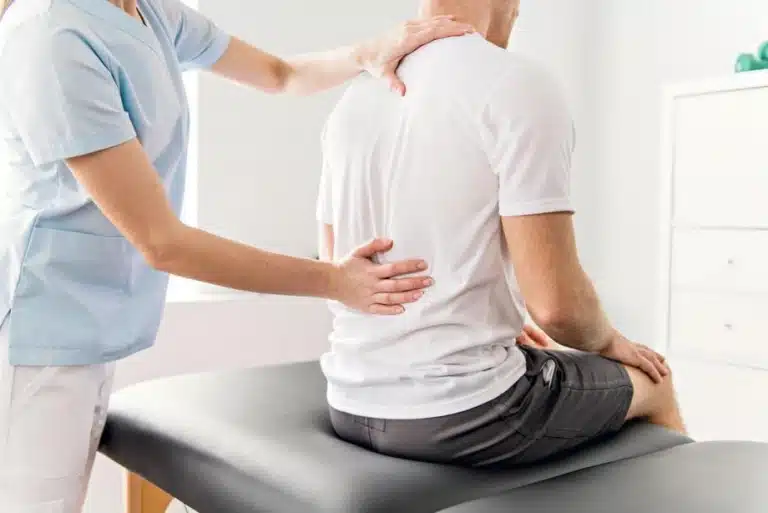
Lumbar pain can be musculoskeletal, myofascial, joint-related, neurological, or a combination of the above. According to Arfurla, some of the conditions listed as applications include back pain, sciatica, arthritis, muscle spasm, peripheral neuropathy, tendon and ligament injuries, postoperative rehabilitation, edema relief, and sports therapy.
These are important application areas for suppliers targeting physiotherapy clinics, chiropractic centers, orthopedic clinics, sports medicine centers, and veterinary rehabilitation centers.
Operational Benefits for Clinics
A high-power laser platform may provide:
- Non-invasive, drug-free treatment workflow
- Adjustable delivery for different anatomical targets
- Integration with exercise and manual therapy
- Broad rehabilitation application coverage
- Low routine consumable requirements
Actual outcomes depend on diagnosis, dosing, operator training, and patient factors. Marketing must remain consistent with local registration and approved indications.
Arfurla Four-Wavelength Class IV Laser: A Procurement-Focused Overview
Core Configuration and B2B Value
The 650nm, 810nm, 980nm, and 1064nm combination is designed to cover superficial, intermediate, and deeper targets. Z Arfurem positions the platform for pain management, rehabilitation, sports medicine, tissue repair, and selected neurological applications.
A complete procurement evaluation should include:
- Laser safety controls, emergency stop, key switch, and eyewear
- Adjustable power, pulse, time, and treatment protocols
- Technical manuals, training, and regulatory documentation
- Warranty, spare parts, and remote support
- OEM/ODM options for branding, language, and packaging
Manufacturer, Supplier, and Factory Capabilities
According to Hangzhou Arfurla Science & Technology Co., Ltd., the firm has its own R&D department and factory along with offering OEM and ODM services to global distributors. Additionally, there is a guarantee provided by the firm for two years along with online services and spare parts support. From a third-party supplier profile, the firm has been recognized as a “Manufacturer/Factory.”
Complementary Non-Surgical Treatments and Safety Considerations
Integration with Physical Therapy
Laser treatment is most suited in the context of a multimodal rehabilitation regimen. Exercises aimed at strengthening, increasing range of movement, improving posture, and manual therapy target mechanical or functional factors which laser energy can’t fix on its own.
Some benefits are possible in terms of high-intensity laser treatment in certain combinations with exercises or other physiotherapy methods. Still, evidence certainty in many cases is moderate or even very low.
Laser, LED, and Shockwave
- Class IV laser:Focused, coherent light with higher power density and configurable energy delivery.
- LED phototherapy:Non-coherent light commonly used for superficial or broad-area applications.
- Shockwave therapy:Mechanical acoustic stimulation often selected for certain chronic tendon and soft-tissue conditions.
No modality is automatically superior for every condition. A Class IV laser is strongest as a versatile light-based platform that can complement other rehabilitation equipment.
Contraindications and Professional Use
Manufacturer guidance identifies caution or contraindication areas including the eyes, malignant tumor sites, active bleeding, photosensitivity, the pregnant abdomen or pelvis, and the thyroid region. Protocols must follow device labeling, local regulations, and qualified clinical judgment.
Class IV Laser Therapy: A Promising Advancement in Back Pain Treatment
Class IV laser therapy offers an adaptable, non-invasive option for back-pain rehabilitation and broader musculoskeletal care. A four-wavelength system provides wider protocol flexibility, while higher output may improve workflow efficiency when operated by trained professionals.
Arfurla’s configuration combines product versatility with direct factory capability, OEM/ODM cooperation, and after-sales support. For distributors, the strongest market proposition combines credible specifications, regulatory readiness, operator education, and realistic clinical claims.
Wholesale inquiries can be sent to info@arfurla.com Lub +86-1830-1023-578 for technical details and commercial information about the four-wavelength Class IV laser platform.
Często zadawane pytania
Is Class IV Laser Therapy the Same as Cold Laser Therapy?
No. Class IV systems generally use higher output than low-level or “cold” lasers, requiring stricter safety controls.
What Makes a Four-Wavelength Physiotherapy Laser Different?
Multiple wavelengths provide different absorption and penetration profiles. Arfurla combines 650nm, 810nm, 980nm, and 1064nm for superficial and deeper musculoskeletal protocols.
Can Class IV Laser Therapy Support Sciatica and Lower-Back Pain Programs?
These conditions appear in physiotherapy laser application lists. Suitability depends on diagnosis, contraindications, approved indications, and professional protocol selection.
What Should Distributors Assess Before Purchasing?
Priority checks include regulatory files, laser safety, parameter control, training, warranty, spare parts, OEM/ODM options, and after-sales response.
Does Arfurla Provide OEM and ODM Services?
Arfurla states that its in-house R&D team and factory support OEM and ODM cooperation for international distributors.