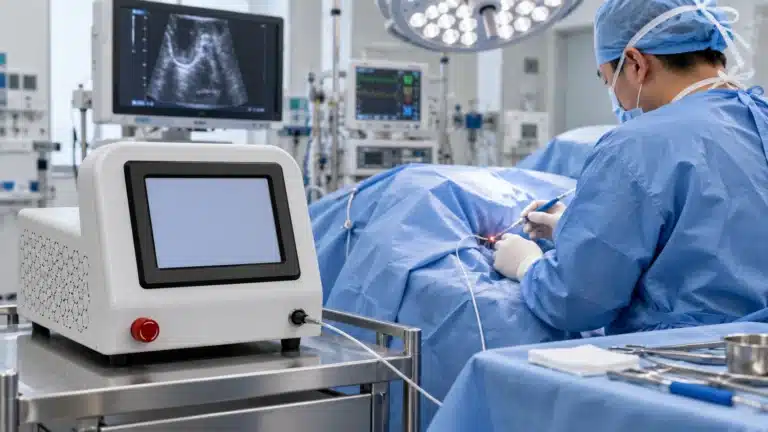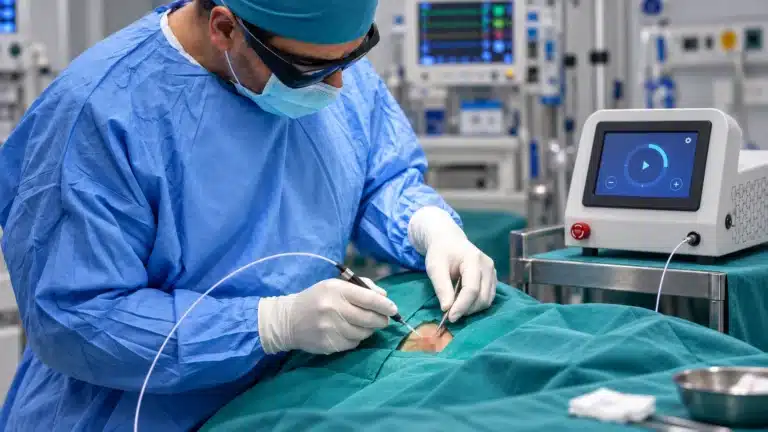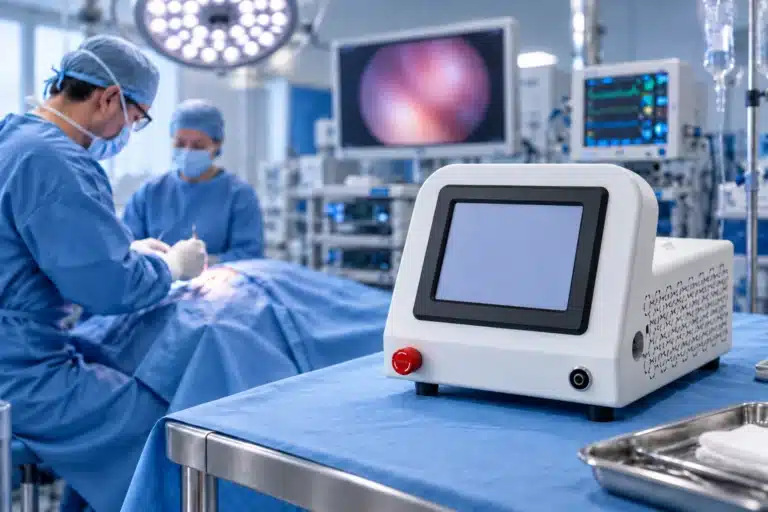
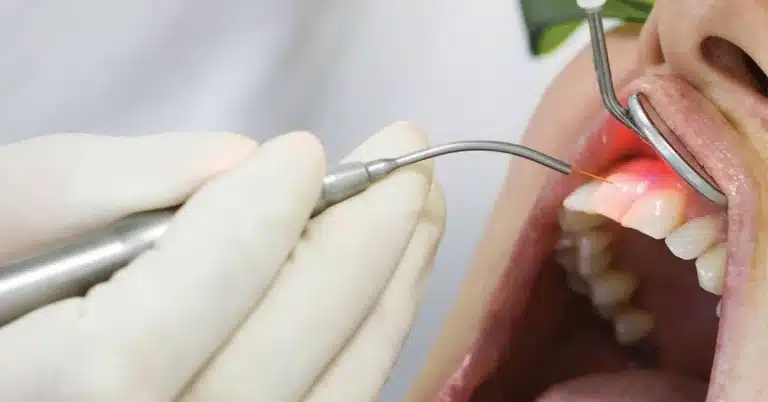
Soft tissue laser therapy in dentistry is a useful procedure for those cases that require controlled cutting, coagulation, ablation, or evaporation of the tissues in the oral cavity. The use of dental diode laser differs from a traditional scalpel or electrosurgical instrument since the delivery of laser energy is done through an optical fiber.
Such applications include gingivectomy, contouring of gums, crown lengthening, frenectomy, periodontal pocket therapy, uncovering of implants, troughing for restorations, removal of certain soft tissue lesions, and haemostasis. Effectiveness of the technique depends on wavelength, output power, pulse mode, fiber size, the technique itself, tissue type and proficiency of the operator. According to the FDA, dental soft tissue lasers are considered to be devices that provide incision, excision, cutting, ablation, and vaporization in oral and maxillofacial surgery and dentistry.
Different Types of Soft Tissue Dental Lasers
Types of soft tissue dental laser systems are diode, carbon dioxide, Nd, erbium family, among others. In each group of laser types, there are unique absorption properties, penetration depth, mode of delivery, and applications. Consequently, choice of laser must be made based on its applications rather than just its wavelengths.
Dental diode lasers are found in the near-infrared spectra. Those with wavelengths of about 810nm to 980nm are used for surgery, coagulation, periodontics, and antibacterial. Absorption of wavelengths of light by chromophores like hemoglobin and melanin helps in cutting and bleeding control in the blood-filled oral tissue, and the interaction with mineralized dental tissue is less pronounced.
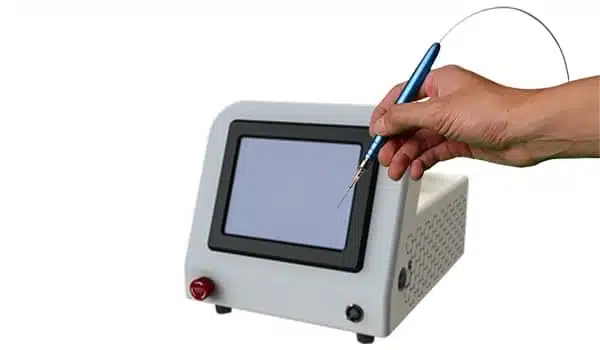
The Arfurla 980nm/1470nm multifunction medical 12-in-1 diode laser machine offers a broader platform for hospitals, specialty clinics, and distributors serving several departments. The 980nm wavelength supports coagulation and soft tissue applications, while the 1470nm wavelength has strong absorption in water-rich tissue and shallower penetration characteristics. Arfurla presents the system for dental, ENT, surgical, proctology, vascular, physiotherapy, and other applications.
Laser Therapy Provides the Following Advantages:
- Precise fiber-delivered soft tissue cutting
- Effective coagulation and improved treatment visibility
- Reduced mechanical trauma compared with conventional cutting
- Potentially less postoperative swelling and discomfort
- Limited interaction with enamel and dentin at common diode wavelengths
- Potential reduction in suturing requirements for selected cases
- Interchangeable tips for different oral procedures
- Compatibility with periodontal, restorative, surgical, and cosmetic workflows
- Strong product differentiation for dental equipment distributors
These benefits are not automatic. Excessive power, prolonged contact, an improperly initiated tip, or insufficient thermal relaxation can increase carbonization and collateral damage. Clinical protocols, device labeling, local regulations, and professional training remain essential.
Treating Patients with Periodontal Disease
Periodontal care is one of the most discussed applications of diode laser dentistry. A thin optical fiber can enter the periodontal pocket and deliver controlled energy toward inflamed soft tissue. The photothermal effect may support de-epithelialization, coagulation, and reduction of selected microorganisms.
Laser therapy is usually used as a supplement to, and not a substitute for, scaling and root planing. The mechanical debridement of plaque and calculus is still the cornerstone of the procedure. There are suggestions of advantages for laser therapy in terms of hemostasis, bactericidal effects, and pain relief; however, these results are inconsistent.
For B2B buyers, periodontal functionality opens up customer segments for general dental practitioners, periodontal clinics, implant facilities, and educational institutions. Fibers sizes, disposables, presets, training programs, and after sales services should be included in the purchase evaluation process.
Gingival Contouring with Soft Tissue Lasers
Gingival contouring entails the removal of excess tissue in a controlled manner, without disrupting the surrounding structures. Using the diode laser, it is possible to sculpt tissue with coagulation simultaneously, allowing visualization around the gingival margin. Some of the uses could be cosmetic recontouring, exposing the margin for restoration, crown-lengthening protocols, and overgrowth of the gums.
Controlled sweeping technique and appropriate energy level will minimize thermal build-up. If done appropriately, laser-guided contouring could minimize bleeding and simplify management postoperatively.
Procurement teams should evaluate tip availability, fiber durability, replacement cost, sterilization workflow, foot-switch responsiveness, interface design, treatment presets, and spare-parts support. These factors affect clinic adoption and distributor service costs.
Benefits of Using Laser Surgery for Frenum Removal
A restrictive labial or lingual frenum may contribute to functional, periodontal, orthodontic, or restorative concerns. Conventional frenectomy can involve scalpel excision, bleeding control, and suturing. Diode laser-assisted frenectomy provides an alternative through controlled ablation and coagulation.
Potential advantages include a clearer surgical field, reduced bleeding, limited mechanical trauma, and less need for sutures in selected cases. The fiber also allows access to small anatomical areas. Case selection, power control, and postoperative evaluation remain critical.
For distributors, frenectomy can demonstrate cutting precision and hemostatic performance. Demonstrations should be conducted by trained clinicians and aligned with national device registration and professional-use requirements.
Safety When Using Lasers
Laser soft tissue treatment is safe only when the device, clinical environment, and protocol are properly controlled. Dental professionals must understand wavelength-specific tissue interaction, power density, exposure time, pulse duration, fiber initiation, and thermal relaxation.
Key safety requirements include:
- Okulary ochronne o określonej długości fali
- Controlled access and laser warning signs
- Smoke evacuation where plume is generated
- Inspection of fibers, connectors, and foot switches
- Correct settings for the intended procedure
- Training on tissue response and emergency shutdown
- Compliance with local medical device regulations
Market authorization and approved claims vary by country. Distributors and importers should confirm registration documents, labeling, quality records, electrical requirements, and after-sales obligations before launch.
Często zadawane pytania
What Is a Dental Soft Tissue Diode Laser Used For?
A dental soft tissue diode laser may be used for gingivectomy, contouring, frenectomy, periodontal pocket procedures, implant uncovering, troughing, coagulation, and selected oral soft tissue surgery, subject to device indications and professional training.
Why Is 980nm Commonly Used in Dental Soft Tissue Treatment?
The 980nm wavelength is absorbed by hemoglobin, melanin, and water to varying degrees, supporting soft tissue cutting and coagulation with comparatively little direct interaction with enamel and dentin.
What Should Distributors Evaluate Before Purchasing a Dental Laser?
Important evaluation points include wavelength, output power, operating modes, fiber options, treatment presets, interface design, cooling, accessory costs, training, warranty, spare-parts availability, technical documentation, and regulatory suitability.
Partner with an Arfurla Dental Laser Manufacturer, Supplier, and Factory
Hangzhou Z Arfurem Science & Technology Co., Ltd. is a medical laser manufacturer, supplier, and factory integrating R&D, production, sales, and after-sales service. Arfurla provides OEM/ODM customization, technical training, warranty support, spare parts, and marketing assistance for distributors, importers, hospitals, and procurement organizations.
The 980nm/1470nm multifunction diode laser platform supports dental soft tissue treatment and multiple medical applications, helping B2B partners expand their product portfolios.
Skontaktuj się z Arfurlą for distributor pricing, technical specifications, OEM/ODM solutions, and quotations.
Email: info@arfurla.com
Phone/WhatsApp: +86-1830-1023-578