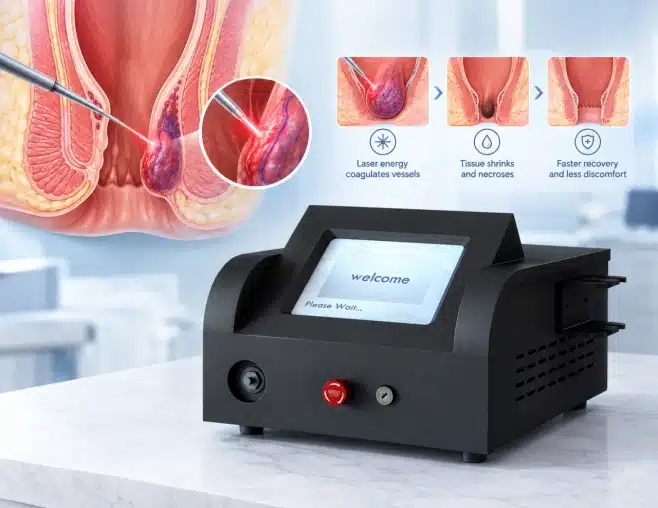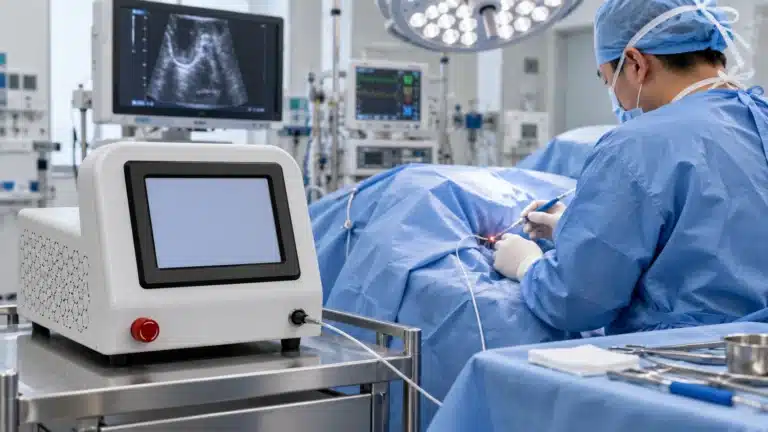
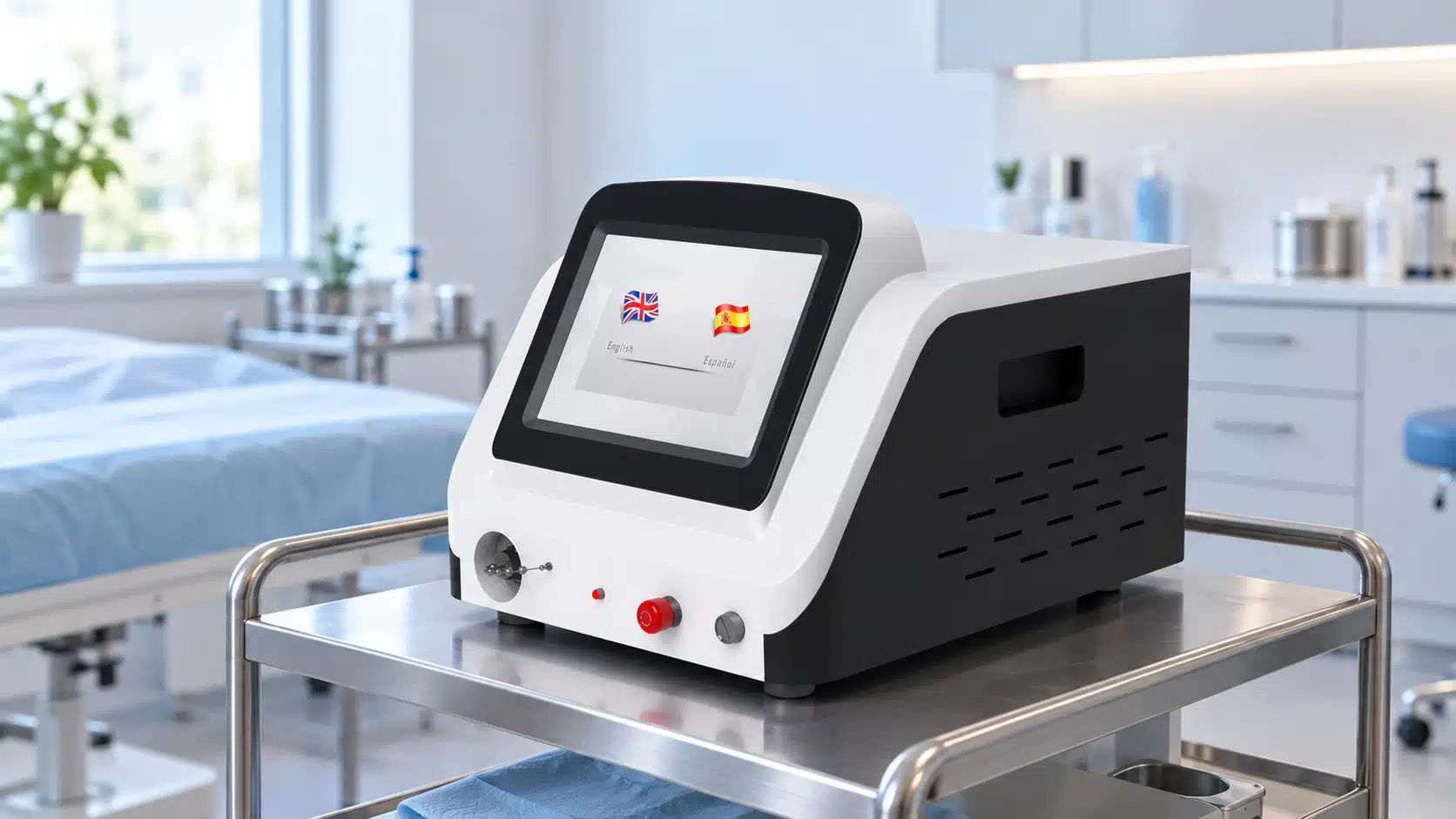
Anal fissure laser surgery is a sphincter-preserving option for selected patients, not a universal replacement for conservative care or lateral internal sphincterotomy. The clinical task is to identify a chronic, typical fissure that has not healed with appropriate medical treatment, define whether hypertonia or fibrotic tissue is the dominant problem, and choose a laser technique that addresses that problem without overstating the evidence. For equipment teams, the generator, wavelength, delivery fiber, handpiece, and sterile accessories must be verified as one compatible system before a case is scheduled. This guide is written for surgeons, clinical managers, and procurement teams who need to connect patient selection and operative intent with a defensible laser configuration.
Where Laser Fits in Anal Fissure Care
Most acute fissures should first receive stool regulation, fiber, sitz baths, analgesia, and appropriate topical therapy. The ASCRS clinical practice guideline for anal fissures defines acute symptoms as lasting less than six weeks and recommends nonoperative treatment first. Chronic fissures show persistent symptoms or features such as a sentinel tag, hypertrophied papilla, or exposed internal sphincter. Surgery is considered after diagnosis is confirmed and conservative or pharmacologic treatment has failed, or in selected chronic cases where a surgeon judges that an operative approach is appropriate.
Laser treatment is not one standardized operation. Published techniques include photobiomodulation, laser fissurectomy or debridement, and laser-assisted sphincterotomy. These interventions use different wavelengths, fibers, power settings, and tissue targets. A clinic should therefore describe the planned tissue effect precisely instead of treating the word laser as a complete protocol.
Patient Selection Before Laser Treatment
A practical selection review should confirm all of the following:
- A midline fissure with a clinical pattern consistent with primary anal fissure. Lateral or multiple fissures require evaluation for Crohn disease, infection, malignancy, or another secondary cause.
- Persistent symptoms despite an adequate course of stool softening, fiber, topical vasodilator or calcium channel blocker therapy, and other indicated nonsurgical measures.
- Baseline continence status, obstetric history, prior anorectal surgery, inflammatory bowel disease, and known sphincter injury. These factors can change the risk balance for any sphincter-dividing procedure.
- A defined operative goal. Superficial photobiomodulation, removal of fibrotic tissue, and sphincter relaxation are different goals and may require different delivery tools.
- No uncontrolled infection, undrained abscess, or unclear diagnosis that should be managed before elective laser treatment.
How the Diode Laser Procedure Works
Preparation and Exposure
The surgeon reconfirms the fissure location, chronicity, continence history, and planned tissue target. Positioning, anesthesia, bowel preparation, prophylaxis, and postoperative medication follow the surgeon’s protocol and local rules. An anoscope or suitable retractor provides controlled exposure while laser safety eyewear, warning controls, footswitch function, and fiber integrity are checked before emission.
Treatment Steps
- Inspect the anal canal and rule out another lesion or associated abscess.
- Remove hair, debris, scarred edges, or a sentinel tag only when the selected technique calls for debridement or fissurectomy.
- Position the approved fiber or probe at the planned distance and orientation. A bare or flat probe directs energy differently from a radial-emitting fiber.
- Deliver energy in controlled passes according to the device instructions and the surgeon’s validated protocol, watching tissue response and avoiding prolonged exposure at one point.
- Confirm hemostasis, inspect surrounding anoderm and sphincter, and document wavelength, mode, power, delivered energy, fiber type, and any additional procedure.
Equipment and Fiber Matching
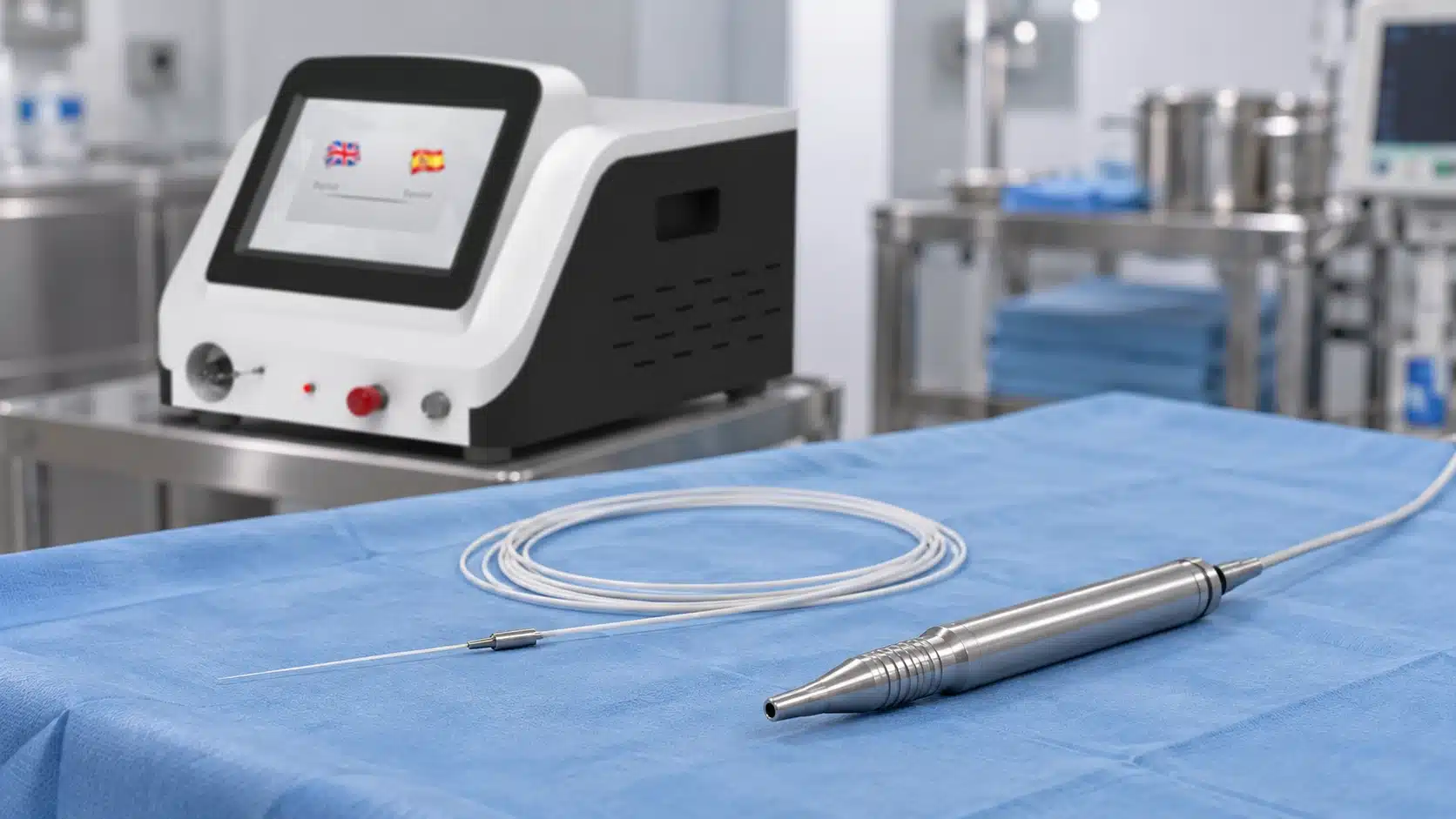
Arfurla presents proctology as an application of its 980 nm and 1470 nm diode laser platform. Its radial fiber product page lists a 360-degree emission pattern, SMA-905 connector, 3 m length, 400 or 600 micrometer diameter, and fissure among the stated applications. Those specifications do not by themselves establish the correct fissure technique. The surgeon and supplier must verify whether the intended procedure requires a flat, bare, conical, or radial output and confirm connector, fiber diameter, power handling, sterility, introducer, and approved use in the destination market.
Clinical Evidence and Its Limits
Evidence for anal fissure laser surgery remains preliminary and technically heterogeneous. A 2024 retrospective laser fissure study followed 38 patients treated with a 1470 nm diode laser and flat 600 micrometer fiber. Mean pain scores fell from 4.1 before treatment to 0.1 at day 60; minor complications occurred in 7.9%, and no continence change was reported at 60 days. However, the cohort mixed acute, chronic, and postoperative fissures, had no control group, focused mainly on pain, and had short follow-up for continence and recurrence.
The same paper reviews small studies using CO2 and diode systems, but their procedures and energy parameters differ. This prevents a reliable class-wide success rate. Standard care evidence is stronger for conservative therapy, botulinum toxin in selected patients, and lateral internal sphincterotomy for appropriate chronic fissures. Laser can be discussed as an alternative within shared decision-making, but clinics should not promise painless treatment, zero recurrence, or protection from incontinence.
Postoperative Management
Postoperative care protects the wound from renewed mechanical trauma and detects complications early. Written instructions should cover analgesia, stool softening, fiber and fluids, sitz baths or hygiene, activity, and the timing of review. The exact regimen must reflect the operation performed and the patient’s comorbidities.
- Ask patients to report fever, escalating pain, urinary retention, heavy bleeding, purulent drainage, or new continence symptoms promptly.
- Review wound healing and bowel function rather than judging success from pain alone.
- Address persistent constipation, diarrhea, and defecatory behavior because laser treatment does not remove these drivers.
- Record delayed healing or recurrent symptoms and reassess the diagnosis before repeating energy treatment.
Procurement Checks for Clinical Teams
Before purchase, request the current device specification, fiber instructions for use, compatible connector list, sterilization and shelf-life documentation, service plan, training scope, and country-specific regulatory status. Ask the supplier to map each proposed accessory to the exact clinical technique. The Arfurla proctology laser application page confirms the company’s intended application area, but the clinical team remains responsible for protocol selection, credentialing, laser safety, and patient consent.
Conclusão
Diode laser treatment may offer a sphincter-preserving option for carefully selected anal fissure patients, but selection and technique matter more than the label laser surgery. Acute and atypical fissures need appropriate medical or diagnostic management first. For chronic disease, clinicians should compare the intended laser effect with established alternatives, explain the limited evidence, and document the equipment configuration. Clinics evaluating an Arfurla system can request a technical fit check with the planned wavelength, fiber type, connector, target tissue, sterilization requirement, and local regulatory market.
Perguntas frequentes
Is laser first line treatment for an acute anal fissure
No. Most acute fissures should first receive nonoperative care, including stool regulation, fiber, sitz baths, and appropriate topical treatment. Atypical fissures require investigation before elective intervention.
Does laser replace lateral internal sphincterotomy
No. Lateral internal sphincterotomy remains the best-supported surgical treatment for selected chronic fissures without baseline fecal incontinence. Laser techniques may be considered in selected patients, but comparative long-term evidence is limited.
Which wavelength is used for diode laser fissure treatment
Published protocols include 980 nm and 1470 nm diode systems, but wavelength cannot be selected alone. Probe geometry, tissue target, power, mode, exposure time, and surgeon training must be considered together.
What should a clinic send for an equipment fit check
Provide the intended procedure, wavelength, fiber or probe geometry, connector, required diameter and length, sterile-use policy, expected case volume, destination country, and any compatible anoscope or introducer requirements.