The phrase diode laser machine describes a laser source, not a single medical product category. In aesthetic and clinical procurement, it can refer to an 808nm hair-removal console, a multi-wavelength hair-removal system, a fiber-delivered 980nm and 1470nm surgical platform, or a therapy device using another wavelength set. Comparing all of them by power, price, or wavelength count produces a misleading shortlist. This guide helps distributors and clinic buyers classify the product first, then request specifications that match the intended service.
Start With Intended Use Rather Than the Diode Label
Write one sentence that defines what the buyer expects the equipment to do, where it will be used, who will operate it, and which market will receive it. A hair-removal platform and a fiber-delivered medical laser may both use semiconductor diodes, but their beam delivery, controls, accessories, room workflow, operator requirements, and regulatory evidence are different. The intended use should therefore control the comparison table.
Arfurla’s medical and aesthetic product catalog separates 808nm laser hair removal machines from 980nm and 1470nm diode laser machines and from accessory categories. That separation is commercially useful. It prevents buyers from requesting a hair-removal handpiece for a fiber console, applying a surgical output claim to an aesthetic platform, or treating a broad supplier label as a complete product specification.
Separate Hair Removal Systems From Fiber Delivered Medical Lasers
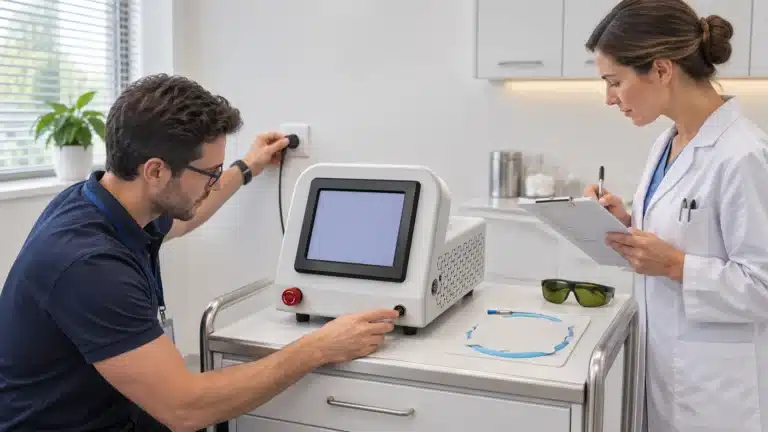
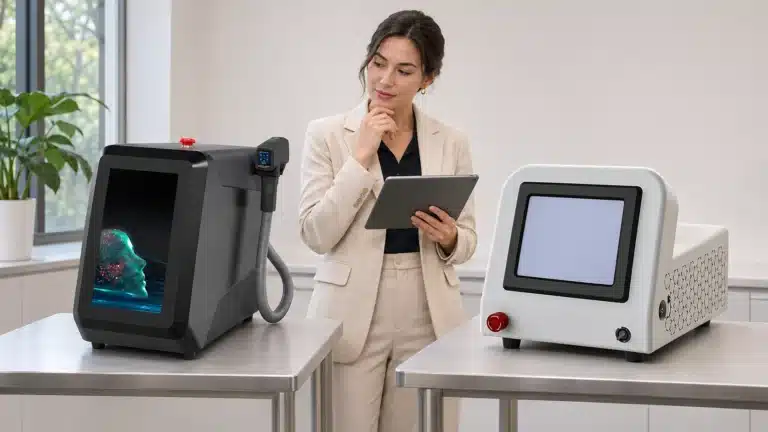
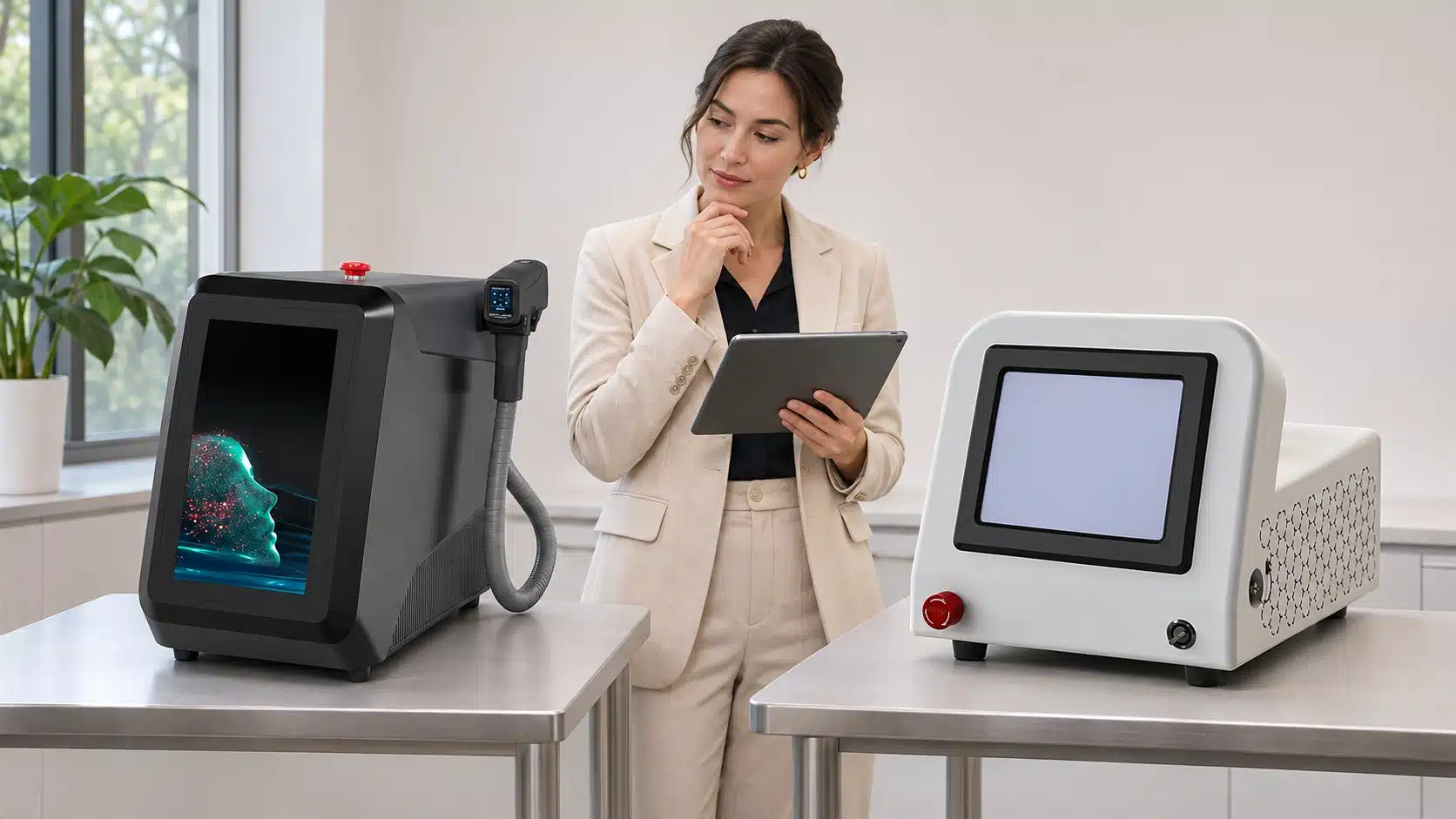
A professional hair-removal system normally delivers energy through a contact handpiece with a treatment window and integrated cooling. Product comparisons commonly address wavelength combination, spot size, repetition rate, pulse controls, handpiece cooling, cable handling, and expected service life. Arfurla’s portable four-wavelength hair removal model lists 790nm, 808nm, 940nm, and 1060nm in one product family. Buyers should verify the exact combination and delivery method for the quoted model rather than shortening every option to an 808nm label.
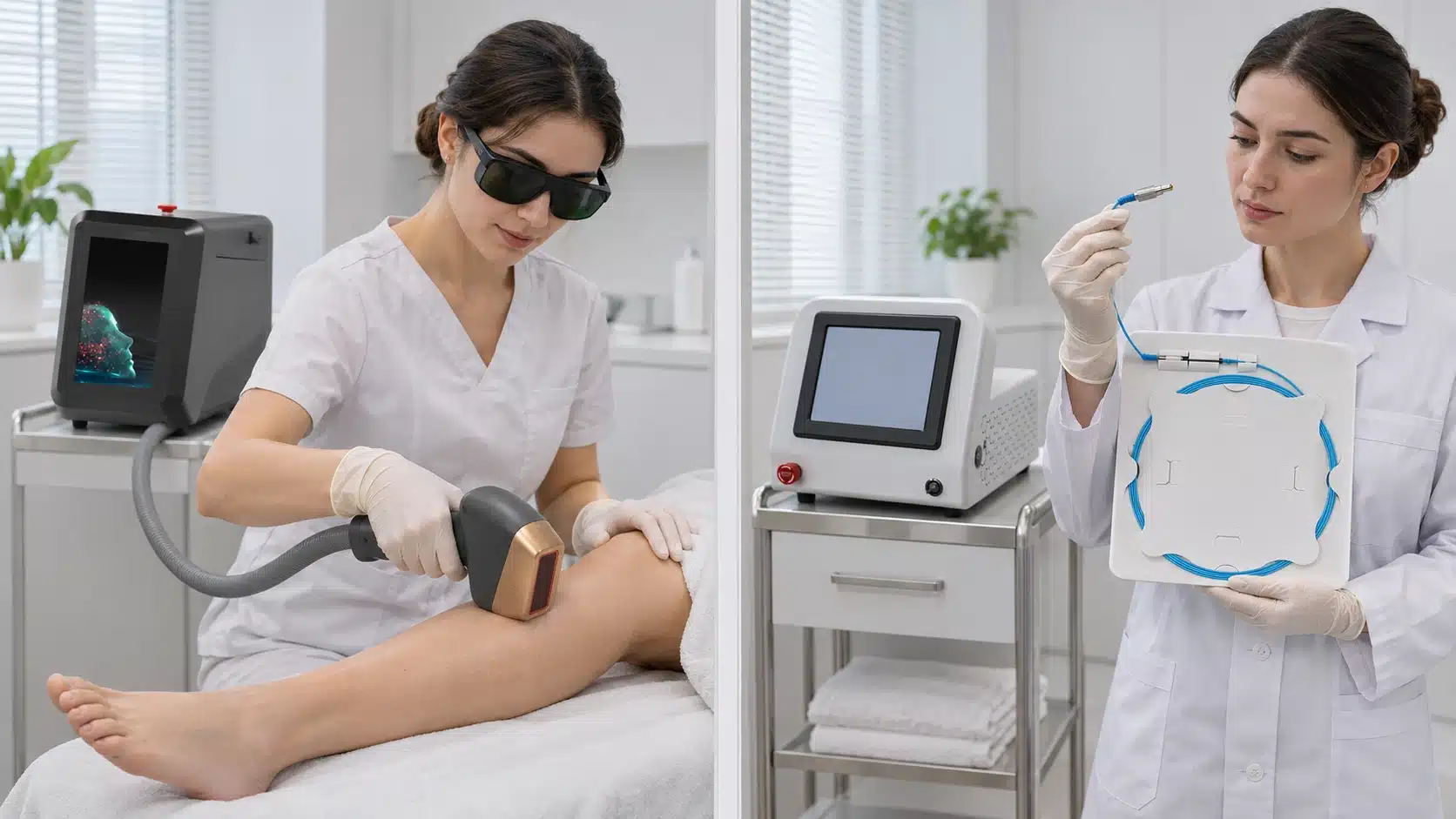
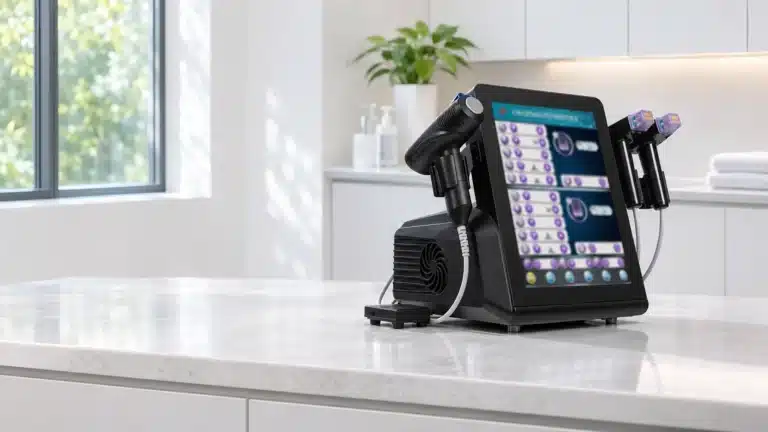
A 980nm and 1470nm medical platform generally uses optical fibers and specialty handpieces to deliver energy for defined clinical applications. The AFL Medical 12 in 1 platform presents this type of system across several specialties. Procurement therefore centers on host-fiber compatibility, output modes, connector and tip geometry, single-use or reusable status, sterilization or disposal workflow, department-specific training, and procedure documentation. Those criteria do not map cleanly to a contact-cooled hair-removal handpiece.
Understand What the Wavelength Number Can and Cannot Tell You
Wavelength affects which chromophores absorb energy and how energy is distributed in tissue, but it does not prove clinical suitability by itself. Pulse duration, fluence or power, spot or fiber geometry, repetition rate, cooling, contact conditions, software limits, and operator technique also influence delivery. A claim that one wavelength is universally better should be replaced with a documented match between the product, intended use, and approved protocol.
For hair removal, 808nm is a common reference wavelength and may appear alone or in a multi-wavelength handpiece. Arfurla’s article on waveguide-free multi-wavelength hair removal technology describes one combination used in its current product line. A buyer should still request the model-specific spectrum, method of simultaneous or selectable delivery, usable pulse range, spot sizes, cooling architecture, and verification procedure. Do not copy settings or performance claims between models that have different optical paths.
For fiber-delivered medical systems, 980nm and 1470nm are often discussed through their different interactions with hemoglobin and water. The existing 980nm and 1470nm comparison explains that technical distinction. The purchasing decision should go further by identifying which wavelength is independently available, whether combined delivery is supported, which fibers are documented for each mode, and which intended applications are covered in the destination market.
Compare the Delivery System Before Comparing Power
Power numbers are not interchangeable across product categories. A hair-removal handpiece spreads controlled pulses through a defined spot and depends on skin contact and cooling. A medical fiber concentrates output at a small distal geometry and may use a bare, conical, radial, or specialty tip. A therapy applicator can use yet another beam arrangement. Each architecture needs its own output range, calibration method, safety controls, and maintenance evidence.
Ask the supplier to show where output is specified and measured, what tolerance applies, how the system detects faults, and which component is considered the treatment aperture. Confirm whether the displayed value represents electrical input, optical output, pulse energy, fluence, or another parameter. A large number without a defined measurement point and duty cycle is not useful for a like-for-like comparison.
Map Accessories and Ownership Costs by Product Family
For hair-removal equipment, list every included handpiece, spot option, window, filter or coolant requirement, cleaning material, cable, and replacement module. Clarify how handpiece life is measured, which parts can be serviced locally, and whether a second handpiece or loan unit is available. Build room downtime, preventive service, freight, and operator retraining into the ownership model.
For fiber-delivered systems, build a bill of materials for each approved service. Record the fiber part number, connector, diameter, emission geometry, handpiece, introducer or guide, sterile status, pack quantity, shelf life, disposal or reprocessing method, and approved substitute. Recurring fiber cost and supply continuity may matter more than the price difference between two consoles. Keep the two ownership models separate until the buyer has classified the equipment correctly.
Verify Regulatory and Safety Evidence for the Market
The product name used in a quotation does not establish legal status. Match the model identifier across the label, manual, technical file, invoice, software, and market-specific regulatory documents. Confirm the intended use, user population, operator requirements, laser class, wavelength, maximum output, and included accessories. Marketing phrases such as medical grade or professional diode laser should never replace those records.
In the United States, the FDA laser frequently asked questions explains that professional laser products carry hazard classifications and require appropriate training and labeling. Other markets use different device, facility, and professional rules. Buyers should obtain advice for the destination market before approving claims, importing equipment, or adding a service. Supplier certificates must be current, model-specific, and relevant to the proposed use.
Use a Two Stage Request for Quotation
The first stage should classify the product. State the intended service, treatment area or specialty, expected volume, operator type, destination market, room format, and whether contact-handpiece, fiber, or therapy delivery is required. Ask the supplier to propose only models that fit that definition.
The second stage should normalize the offers. Require an itemized console, wavelengths, modes, optical delivery, accessories, cooling, utilities, training, installation, warranty, spare parts, consumables, lead times, regulatory documents, and service response. Arrange a demonstration that uses the quoted configuration. A buyer can then compare working systems rather than unrelated machines that share only the word diode.
Decision Checklist
- Intended use and destination market stated before any model is shortlisted.
- Product family classified as hair removal, fiber-delivered medical, therapy, dental, or another defined category.
- Wavelength, pulse or output controls, delivery path, cooling, and measurement method confirmed for the exact model.
- Handpieces, fibers, consumables, cleaning, service parts, training, and downtime included in ownership cost.
- Labels, manuals, quotation, software identity, intended use, and regulatory evidence agree.
Conclusion
A useful diode laser machine comparison begins by separating product families. An 808nm or multi-wavelength hair-removal console should be judged through its contact handpiece, cooling, spot delivery, and throughput. A 980nm and 1470nm medical system should be judged through fibers, handpieces, documented applications, traceability, and clinical support. Once the intended use and delivery path are fixed, wavelength and price become meaningful specifications instead of misleading labels.
Frequently Asked Questions
Does diode laser machine always mean hair removal equipment
No. The phrase can describe hair-removal, medical, surgical, therapy, dental, industrial, and other systems. Add the intended use and wavelength when researching or requesting a quotation.
Is 808nm better than 980nm for every clinic
No. They commonly belong to different product and application categories. Compare the intended use, delivery system, approved configuration, and market requirements rather than ranking the wavelength alone.
Can a multi-wavelength handpiece replace a 980nm and 1470nm fiber laser
Not on the basis of wavelength count. Contact hair-removal handpieces and medical fiber systems have different delivery geometries, controls, accessories, workflows, and intended-use documentation.
What information should a supplier quotation include
It should identify the exact model, wavelengths, delivery components, enabled modes, utilities, included accessories, consumables, training, installation, warranty, service, lead times, and destination-market documents.