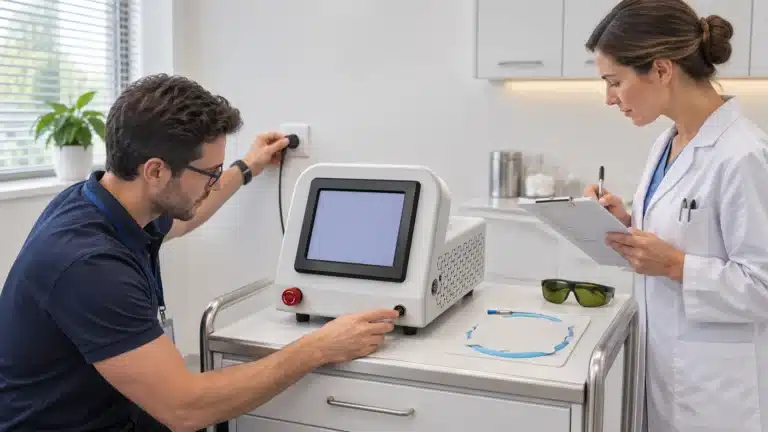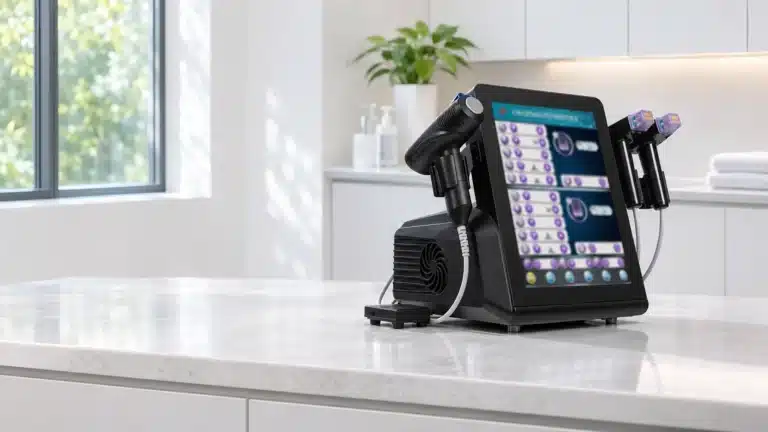
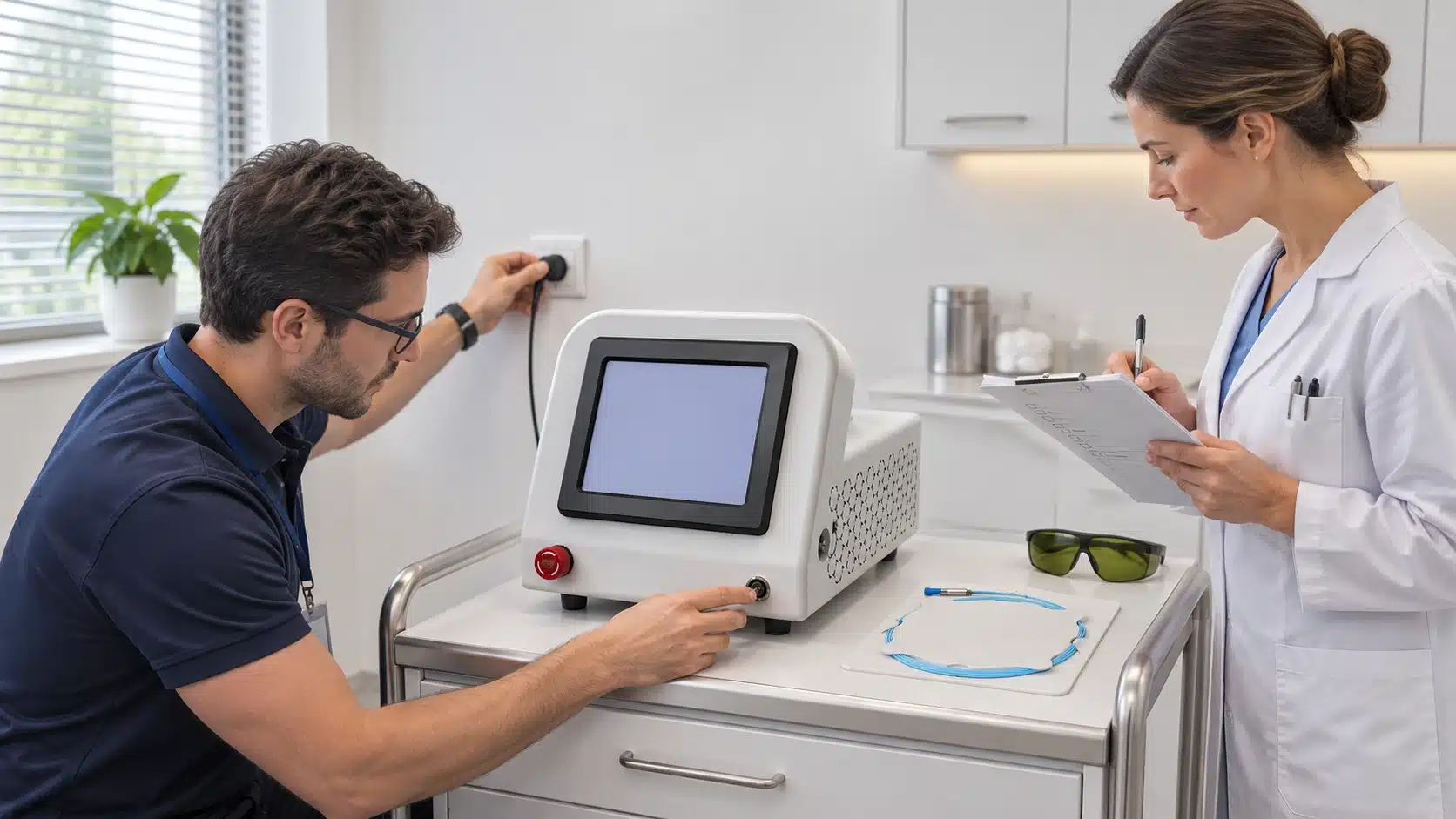
An endolaser service should open only after the clinic has commissioned the room, console, delivery components, safety controls, staff roles, and support process as one working system. A successful power-on test does not prove that the treatment area is ready. The clinic also needs controlled access, wavelength-matched protection, traceable fibers, a clean workflow, and a documented response to faults. This checklist helps clinic owners, laser safety personnel, and procurement teams prepare a 980nm and 1470nm platform for first clinical use without repeating treatment-effect claims already covered elsewhere.
Confirm the Intended Service Before Planning the Room
Begin with the exact services approved for launch, the qualified operators, and the local rules that apply to those services. Endolaser is used loosely in commercial searches, while the equipment may be configured for subdermal aesthetic work, lipolysis, vascular procedures, soft-tissue applications, or other specialties. Each service can require different fibers, handpieces, patient positioning, sterile supplies, imaging, smoke control, and operator credentials. Do not design a generic laser room around every capability listed in a brochure.
Arfurla presents the AFL Medical 12 in 1 platform as a multi-application 650nm, 980nm, and 1470nm system. That breadth makes configuration control important. The opening-day scope should identify which wavelength, delivery component, software mode, and accessory set are enabled for each service. The clinic should keep future applications outside the active workflow until the required training, documentation, supplies, and regulatory review are complete.
Plan the Endolaser Room Around the Complete System
Place the console where the operator can see the display, reach the emergency control, and move the fiber or handpiece without pulling across a walkway. Confirm the specified electrical supply, grounding, ventilation clearance, temperature, humidity, and transport or settling instructions for the quoted model. The footswitch needs a stable position that does not invite accidental activation. Cables should remain visible enough for inspection but protected from wheels, sharp bends, fluids, and unnecessary foot traffic.
Define the controlled work zone before equipment arrives. The plan should cover restricted access, warning signs, reflective surfaces, doors, windows, protective eyewear storage, patient eye protection, and the location of keys when the system is not in use. The clinic’s qualified safety lead should use the device classification, manufacturer instructions, applicable law, and a recognized healthcare laser-safety framework. The OSHA overview of surgical-suite laser hazards is a useful starting point for U.S. facilities, but it does not replace site-specific policy or professional safety assessment.
Build a Controlled Fiber and Handpiece Workflow
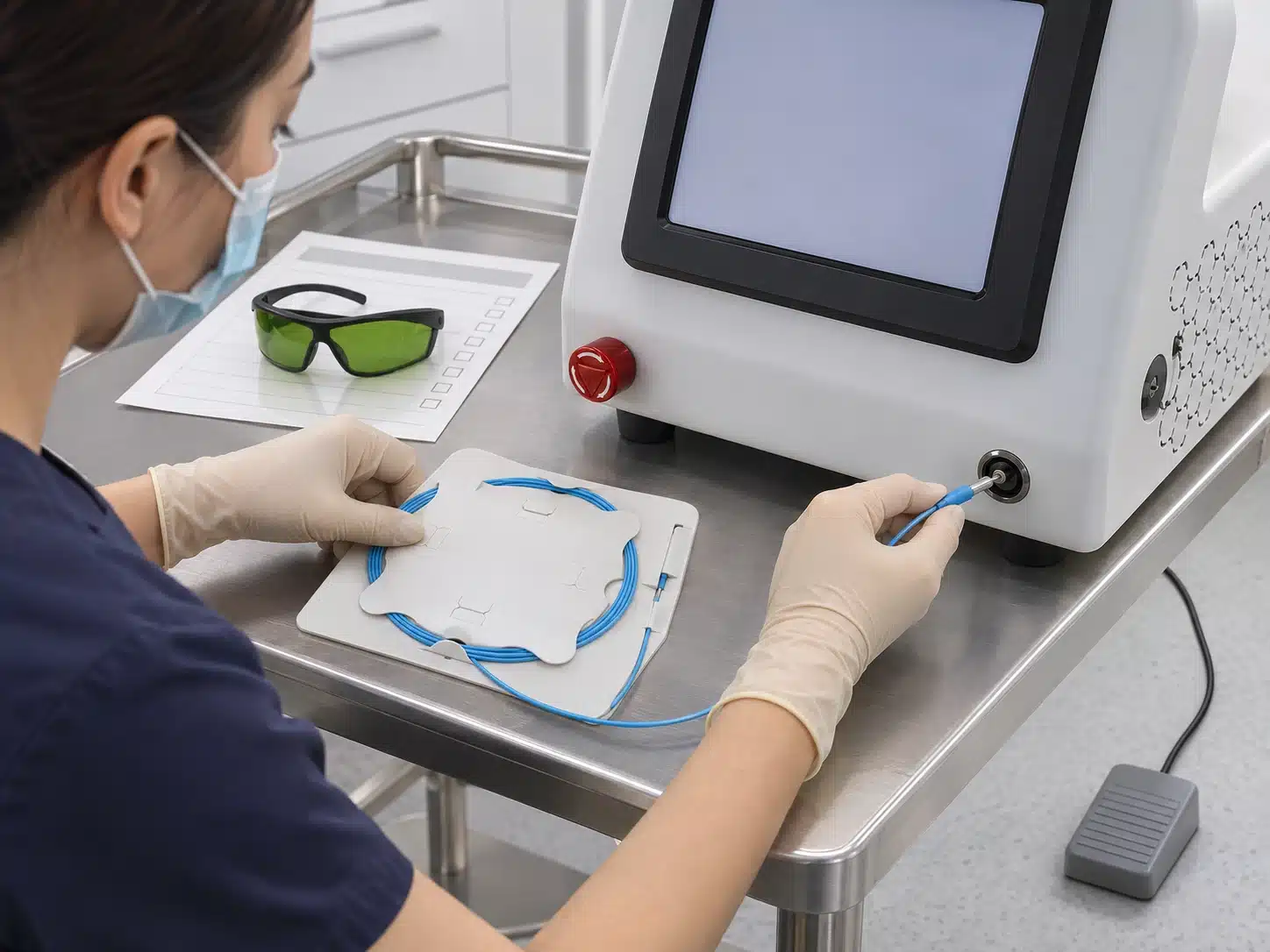
Separate clean storage, preparation, active use, and disposal or reprocessing. Every fiber and handpiece should be identified by part number, compatible host model, connector, wavelength, diameter or tip geometry, sterility status, and reuse classification. Store single-use items by lot and expiration date. Protect connector end faces from dust and damage, and never treat a familiar-looking connector as proof of optical compatibility.
The 980nm and 1470nm accessory catalog lists multiple fiber and handpiece categories, so the room should stock only the approved set for the services being launched. Use the existing fiber and handpiece compatibility guide to build a host-accessory record and a procedure kit list. The commissioning file should show the primary item, an approved backup, included quantity, reorder point, supplier lead time, and the action required when packaging or the connector is damaged.
Complete Installation and Functional Acceptance
Installation should follow the current manual and the supplier’s documented process. Record the model, serial number, enabled wavelengths, software version, voltage, included accessories, keys, footswitch, eyewear, labels, and manuals. Compare the shipment with the quotation before routine use. If a component is missing or a model identifier differs across the label, software, invoice, and instructions, stop the acceptance process and obtain written clarification.
A trained person should verify normal startup, self-checks, display controls, mode selection, audible and visual indicators, emergency stop, key control, footswitch behavior, cooling status, and fault messages without performing an unauthorized output adjustment. Inspect the delivery port, fiber connection, cable routing, and handpiece retention according to the manual. Save the completed acceptance form and approved baseline condition. Future service reviews then have a clear reference rather than a verbal memory of how the unit arrived.
Assign Staff Roles Before the First Appointment
Name the operator, assisting staff, laser safety lead, infection-control contact, equipment owner, and supplier escalation contact. Training should match the exact configuration and cover access control, pre-use inspection, eyewear, fiber handling, console controls, warning indicators, emergency shutdown, cleaning, recordkeeping, and incident response. Clinical technique and patient selection must remain within the operator’s credentials and the approved instructions for the intended use.
Use a simulated appointment to test the workflow from room opening to shutdown. Staff should locate the correct kit, confirm identifiers, position the console and footswitch, complete safety checks, handle a planned alarm scenario, and return the room to its documented state. The simulation often reveals missing labels, awkward cable paths, unclear responsibilities, or supplies stored beyond reach. Correct those issues before a patient schedule creates pressure to improvise.
Create Pre Use and End of Day Records
A short pre-use record should confirm the room status, warning controls, system condition, approved delivery component, connector inspection, cooling status, eyewear, emergency controls, and required supplies. Record the fiber lot or reusable component identity when traceability is required. The end-of-day record should cover shutdown, cleaning, storage, consumable count, fault history, damage, and any item removed from service.
Keep the checklist operational rather than turning it into a treatment protocol. The article on how endolaser technology works provides background on energy delivery; the room record should focus on whether the approved system is ready for use. Settings, endpoints, and clinical steps belong in validated, procedure-specific documents controlled by the responsible clinician and applicable regulation.
Plan Service Support and Downtime
Before launch, document who answers technical questions, expected response times, remote diagnostic requirements, spare-part location, return shipping responsibility, warranty exclusions, and the process for a loan unit. Keep approved backup fibers and routine replacement items within their storage limits. Do not stock an unverified substitute merely because it fits the port.
Arfurla describes in-house development, production, sales, OEM and ODM work, and after-sales support on its official company website. A clinic should convert those general capabilities into configuration-specific commitments for installation, operator training, parts, and escalation. The final readiness decision belongs to the clinic after all open items are closed in writing.
Final Readiness Checklist
- Scope confirmed for each launched service, operator, wavelength, mode, fiber, and handpiece.
- Room utilities, access control, signs, eyewear, cable paths, and emergency controls verified.
- Shipment reconciled with the quotation, manual, labels, and software identifiers.
- Fiber inventory controlled by compatibility, lot, expiration, reuse status, and reorder point.
- Staff simulation completed and installation, training, acceptance, and fault records filed.
Conclusion
Endolaser commissioning is complete when the clinic can show that the room, device, delivery components, people, and support process work together under controlled conditions. Define the launch scope, verify the exact configuration, test the entire appointment workflow, and close every documentation gap before clinical use. This operational approach supports safer scheduling and more reliable ownership without relying on treatment promises or generic specifications.
Frequently Asked Questions
Can an endolaser system be installed in any treatment room
No. Room suitability depends on the device classification, intended service, manufacturer instructions, local requirements, utilities, access control, protective measures, and the clinic’s safety assessment.
What should be checked at delivery
Verify the model, serial number, labels, software, wavelengths, accessories, keys, footswitch, eyewear, manuals, electrical configuration, packaging condition, and quotation line items before acceptance.
Should spare fibers be ordered before launch
Yes, when they are approved for the exact host and service. Set backup stock from expected case volume, shelf life, lead time, and the operational effect of a missing fiber.
Who should approve first clinical use
The clinic should use its responsible clinical, safety, technical, and administrative roles according to local policy. Supplier installation alone does not replace the clinic’s own readiness approval.