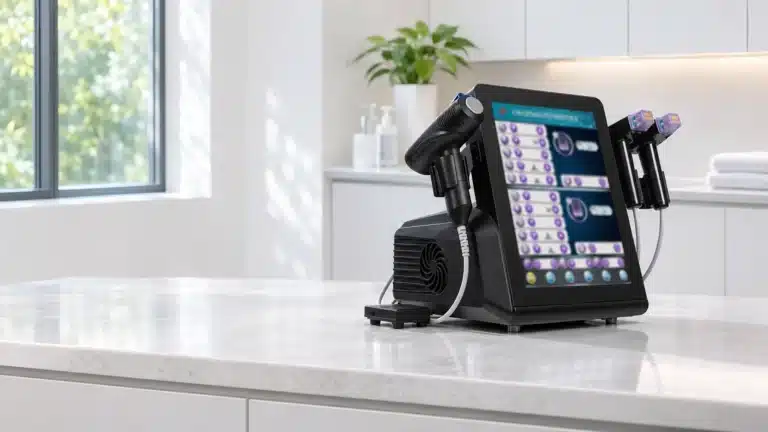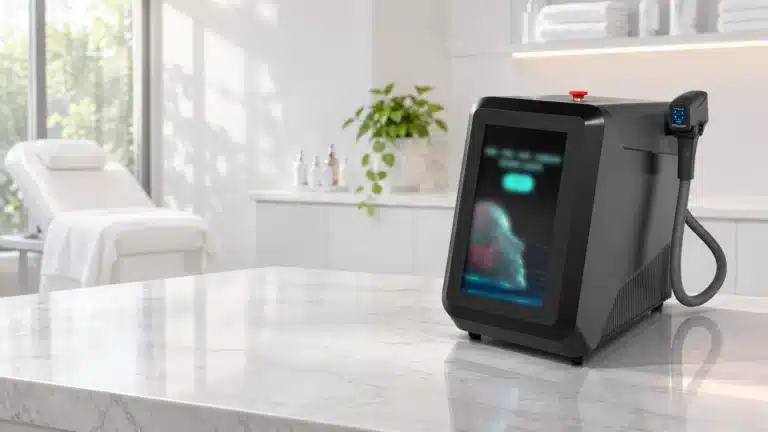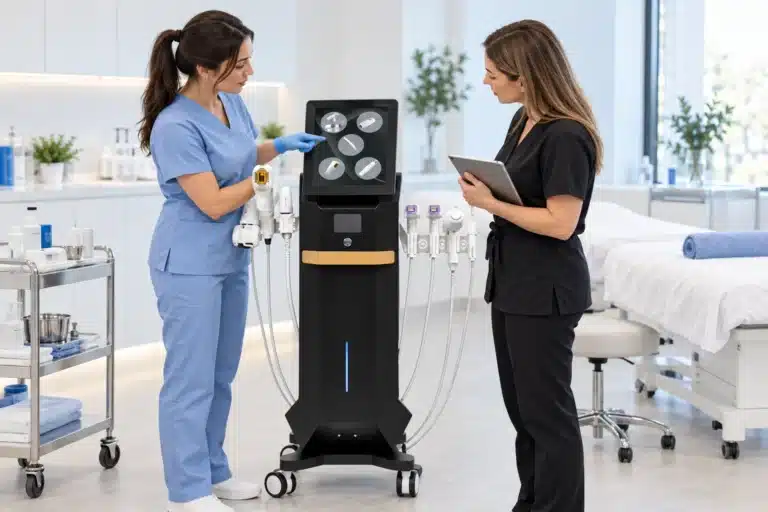
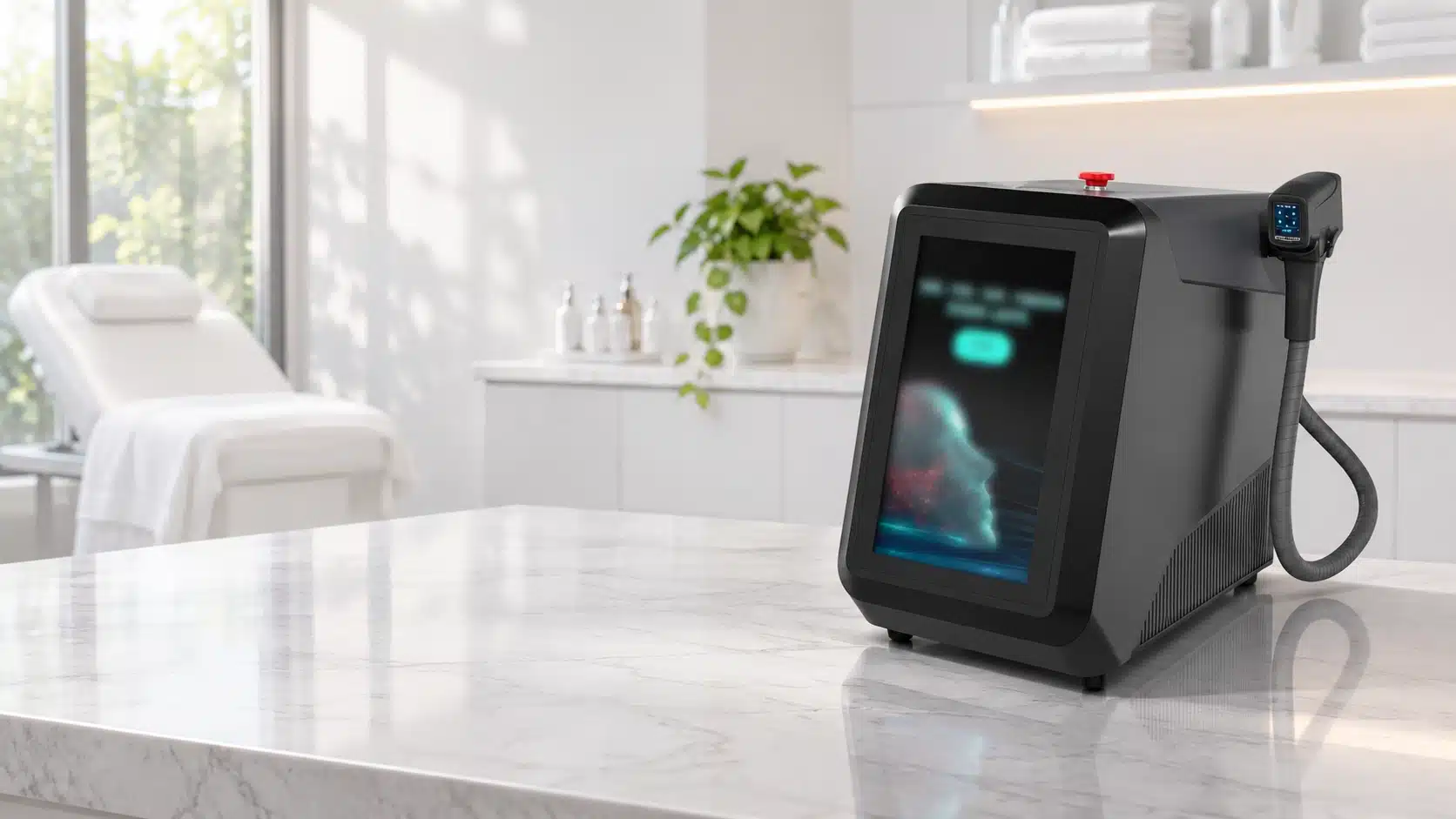
Professional laser hair removal equipment should be evaluated as a clinical workflow, not as a list of headline specifications. A clinic needs a wavelength strategy that fits its intended client mix, a cooling system that supports controlled delivery, a spot-size plan that matches treatment areas, and a handpiece that can be serviced without disrupting the schedule. The purchase decision is sound only when these elements work together under the clinic’s operating conditions.
The most useful comparison begins with a written service profile and ends with an acceptance test. Price matters, but the clinic also needs to understand consumables, handpiece life, preventive maintenance, operator training and the response plan for downtime.
Define the Clinical Scope Before Comparing Machines
Document the services the clinic plans to offer, the body areas involved, expected appointment volume, operator roles and the client groups the clinic is prepared to assess and treat. Include peak-day demand rather than relying only on monthly averages. This profile keeps equipment selection tied to bookable work.
Use that profile to screen the professional diode laser hair removal equipment range before asking for a quotation. Remove any model that cannot be matched to the planned treatment areas, room utilities, staff competency and local requirements. This prevents the feature list from defining the clinic’s service plan after the purchase.
Choose a Wavelength Strategy That Fits the Service Mix
Wavelength selection should follow the clinic’s intended use and the manufacturer’s documented indications. Buyers commonly encounter 755 nm, 808 nm, 940 nm and 1064 nm class options in professional diode platforms. The clinic must review the complete specification, training materials and permitted protocols for the exact model.
Compare Single and Multiple Wavelength Configurations
A single-wavelength platform may be easier to standardize when the service scope is narrow. A multi-wavelength system may support a broader protocol strategy, but only if the clinic will use the added capability and staff can select settings correctly. Arfurla lists both a vertical four-wavelength diode laser and a portable four-wavelength diode laser. Their wavelength combinations are not identical, so the clinic should compare the exact product specification rather than treating every four-wavelength label as equivalent.
Verify How the Wavelengths Are Delivered
Ask whether the listed wavelengths are delivered simultaneously or through another documented operating method, how output is controlled, and which settings the operator can adjust. Confirm the available pulse controls, energy display, treatment modes and any model-specific restrictions. Do not infer performance from wavelength count or combine settings from a different machine’s protocol.
Evaluate Cooling as Part of the Treatment System
Cooling affects workflow, contact stability and the operator’s ability to deliver the documented protocol. Request a clear description of the cooling architecture, the handpiece contact surface, startup time, temperature control and environmental requirements. Ask how the clinic verifies normal cooling before the first appointment and what warning or lockout appears when the system is outside its operating range.
The service review should also cover water quality where applicable, filter or coolant replacement, condensation, cleaning of the contact window and the steps required after transport or extended storage. The waveguide-free diode laser technology article provides useful product context, but a buyer should still obtain maintenance instructions for the exact quoted handpiece and cooling configuration.
Match Spot Size and Treatment Area to Real Throughput
A larger spot can improve coverage of broad areas, while a smaller spot may be easier to position on compact or contoured areas. The practical choice depends on the supplied handpiece, repetition rate, contact technique, protocol and operator control. Ask which spot sizes are standard, which require a separate tip or handpiece, and whether changing the spot changes other available settings.
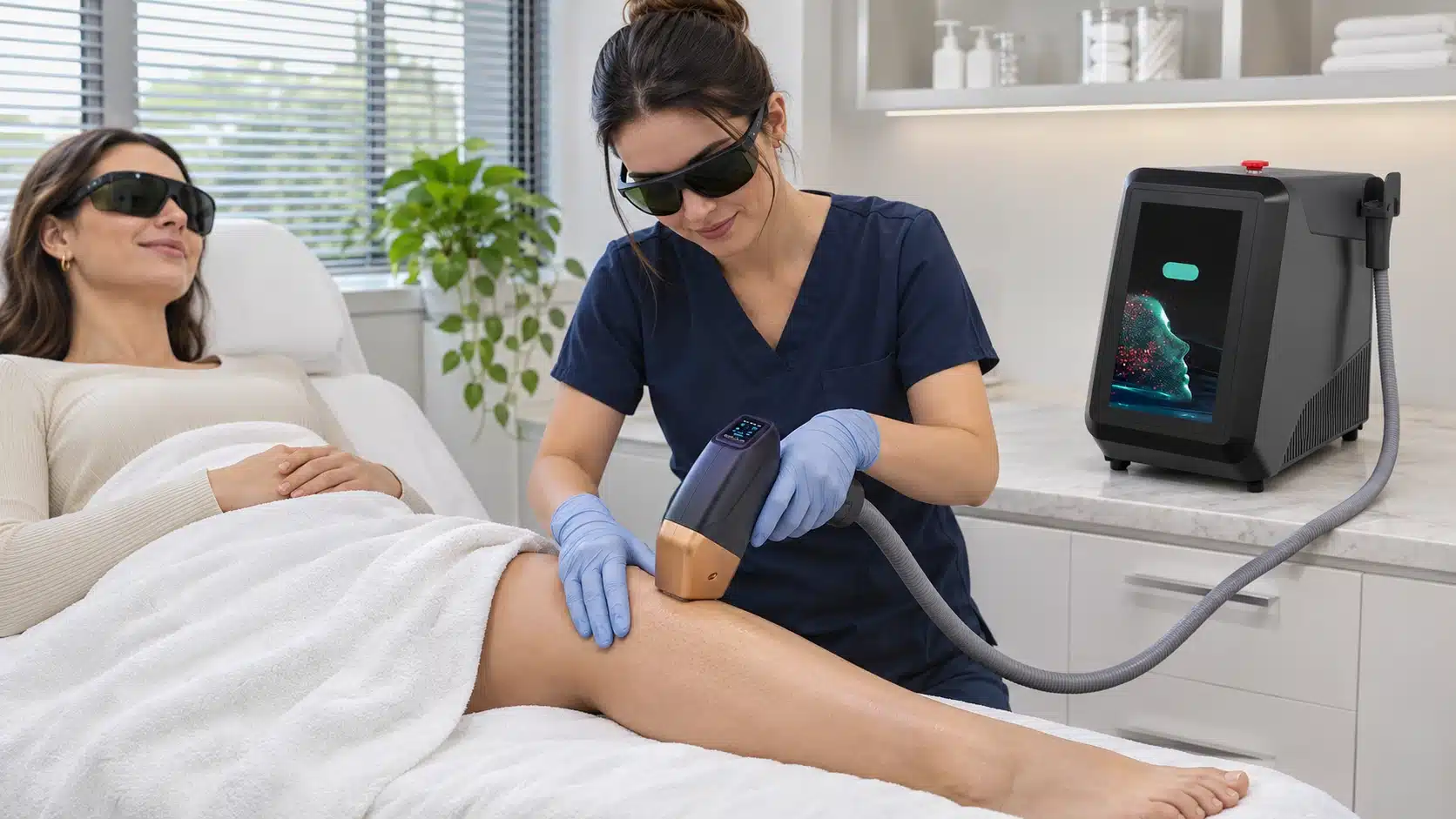
Estimate throughput with a room simulation. Use representative treatment areas, include setup and cleaning time, and record how often the operator must reposition the machine or cable. Do not convert a theoretical repetition rate directly into appointments per hour. Treatment mapping, assessment, documentation, breaks and room turnover also consume capacity.
Check Handpiece Life and Serviceability
The handpiece is both a working tool and a potential source of downtime. Request the expected service-life basis, the counter or diagnostic method used to monitor it, and the conditions that can shorten life. Clarify whether the complete handpiece, diode module, contact window, cable or another component is replaced when service is required. Ask whether replacement can be completed on site or requires return shipment.
A quotation should identify included handpieces, spare availability, replacement pricing, repair lead time, shipping responsibility and warranty exclusions. If the clinic expects high volume, compare the cost and operational value of a second handpiece or a loan unit. Handpiece life should remain a conditional planning figure until the supplier confirms the measurement method and operating assumptions in writing.
Review Room Utilities and Operator Workflow
Confirm electrical requirements, ventilation, console footprint, cable reach, screen visibility, foot-control placement and movement between rooms. Check how the handpiece rests between passes and how the contact surface is cleaned without contaminating the workstation. The clinic should also define pre-use inspection, end-of-day shutdown and escalation steps for cooling alarms, output irregularities or visible damage.
Training must cover the exact configuration. Record who may operate the system, how competency is documented, and what retraining is provided after software, handpiece or protocol changes. Arfurla describes equipment service and after-sales support on its website; the buyer should confirm the model-specific installation, training and troubleshooting package for the destination market.
Compare Total Ownership Cost Instead of Purchase Price
Build a three-year cost model that includes the console, handpieces, optional spot sizes, cooling maintenance, filters or coolant where applicable, cleaning materials, preventive service, training time, freight, import-related costs and likely downtime. Keep revenue forecasts separate from equipment cost so assumptions remain visible. If a cost or service interval is unknown, use a conservative range and mark it for confirmation.
The most useful output is cost per available treatment hour at realistic utilization. A lower purchase price may be offset by frequent service, slow parts supply or a configuration that reduces throughput. A higher-priced package may also be poor value when it includes wavelengths, handpieces or accessories the clinic will not use.
Run a Supplier Evidence and Acceptance Check
Before ordering, request a model-specific configuration sheet, current manual, handpiece list, maintenance schedule, training scope and written support terms. Match the model name and wavelength set across the quotation, labels and technical documents. Confirm what is included in the shipment and which accessories are optional. Avoid accepting a generic brochure as proof for a specific configuration.
On delivery, inspect the serial and model information, verify every included component, complete the supplier’s installation checks and test normal startup, cooling, controls and alarms under the approved procedure. Record baseline condition and operator sign-off. Acceptance testing gives the clinic a reference for future maintenance and makes missing components visible before routine appointments begin.
Conclusión
Clinics should select professional laser hair removal equipment by connecting wavelength strategy, cooling, spot size, handpiece serviceability and room workflow to a defined service plan. The strongest purchase is not the machine with the longest specification list. It is the documented configuration that trained staff can operate, maintain and support at the clinic’s expected volume.
Preguntas frecuentes
Is a Four Wavelength Diode Laser Always Better
No. Multiple wavelengths are useful only when the documented protocols fit the clinic’s service mix and operators can use the configuration correctly. Compare the exact wavelength set and delivery method.
What Cooling Questions Should a Buyer Ask
Ask about the cooling architecture, startup checks, operating range, maintenance materials, alarms, contact-window care and the response when cooling performance is outside specification.
How Should Handpiece Life Be Compared
Compare the supplier’s measurement basis, operating assumptions, replaceable components, replacement price, service location, lead time and warranty conditions. Do not rely on a shot figure without those details.
What Should a Clinic Include in an RFQ
Include intended treatment areas, expected volume, preferred wavelength strategy, spot-size needs, room utilities, operator experience, training requirements, support expectations and destination market.
Request a Model and Handpiece Review
For a model-specific fit check, request a configuration review from Arfurla with the planned services, client mix, treatment areas, expected monthly volume, preferred wavelength set, handpiece needs, room constraints and delivery market.