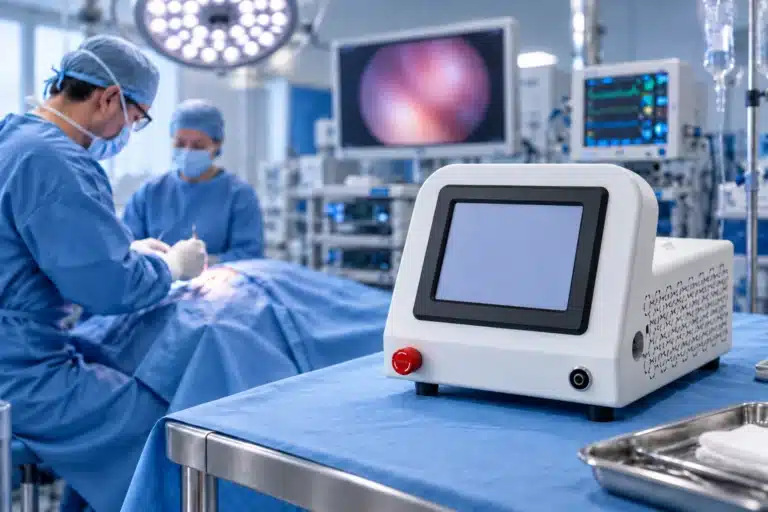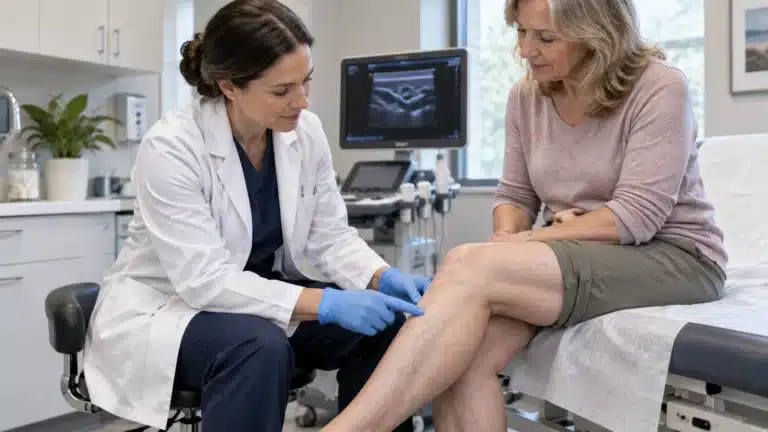
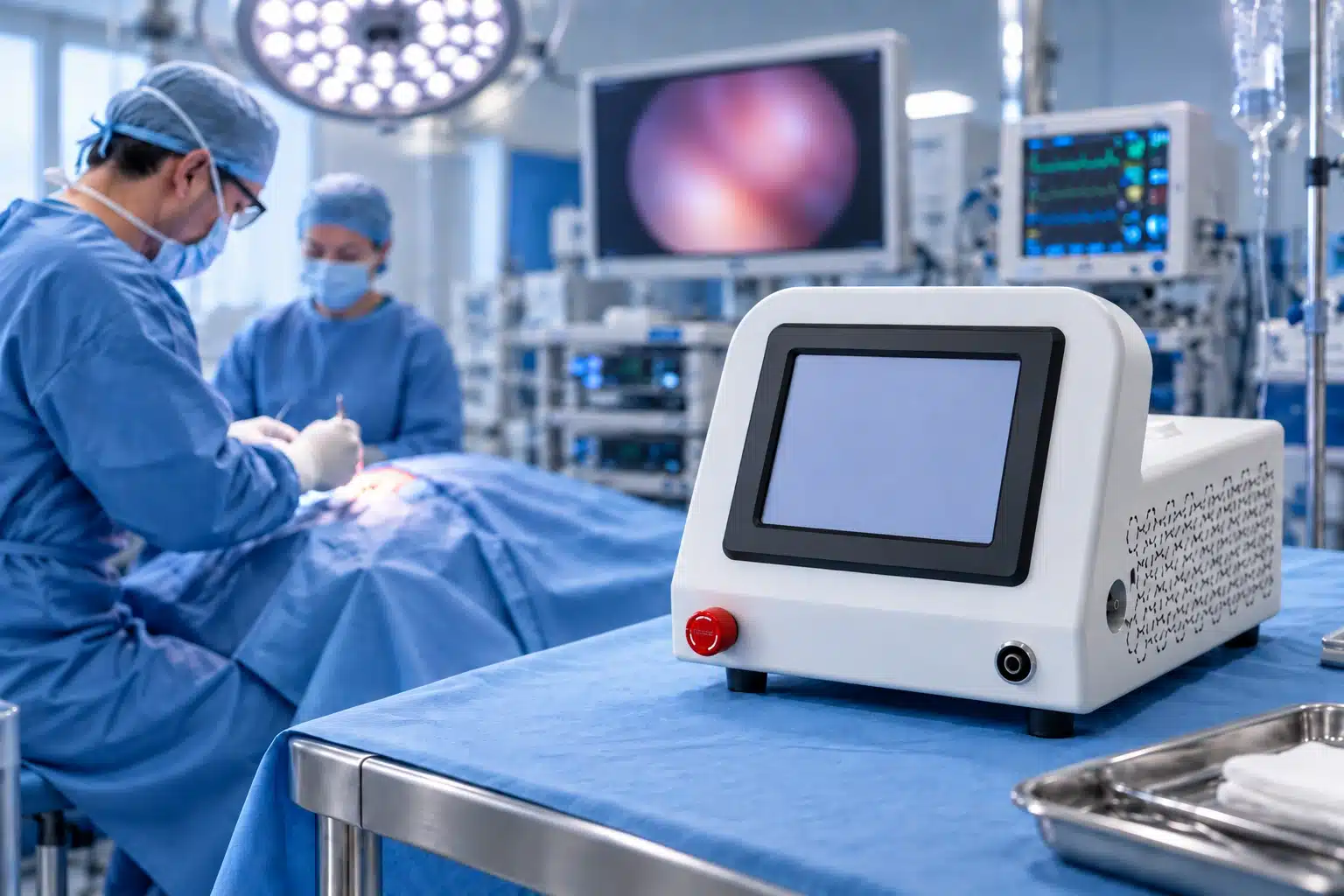
The 980 nm laser is used in minimally invasive surgery when the need arises for a controlled heat source of small beam width for cutting, coagulating, or vaporizing soft tissue. The laser can be delivered via a small fiber, making it suitable for surgeries where access is difficult and mechanical tools are hard to control.
The wavelength alone does not determine the result. Tissue type, blood supply, fiber geometry, pulse duration, power density, and the surgeon’s technique all influence the treatment effect. For a hospital or clinic evaluating equipment, the practical task is to match the complete laser platform with specific procedures, accessories, and safety requirements.
What 980nm Energy Does in Soft Tissue
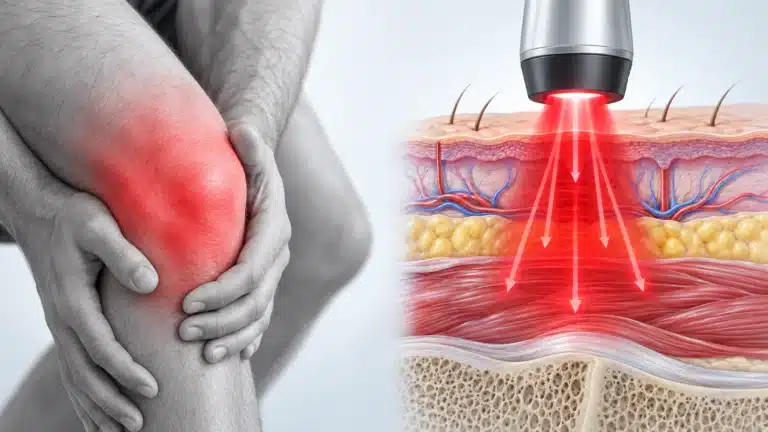
980nm diode laser energy interacts with water and hemoglobin in tissue. That combination can produce localized heating in vascular soft tissue. With suitable settings and fiber movement, the same system may be used for incision, coagulation, or ablation.
Small changes in operating conditions can produce different outcomes. Important variables include:
- continuous-wave or pulsed operation;
- output power and pulse duration;
- contact or non-contact delivery;
- fiber diameter and tip design;
- tissue hydration and vascularity;
- cooling, smoke evacuation, and visualization.
أ peer-reviewed review of 980nm diode laser use discusses how fluence, spot size, pulse duration, and operator control work together. This is why a purchasing team should avoid judging a system by wavelength or maximum power alone. The controls and delivery accessories matter just as much.
Where Minimally Invasive Applications Are Common
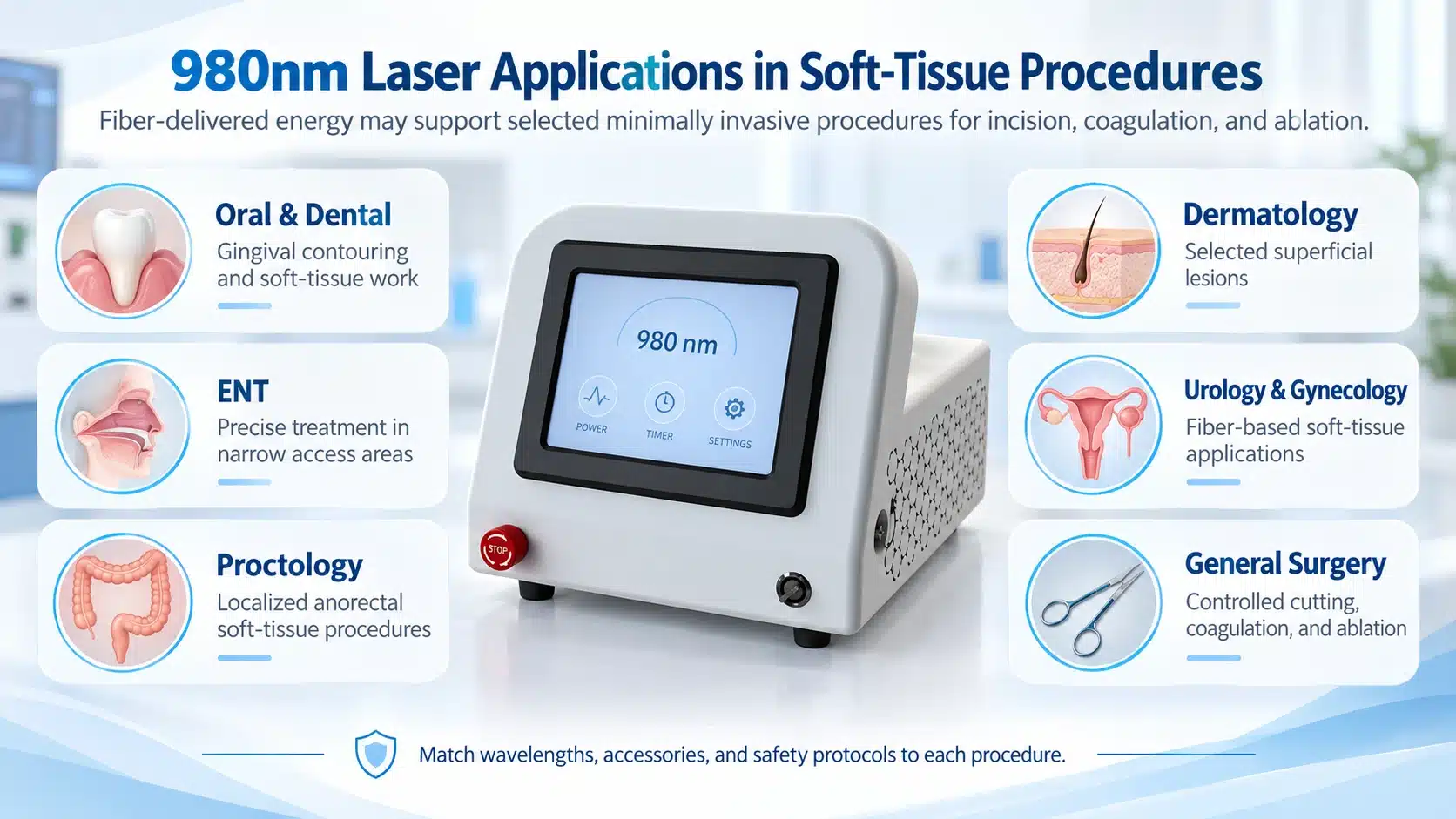
Oral and Dental Soft-Tissue Work
Dental and oral surgery practices may consider 980nm systems for procedures involving gingival tissue, frenectomy, soft-tissue contouring, and selected lesion management. The interaction with blood-containing tissue can help the operator manage bleeding during an appropriately controlled procedure.
The equipment must fit the workflow. A buyer should check fiber sizes, handpiece design, aiming-beam visibility, sterilization requirements, and footswitch operation. A system that is convenient for a short gingival procedure may not be configured for a deeper or more extensive intervention.
Parameter guidance is also important. Power, pulse timing, and fiber movement should be established by qualified clinicians for the specific tissue and technique. General settings copied from another application may not transfer safely.
ENT Procedures in Narrow Access Areas
ENT work often takes place in confined anatomical spaces. A flexible diode laser fiber can provide access through a small working channel, while the operator controls the tissue effect under direct or endoscopic visualization.
Possible applications include selected soft-tissue reduction, coagulation of vascular areas, and treatment of localized obstructive tissue. Whether a 980nm system is appropriate depends on the anatomy, access route, tissue depth, and the physician’s protocol.
The supplier’s soft-tissue surgery applications can help an ENT purchasing group compare the stated application range with its own planned procedures. The final decision should still be based on accessory compatibility and clinical validation.
Proctology and Anorectal Procedures
Laser delivery is considered in selected proctology procedures because the fiber can pass through a limited access route. Depending on the technique, energy may be used for coagulation, tissue reduction, or controlled treatment of a localized area.
The fiber is especially important in this field. Radial, side-firing, and bare fibers distribute energy differently, and the choice affects how the operator works around sensitive structures. Buyers should ask which fiber geometries are available, how they are connected, and whether they are reusable or disposable.
A useful evaluation also covers smoke evacuation, visualization, patient positioning, and cleaning. These details may have more effect on day-to-day usability than a small difference in headline power.
Dermatology and Superficial Lesions
A 980nm diode laser may be used for selected superficial vascular or soft-tissue procedures. Because skin response varies with lesion depth, skin type, hydration, and vascularity, clinicians generally need adjustable parameters rather than one fixed operating mode.
A dermatology buyer should request practical protocol information: how the aiming beam is used, how exposure time is controlled, what cooling options are available, and how the operator is expected to monitor tissue response. Any protocol should be reviewed by a qualified professional and adapted to local clinical requirements.
Urology, Gynecology, and Other Soft-Tissue Fields
In urology, gynecology, and related specialties, diode lasers may support selected endoscopic or open soft-tissue procedures. Typical requirements include a compatible fiber, a stable energy output, clear control of pulse behavior, and an access device suited to the anatomy.
The same machine may not be equally suitable for every procedure. Irrigation conditions, target depth, visualization, and tissue composition all change the operating requirements. A clinic should prepare a procedure-by-procedure list before ordering accessories or setting training priorities.
Comparing 980nm With 1470nm
Some medical platforms combine 980nm and 1470nm sources. These wavelengths have different absorption characteristics, so they can create different tissue responses under comparable settings. In broad terms, 1470nm is more strongly absorbed by water, while 980nm can interact with both water and hemoglobin.
That distinction does not make one wavelength universally preferable. The choice depends on the target tissue, fiber design, desired depth of effect, and the clinician’s technique. A dual-wavelength system is useful only when the controls and accessories allow the team to apply each source appropriately.
During a technical review, ask whether the wavelengths can be selected independently, whether pulse and power settings are separately adjustable, and whether the supplied fibers are approved for the intended procedures.
Procurement Checks That Prevent Expensive Mismatches
Start with the clinical workflow, then review the machine. A concise procurement checklist should include:
- Procedure fit: List every intended specialty and confirm the supplier’s stated use for each one.
- Energy control: Review continuous, pulsed, interval, and standby modes.
- Fiber compatibility: Check connectors, diameters, tip styles, sterilization methods, and replacement availability.
- Visualization: Confirm compatibility with endoscopes, microscopes, dental handpieces, or other viewing equipment.
- Safety functions: Verify aiming-beam controls, footswitch behavior, emergency stop, warning indicators, and eyewear guidance.
- Facility workflow: Consider setup, cleaning, storage, smoke management, and staff handover between cases.
- Service documentation: Request manuals, maintenance requirements, troubleshooting steps, spare-parts information, and training scope.
Ask the supplier to identify which specifications are standard and which depend on the selected configuration. Treat statements about clinical outcomes, recovery time, or procedure speed as claims requiring appropriate evidence and professional review.
Evaluating Arfurla as a Platform Supplier
Once the procedure and accessory requirements are defined, buyers can compare suitable suppliers. مع أرفور describes a multifunction diode laser portfolio covering 650nm, 980nm, and 1470nm wavelengths. Its company information also presents capabilities in product development, manufacturing, sales, after-sales service, and OEM/ODM cooperation.
ال 980nm and 1470nm multifunction diode laser platform is presented for uses that include soft-tissue surgery, ENT, dentistry, proctology, EVLT, PLDD, and physiotherapy. For a real purchase, the clinical team should confirm the exact model configuration, fiber options, output controls, documentation, and regional requirements.
Arfurla is best assessed against the same practical criteria used for any medical equipment source: Does the platform support the planned procedures? Are the accessories clearly specified? Can staff receive suitable training? Is technical support available after installation? Written answers to these questions make supplier comparisons more reliable.
Safety and Staff Readiness
Laser safety must be built into the operating procedure. Facilities should define controlled areas, warning signage, protective eyewear, smoke evacuation, emergency actions, and responsibilities for trained staff.
Before routine use, qualified clinicians should validate settings for each procedure. Initial cases may require supervised training and conservative parameters. Regular fiber inspection, output checks, and maintenance records help keep the system predictable over time.
خاتمة
980nm laser machine applications in minimally invasive surgery span oral surgery, ENT, proctology, dermatology, urology, gynecology, and other soft-tissue fields. The technology can be valuable when the wavelength, fiber, controls, visualization, and safety process match the clinical task.
The most dependable purchasing decision comes from defining procedures first, verifying every accessory and specification, and selecting a supplier that can support implementation after delivery.
الأسئلة الشائعة
What is a 980nm laser machine used for?
It may support selected soft-tissue cutting, coagulation, vaporization, and minimally invasive procedures, depending on its configuration and clinical protocol.
Is 980nm appropriate for every surgery?
No. Suitability depends on tissue, anatomy, fiber, access method, operating parameters, and clinician validation.
Why do some systems include both 980nm and 1470nm?
The wavelengths interact with tissue differently, which may give clinicians more flexibility across selected procedures.
What should be included in an RFQ?
Include intended procedures, specialties, fiber requirements, quantity, facility conditions, training expectations, documentation, and service needs.
For a configuration review, contact the Arfurla technical team with your target procedures, required wavelengths, fiber preferences, quantity, and delivery-market requirements.