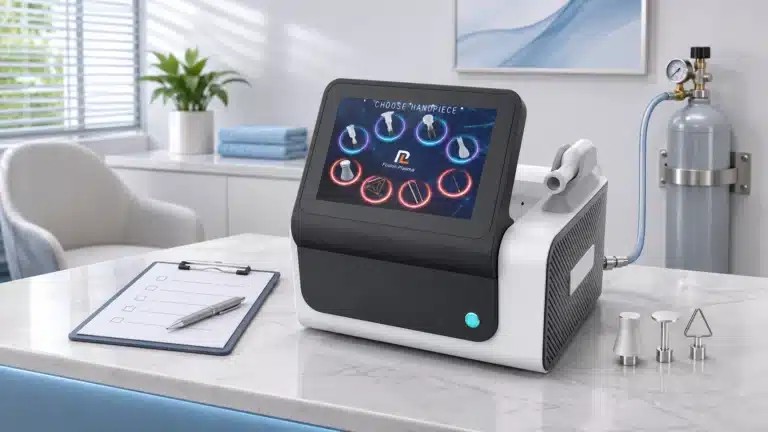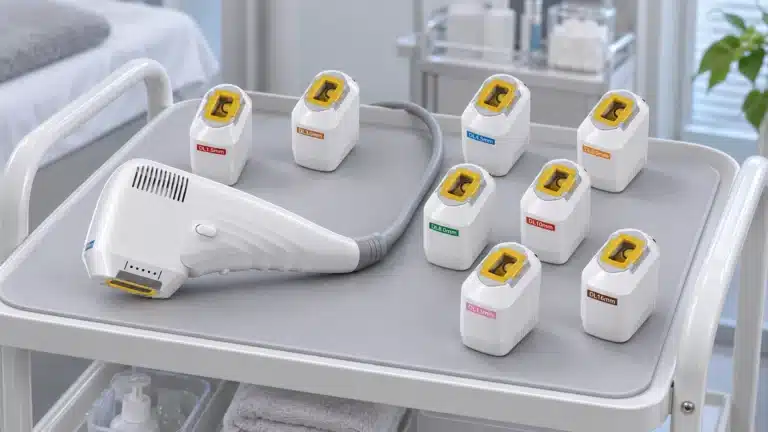

A factory acceptance test checklist helps an aesthetic equipment buyer verify the exact unit, configuration, documents, and agreed functions before shipment. The process should compare observable evidence with a written purchase specification, record every deviation, and define what must be corrected before release. It is not a substitute for regulatory review, clinical validation, incoming inspection, or site acceptance. For distributors and multi-site clinics, however, a disciplined FAT can prevent costly configuration errors from crossing borders.
Define the FAT Scope Before Production Is Complete
The most effective FAT begins before the test date. Convert the quotation and technical discussion into an approved specification: model identity, intended market, power supply, plug, user-interface language, wavelengths or treatment modes, handpieces, accessories, software version, labeling, packaging, manuals, and optional features. Each item needs an objective acceptance method. A statement such as ‘all functions work’ is weak; ‘the quoted handpieces are recognized by the console and each approved mode completes the supplier’s documented functional test’ is testable.
Decide who will attend, whether the session will be on-site or remote, which evidence must be sent in advance, and who can approve exceptions. Identify the exact Arfurla device and ordered configuration on the FAT form. Agree which checks apply to that unit before the test date.
Verify Product Identity and the Ordered Configuration
Start with identity because every later record depends on it. Photograph the model label and serial number, then compare them with the quotation, packing list, manual, test report, and any market-specific documents supplied for the order. Confirm that the console name shown in software matches the physical product. If accessories have their own identifiers, capture those as well. A certificate or manual for a similar family is not evidence for the ordered unit unless its scope clearly includes that model.
Freeze the configuration line by line. Count handpieces, applicators, footswitches, fibers, lenses, eyewear, cables, keys, adapters, straps, spare parts, and consumable samples as applicable. Verify voltage, frequency, plug type, UI language, enabled modes, and optional modules. For an OEM or ODM order, have the buyer and supplier sign the configuration list before the test. Use that copy to check the unit and accessories presented for acceptance.
Inspect Physical Condition and Assembly
Inspect the unit in good light before it is wrapped. Check enclosure panels, screen, casters, brakes, handles, vents, connectors, cables, articulated arms, applicator surfaces, fasteners, and accessory fit. Look for scratches, gaps, loose parts, contaminated optics, bent pins, strained cables, or shipping-sensitive components that are not secured. The inspection standard should distinguish a cosmetic deviation from a defect that affects safe operation, cleaning, service access, or durability.
Photographs should show the whole unit and close-ups of critical interfaces. For a multi-function system such as the AFL Medical 12-in-1 platform, the buyer should also verify that the physical accessories correspond to the quoted application set. Record which accessories and software options are present on the unit being tested.
Run Model-Specific Functional and Safety Checks
Use the approved manual and supplier protocol to power up the device, complete self-tests, navigate every enabled screen, connect each included accessory, and demonstrate the agreed operating modes without treating a person. Check that controls respond consistently and that displayed settings, accessory recognition, timers, footswitches, cooling status, and other applicable indicators behave as documented. Do not improvise high-energy tests or bypass guards, interlocks, warnings, or service restrictions to create a dramatic demonstration.
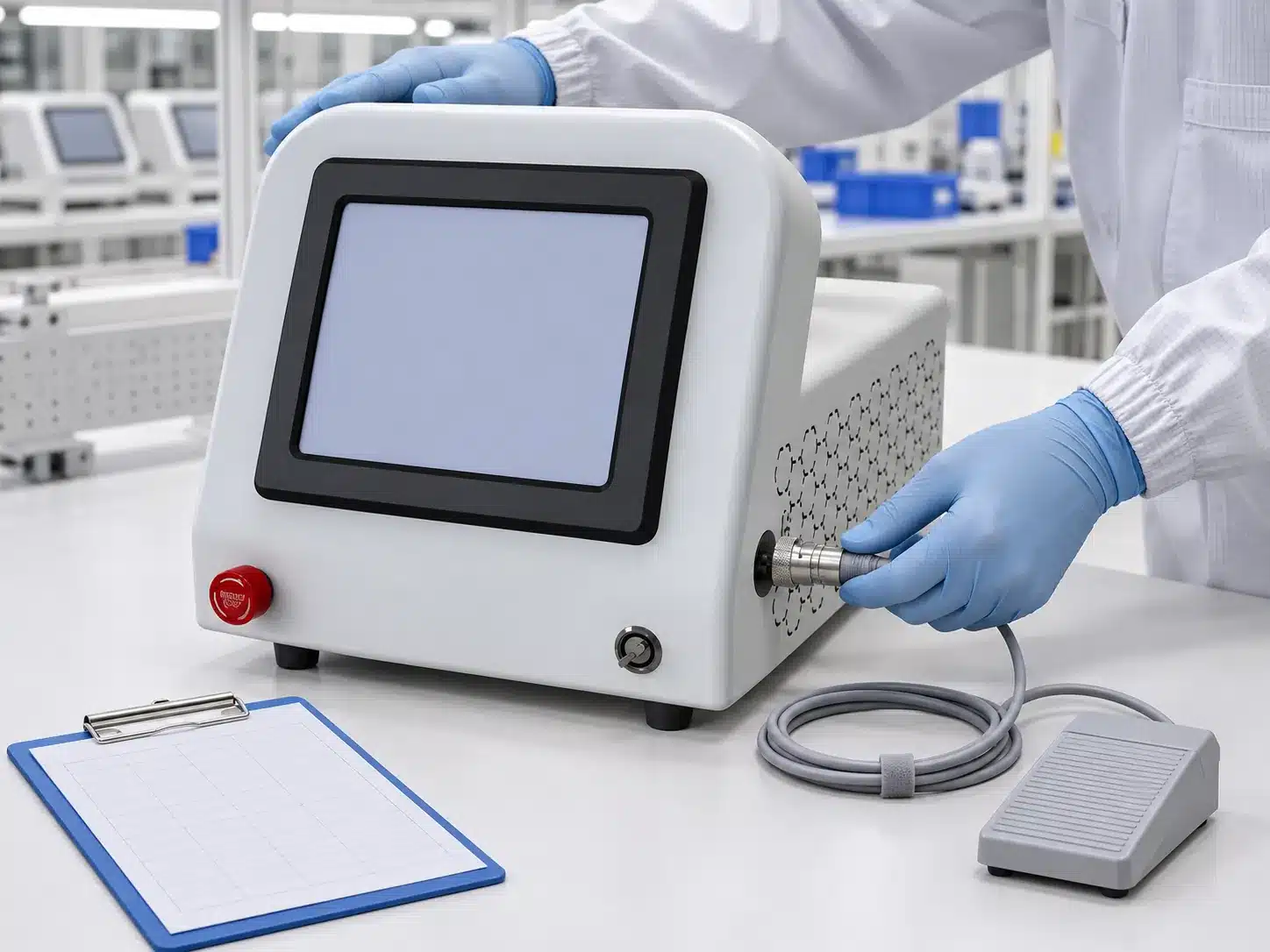
List the safety features required by the approved specification and the rules for the destination market. Check each feature on the unit using the manufacturer’s procedure and record the result. If a required feature is missing, fails, or cannot be verified, hold shipment until the supplier corrects the issue and the buyer verifies closure. Mark a feature as not applicable only when the specification supports that decision, and record the reason. Assign output measurements and electrical safety tests to qualified personnel using suitable instruments and agreed limits.
Review Documents and the Evidence Pack
A complete FAT evidence pack should make the tested unit traceable after shipment. Request the signed configuration, serial-number record, packing list, user manual, cleaning and maintenance instructions, warranty terms, training plan, service contacts, and FAT report. Where applicable, include QC records, instrument identifiers, software version, labels, electrical information, test data, and copies of market documents whose model scope has been checked. The buyer remains responsible for confirming destination-market requirements.
Document consistency matters more than file count. The model name, manufacturer identity, serial number, accessories, electrical rating, and intended market should agree across labels and records. If a document needs correction, add it to the punch list; do not accept a verbal promise that the right file will appear later. For after-sales support, record who will provide training, what it covers, and how the buyer can reach service staff after delivery.
Control Deviations With a Punch List
Every deviation needs a description, evidence, owner, due date, severity, and closure method. Separate shipment blockers from minor cosmetic items and document-only corrections. Shipment blockers include an incorrect voltage, a missing handpiece, a required safety function that is absent or unverified, a failed alarm, a damaged connector, or conflicting model identifiers. A low-risk cosmetic issue may be accepted only by the person authorized to approve it. Screenshots, photos, short videos, or retest data should demonstrate closure.
The final FAT status should be unambiguous: accepted for shipment, conditionally accepted with listed actions, or not accepted. Conditional release should state exactly what may be completed after shipment and why that does not undermine safety, compliance, configuration, or commissioning. Silence is not acceptance, and a signed report should never hide open items in an email thread.
Confirm Packing and Shipment Readiness
After corrections are closed, repeat an identity check before packing. Photograph the accessories inside their labeled compartments, protective caps, moisture protection, foam supports, crate condition, orientation marks, and external shipping labels. Confirm the destination, consignee, package count, gross dimensions, and included documents. Store the pre-pack and closed-crate photographs with the FAT report so an incoming inspection can distinguish a factory issue from transport damage or a packing discrepancy.
Plan Incoming Inspection and Site Acceptance
FAT completion does not end acceptance. On arrival, the buyer should inspect the crate, verify serial numbers and package count, check for damage, reconcile accessories, and record any claim immediately. Site acceptance then confirms room utilities, installation, startup, training, local safety controls, and the agreed operating checks in the real environment. Keep the factory baseline available so changes after transit or installation can be isolated quickly.
خاتمة
A useful factory acceptance test checklist turns a purchase promise into traceable evidence. Define measurable criteria early, verify identity and configuration, inspect the complete unit, run only documented non-clinical checks, reconcile the evidence pack, and close deviations before release. For aesthetic equipment distributors, this process reduces ambiguity across customization, international shipping, installation, and service handover while preserving the separate roles of regulatory review and site acceptance.
الأسئلة الشائعة
When should a factory acceptance test take place?
Schedule it after the ordered configuration is complete but before final packing and shipment. Allow time for corrections and retesting before the carrier arrives.
Can a factory acceptance test be performed remotely?
Yes, when the protocol defines camera views, live demonstrations, document sharing, evidence capture, and witness authority. Remote FAT may not replace independent or in-person testing when the purchase specification or applicable requirements call for it.
Does FAT approval prove regulatory compliance?
No. FAT verifies agreed, observable acceptance criteria for the ordered equipment. Regulatory status, clinical suitability, independent safety testing, import requirements, and authorization for use require separate evidence and qualified review.
What information should a buyer send before requesting a factory acceptance test plan?
Provide the exact model and configuration, destination market, electrical requirements, UI and label language, accessory list, documentation needs, witness method, acceptance criteria, and shipment deadline. Buyers can send a configuration inquiry to Arfurla so the test plan can be built around the actual order.