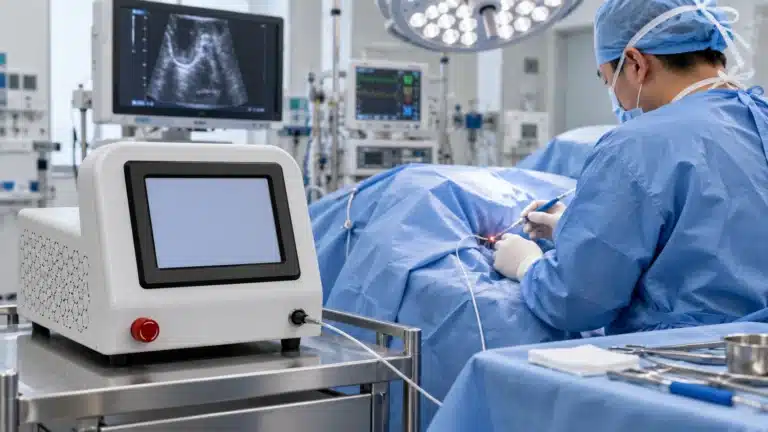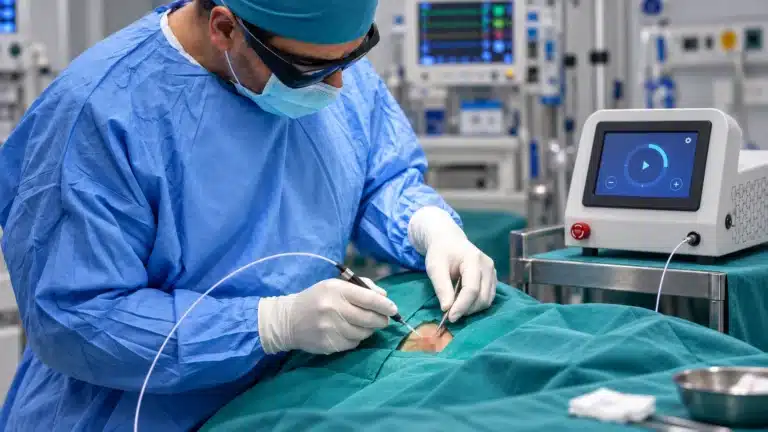
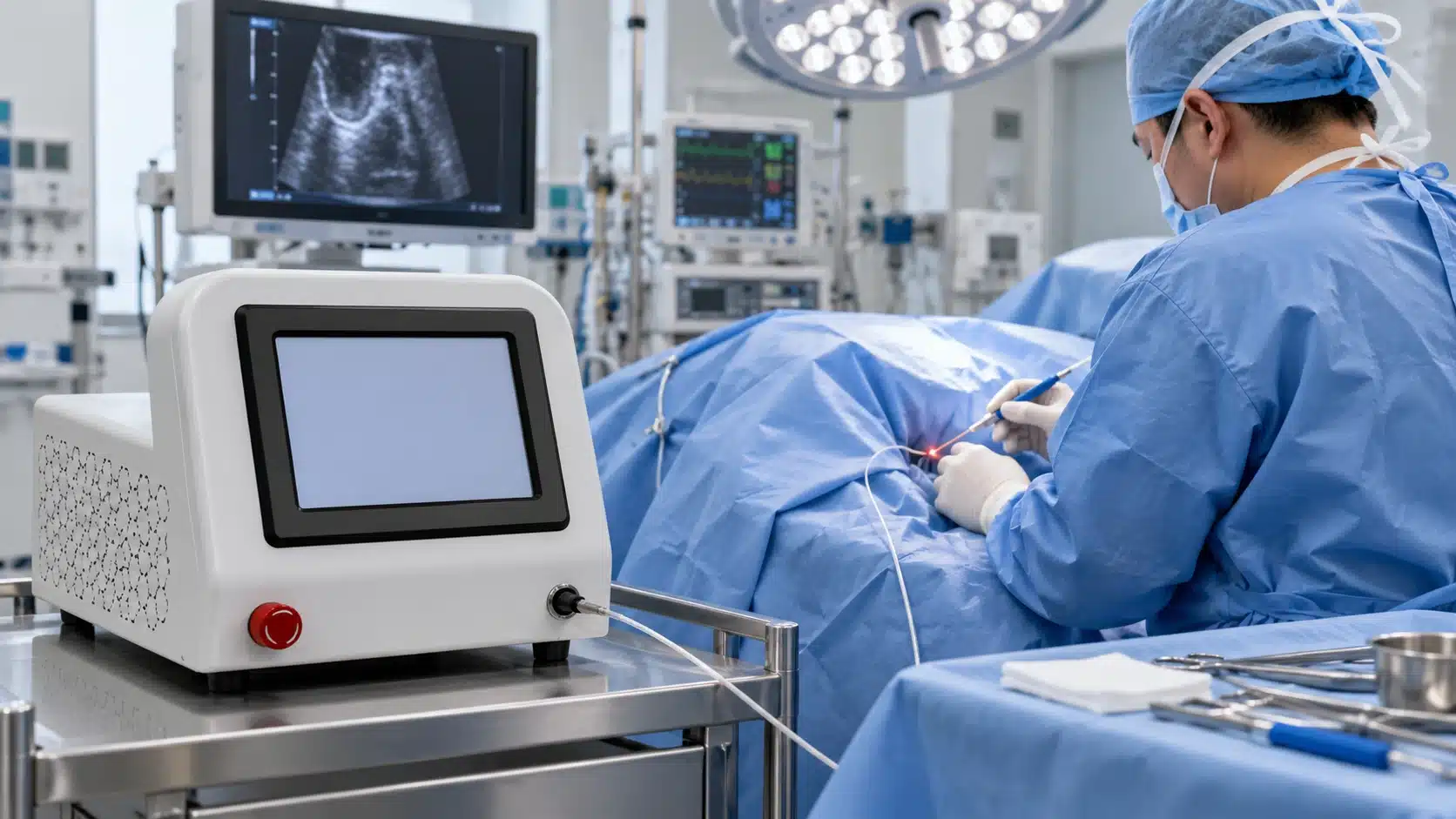
FiLaC, or Fistula-tract Laser Closure, is a minimally invasive technique for treating selected anal fistulas. A flexible laser fiber is introduced through the external opening and guided along the fistula tract. As the fiber is withdrawn, controlled laser energy treats the tract lining and encourages the channel to contract and close.
A 1470nm laser is particularly relevant because its energy is strongly absorbed by water-rich tissue. This enables localized thermal ablation and coagulation when the fiber, power, pulse mode, and withdrawal speed are properly selected. FiLaC is not suitable for every fistula, so patient selection, tract mapping, infection control, and clinical judgment remain essential.
What Is FiLaC Treatment?
FiLaC stands for Fistula-tract Laser Closure. Unlike an open fistulotomy, which divides the tissue over the fistula tract, FiLaC aims to treat the tract from the inside while preserving the anal sphincter as far as the anatomy allows.
This sphincter-sparing principle is important when the fistula passes through a substantial amount of muscle. The treatment objective is to eliminate or alter the tract lining, reduce the tract diameter, and support gradual closure during healing.
FiLaC may be considered for selected simple, high, recurrent, or sphincter-involving fistulas. However, the decision depends on several factors:
- The location of the internal and external openings.
- The length and direction of the tract.
- Whether the tract has branches.
- The presence of an abscess or active infection.
- Previous fistula operations.
- Associated inflammatory conditions.
- The amount of sphincter involved.
Laser equipment supports the procedure, but it does not replace diagnosis, drainage, imaging, or surgical planning.
How 1470nm Laser Energy Works
The main technical principle is the absorption of laser energy by water in soft tissue. When 1470nm energy is delivered through a suitable fiber, it can create controlled heating in the treatment zone.
Depending on the clinical protocol, this energy may help:
- Ablate or alter the epithelial lining of the fistula tract.
- Contract the tract wall.
- Coagulate small blood vessels.
- Reduce bleeding during treatment.
- Limit unnecessary thermal exposure to nearby tissue.
The purpose is controlled treatment along the fistula pathway, not uncontrolled heating of the surrounding anatomy. Results depend on the tissue condition, fiber design, treatment settings, and operator technique.
Arfurla’s Proctology Laser Treatment platform describes 1470nm as a wavelength that targets water in hemorrhoidal and fistula tissue. The same platform identifies 980nm as a wavelength that interacts with oxyhemoglobin in supplying arteries. A dual-wavelength system may therefore support different tissue interactions, but the correct setting must always be verified against the device documentation and the physician’s protocol.
Typical FiLaC Procedure
1. Clinical assessment
The clinician first confirms the diagnosis and evaluates the fistula’s anatomy. Examination under anesthesia, imaging, ultrasound, or endoscopic assessment may be used when the tract is difficult to define.
The key question is whether the fistula can be treated while maintaining adequate drainage and avoiding unnecessary damage to the sphincter.
2. Infection control
If an abscess or blocked tract is present, drainage and infection management may be required before definitive closure. Treating an actively infected or poorly drained tract can reduce the predictability of the outcome.
3. Tract identification
The external and internal openings are located, and the tract is probed or visualized. Any secondary branches should be identified because an untreated branch may contribute to persistent drainage or recurrence.
4. Fiber placement
A flexible laser fiber is passed through the fistula tract. The operator confirms the position and chooses a fiber design appropriate to the intended treatment. Radial-emission and other fiber geometries can produce different energy-distribution patterns.
5. Controlled laser delivery
The fiber is withdrawn gradually while energy is applied. The combination of power, pulse duration, wavelength, and withdrawal speed determines the amount of thermal treatment delivered to the tract.
Generic settings should not be copied between patients or devices. Tract diameter, tissue condition, fiber type, and clinical objectives must be considered together.
6. Internal opening management
The internal opening may require closure, curettage, or another complementary technique. Treating the tract alone does not remove the need to address the internal opening and any associated infection.
7. Follow-up
The patient is monitored for healing, discharge, pain, swelling, fever, or a new external opening. Persistent symptoms may indicate incomplete closure, recurrence, or another condition requiring clinical review.
FiLaC Benefits and Clinical Limits
The main reason clinics consider FiLaC is its sphincter-preserving approach. Because the tract is treated internally, the procedure may avoid the long open wound associated with some conventional techniques. It may also reduce the amount of tissue that must be divided.
Other potential advantages can include:
- A smaller external wound.
- Less disruption of surrounding tissue.
- Reduced need for extensive cutting.
- A procedure that can be combined with other fistula-management steps.
- The possibility of treating selected recurrent or high fistulas.
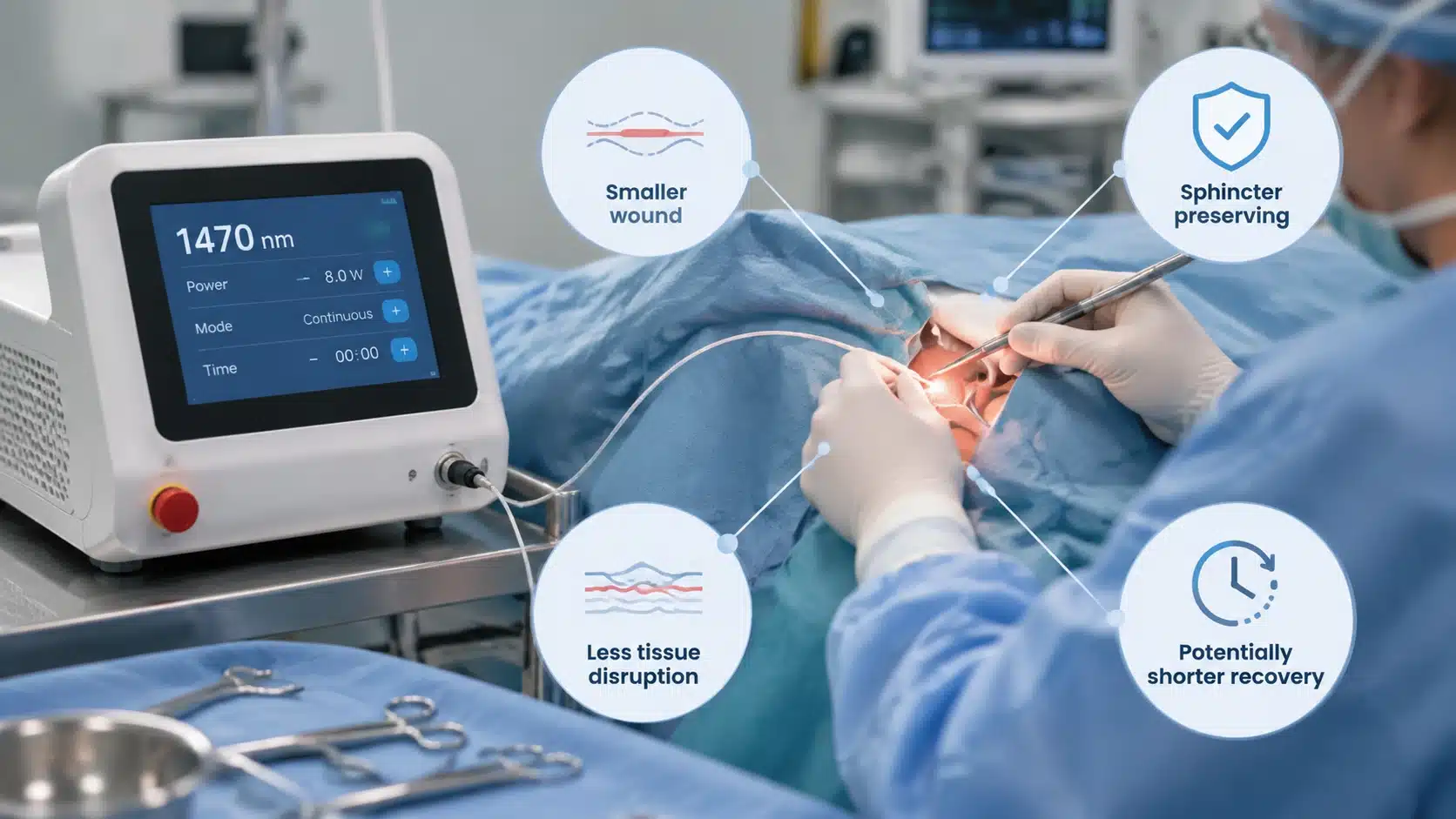
These benefits should be presented carefully. FiLaC is not automatically safer or more effective for every patient. Complex branching tracts, uncontrolled infection, difficult internal openings, and inflammatory disease can affect healing. Recurrence remains possible, and the final result depends on anatomy and technique.
Clinicians should avoid presenting a single success rate as universal. Outcomes vary by patient selection, fistula classification, follow-up period, and treatment protocol.
What to Check When Selecting a 1470nm Laser
For a hospital, proctology center, or medical distributor, wavelength is only one part of the purchasing decision.
First, confirm the intended application. Arfurla’s جهاز ليزر ديود طبي متعدد الوظائف 12 في 1، 980 نانومتر و1470 نانومتر lists proctology among its clinical applications. Buyers should verify which configuration, accessories, and fibers are included for fistula procedures.
Second, review fiber compatibility. The system should be matched with the fiber types required by the clinic’s treatment protocols. Confirm connector type, emission pattern, diameter, sterilization method, and whether the fiber is single-use or reusable.
Third, verify control of treatment parameters. The interface should clearly support wavelength selection, power adjustment, pulse or continuous operation, and treatment-time management. These controls should be documented in a way that reduces operating errors.
Fourth, review service and training. A supplier should provide operating instructions, maintenance guidance, troubleshooting support, and application training appropriate to the local market. Warranty coverage, spare parts, and response times should also be clarified before purchase.
Finally, confirm that the delivered system matches the requested specification. A multifunctional platform can support several clinical areas, but the actual clinical value depends on the supplied handpieces, fibers, accessories, documentation, and training.
How Arfurla Fits the Procurement Process
مع أرفور presents its platform for multiple medical laser applications, including proctology. The company’s proctology materials discuss 1470nm treatment for hemorrhoids, fistulas, and pilonidal sinus applications.
For a procurement team, the most useful evaluation is application-specific. Instead of asking only whether a machine includes 1470nm, ask whether the proposed configuration supports:
- The clinic’s intended fistula procedures.
- The required fiber and handpiece types.
- The desired 980nm and 1470nm workflows.
- Operator training and technical documentation.
- Local installation, service, and replacement support.
- Future expansion into other approved clinical applications.
A technical inquiry should include the target procedures, expected volume, market, accessory requirements, and training expectations.
خاتمة
A 1470nm laser supports FiLaC by delivering water-absorbed thermal energy inside the anal fistula tract. The intended effect is controlled treatment of the tract lining and contraction of the channel while preserving the sphincter where possible.
Successful use depends on accurate diagnosis, infection control, tract mapping, suitable fibers, carefully selected settings, internal-opening management, and follow-up. For buyers, the right system should be evaluated through the complete clinical workflow rather than wavelength alone.
الأسئلة الشائعة
Is FiLaC suitable for every anal fistula?
No. Suitability depends on the fistula’s anatomy, infection status, branching, sphincter involvement, previous treatment, and the clinician’s judgment.
Why is 1470nm used for fistula treatment?
1470nm energy is strongly absorbed by water-rich tissue, allowing localized thermal ablation and coagulation when applied with an appropriate fiber and controlled settings.
Does FiLaC cut the anal sphincter?
FiLaC is designed to treat the fistula tract internally and preserve sphincter tissue where possible. The actual approach depends on the anatomy of each case.
Can a dual-wavelength diode laser support other procedures?
It may support multiple applications when the system includes the required software, fibers, handpieces, accessories, and clinical documentation. The approved use depends on the specific configuration and local requirements.
What should be included in a quotation request?
Include the intended procedures, preferred wavelengths, fiber types, accessory requirements, training needs, regulatory market, quantity, and after-sales service expectations.
Request a FiLaC Laser Configuration Review
Hospitals, proctology clinics, distributors, and medical equipment integrators can اتصل بأرفورلا to review a suitable 980nm/1470nm laser configuration for anal fistula and other proctology applications. Please include your target procedures, preferred wavelengths, fiber and handpiece requirements, destination market, expected quantity, training needs, and documentation requirements. Arfurla’s technical team can then recommend a configuration and clarify accessories, operating parameters, service support, and OEM/ODM options where applicable.